Electromagnetic Induction Explained
Introduction to Electromagnetic Induction
A Surprising Connection
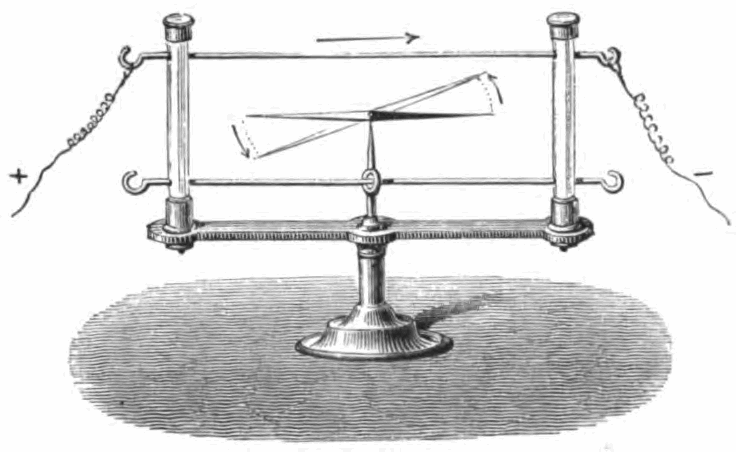
For a long time, electricity and magnetism seemed like two separate forces in the universe. One made lightning flash, and the other made compass needles point north. They were interesting, but unrelated. That view started to change in 1820 when Hans Christian Ørsted made an accidental discovery during a lecture. He noticed that the needle of a compass moved whenever he switched on the electric current from a nearby battery.
This was a huge revelation. An electric current could create a magnetic field. The two forces were connected after all. This discovery sparked a new question in the scientific community: if electricity can create magnetism, can magnetism create electricity?
Faraday's Breakthrough
The person who answered that question was Michael Faraday, a brilliant and curious experimentalist. He spent years trying to generate electricity from magnetism. He placed magnets near wires, ran currents through wires next to other wires, but nothing seemed to work. A steady magnetic field didn't seem to have any effect on a stationary wire.
His breakthrough came in 1831. Faraday wrapped two separate, insulated coils of wire around an iron ring. He connected one coil to a battery and the other to a galvanometer, an instrument that detects electric current. When he connected the battery to the first coil, he saw a brief flicker on the galvanometer connected to the second coil. When he disconnected it, the needle flickered again, but in the opposite direction.
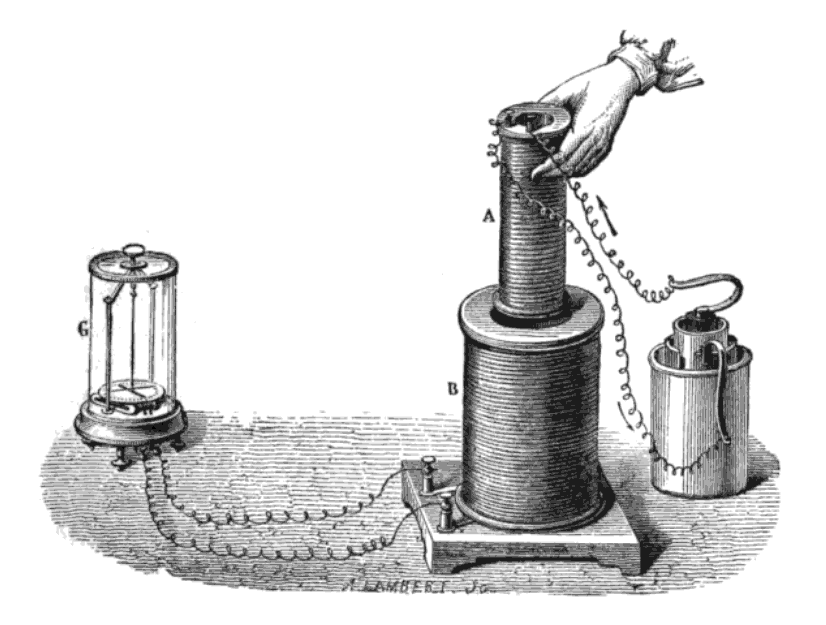
This was the key insight. It wasn't the presence of a magnetic field that created a current, but its change. When the current in the first coil started, it created a magnetic field that grew from zero to its full strength. This changing field induced a current in the second coil. Once the field was steady, the current stopped. Disconnecting the battery caused the magnetic field to collapse, and this change again induced a current.
Electromagnetic Induction
noun
The process of generating an electric current in a conductor by exposing it to a changing magnetic field.
How It Works
So what's actually happening? Think of a conductor, like a copper wire. It's full of electrons that are free to move around. A magnetic field is an invisible force field that can push on these electrons, but only if there's relative motion. A stationary magnet next to a stationary wire does nothing.
But if you move the magnet, or move the wire, the magnetic field experienced by the wire changes. This change gives the electrons a little push, forcing them to flow in a specific direction. A flow of electrons is what we call an electric current.
The crucial ingredients are a conductor, a magnetic field, and change. Without a change in the field, no current is induced.
Induction in Action
This simple principle is one of the most important discoveries in physics. It's the basis for how we generate most of the world's electricity. Power plants use fuel to spin turbines, which are essentially large magnets spinning inside coils of wire. The constant change in the magnetic field induces a powerful electric current.
Electromagnetic induction is the production of voltage from a changing magnetic field.
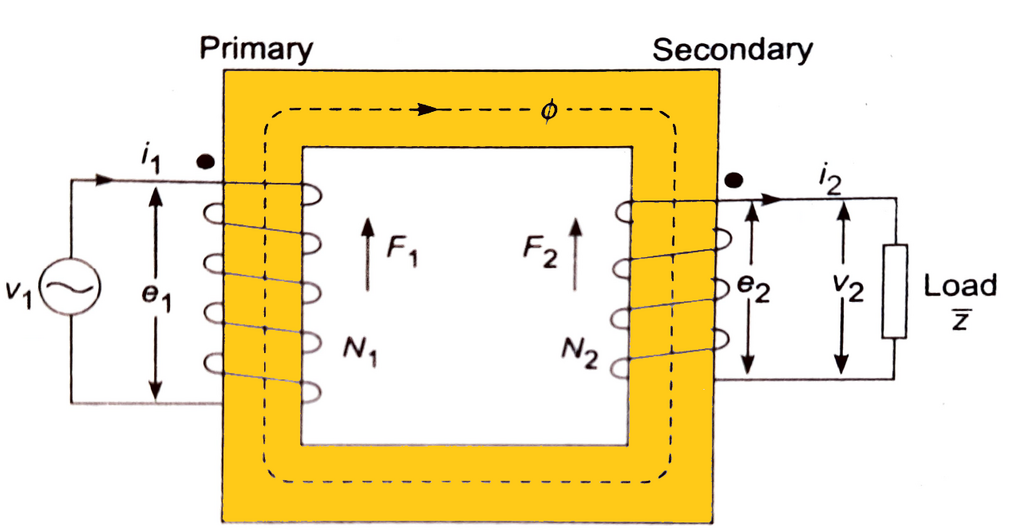
Induction is also key to transformers, devices that can increase or decrease AC voltage. They use a primary coil to create a changing magnetic field, which then induces a current in a secondary coil with a different number of windings. This allows for efficient long-distance power transmission.
On a smaller scale, induction charges your electric toothbrush and your smartphone wirelessly. A coil in the charging base creates a changing magnetic field, which induces a current in a coil inside your device, charging its battery without any physical connection. From global power grids to simple household gadgets, Faraday's discovery is everywhere.