Electric Vehicle Regenerative Braking Explained
Introduction to Regenerative Braking
Braking That Gives Back
When you hit the brakes in a typical gas-powered car, you’re essentially wasting energy. The car’s forward motion, its kinetic energy, has to go somewhere. Traditional brakes convert that energy into heat through friction. It’s the same reason your hands get warm when you rub them together. All that heat simply dissipates into the air, lost forever.
Electric vehicles (EVs) offer a smarter way to slow down. Instead of just throwing that energy away as heat, they can capture and reuse it. This process is called regenerative braking.
Regenerative Braking
noun
A mechanism in electric or hybrid vehicles where the electric motor acts in reverse to slow the vehicle down, converting kinetic energy back into electrical energy, which is then stored in the battery.
Friction vs. Regeneration
Let's look at how a standard car stops. When you press the brake pedal, hydraulic fluid pushes brake pads against a metal disc (or rotor) connected to the wheel. The immense friction between the pads and the disc slows the car down, generating a lot of heat in the process. This is a simple, effective, and reliable way to stop a car.
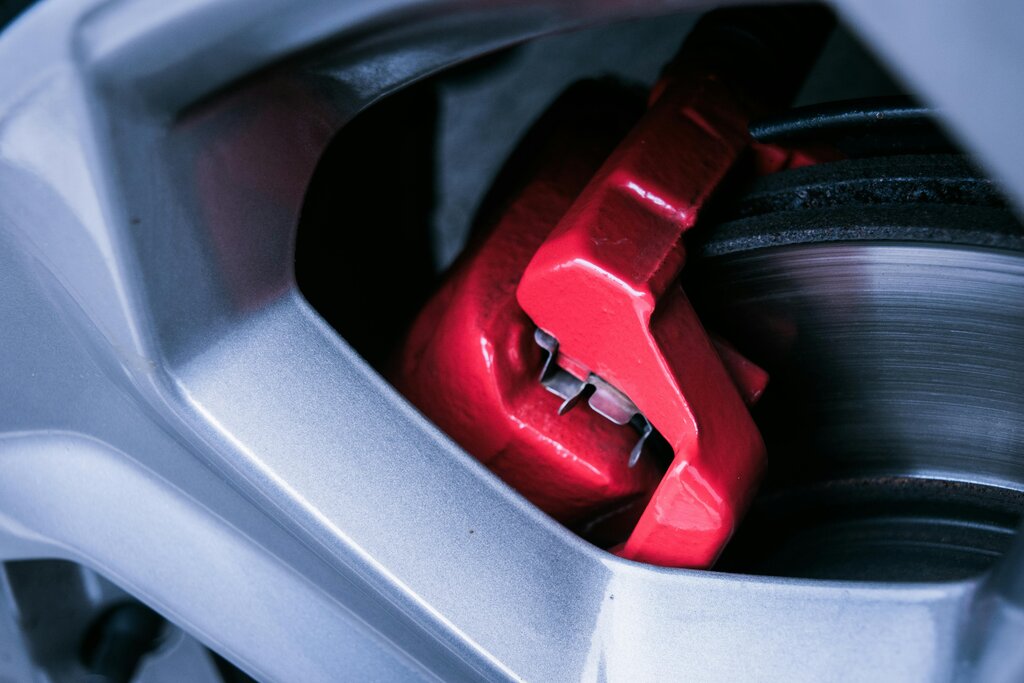
Regenerative braking works differently. In an EV, the same electric motor that powers the wheels can also slow them down. When you lift your foot off the accelerator or press the brake pedal lightly, the motor reverses its function. It switches from using electricity to producing it.
This creates resistance, a magnetic drag that slows the car's momentum. The kinetic energy isn't lost as heat; it's converted into electrical energy and fed back into the car's battery pack. You're literally recharging your battery every time you slow down.
The Benefits
The most obvious benefit of regenerative braking is improved energy efficiency. By recapturing energy that would otherwise be lost, an EV can travel farther on a single charge. This effect is most noticeable in stop-and-go city driving, where frequent braking provides plenty of opportunities to top up the battery.
Another advantage is reduced wear on the conventional friction brakes. Since regenerative braking handles most of the light to moderate slowing, the brake pads and rotors don't have to work as hard. This often means they last much longer, saving the owner money on maintenance.
One of the best features of an electric vehicle is regenerative braking.
This technology not only makes EVs more efficient but also changes the driving experience. Many EVs allow for "one-pedal driving," where lifting off the accelerator engages a strong regenerative braking effect, slowing the car down significantly without needing to touch the brake pedal at all.
What's the Catch?
Regenerative braking isn't a perfect solution. For one, it has its limits. It can't bring a car to a full, sudden stop. In an emergency situation, you still need the power of traditional friction brakes. That’s why every EV and hybrid is also equipped with a standard braking system that takes over when heavy braking is required.
The effectiveness of regeneration also depends on the battery's state of charge. If the battery is already full, there's nowhere for the captured energy to go. In this scenario, which might happen at the top of a long downhill drive after a full charge, the car will rely entirely on its friction brakes.
Finally, the amount of braking force is limited by the power of the motor and the traction of the tires. It's a powerful tool for efficiency, but it works as a partner to, not a replacement for, the tried-and-true friction brake.
What is the primary form of energy that a traditional car's kinetic energy is converted into during braking?
In which driving scenario is regenerative braking MOST effective at increasing an EV's range?
Regenerative braking is a key technology that makes electric vehicles practical and efficient. By turning wasted momentum into useful energy, it helps extend range, reduce maintenance, and fundamentally improve the way we drive.