Electric Utility Distribution Systems Explained
Introduction to Electric Utility Distribution Systems
The Final Stretch
Think of the electrical grid like a highway system. High-voltage transmission lines are the massive interstates that carry huge amounts of power over long distances at high speeds. But you can't drive an interstate directly to your front door. You need to exit onto smaller state highways, then local roads, and finally your own driveway.
Electric utility distribution systems are those local roads and driveways. Their job is to take the high-voltage power from the transmission system and deliver it safely to end-users like homes, schools, and factories. This is the final, crucial step in electricity's journey from the power plant to your light switch.
From Bulk Power to Your Outlet
The distribution network is a complex web of equipment designed to manage and reduce voltage. It starts where the high-voltage transmission grid ends. Let's break down the key components.
Substation
noun
A facility that steps down high-voltage electricity from the transmission system to lower voltages suitable for local distribution. It also contains switches and circuit breakers to protect the local grid.
Substations are the gateways between the transmission and distribution systems. They are like the big exit ramps off the electrical interstate. Here, large transformers reduce the voltage from extremely high levels (like 345,000 volts) down to a more manageable level, typically between 4,000 and 35,000 volts.
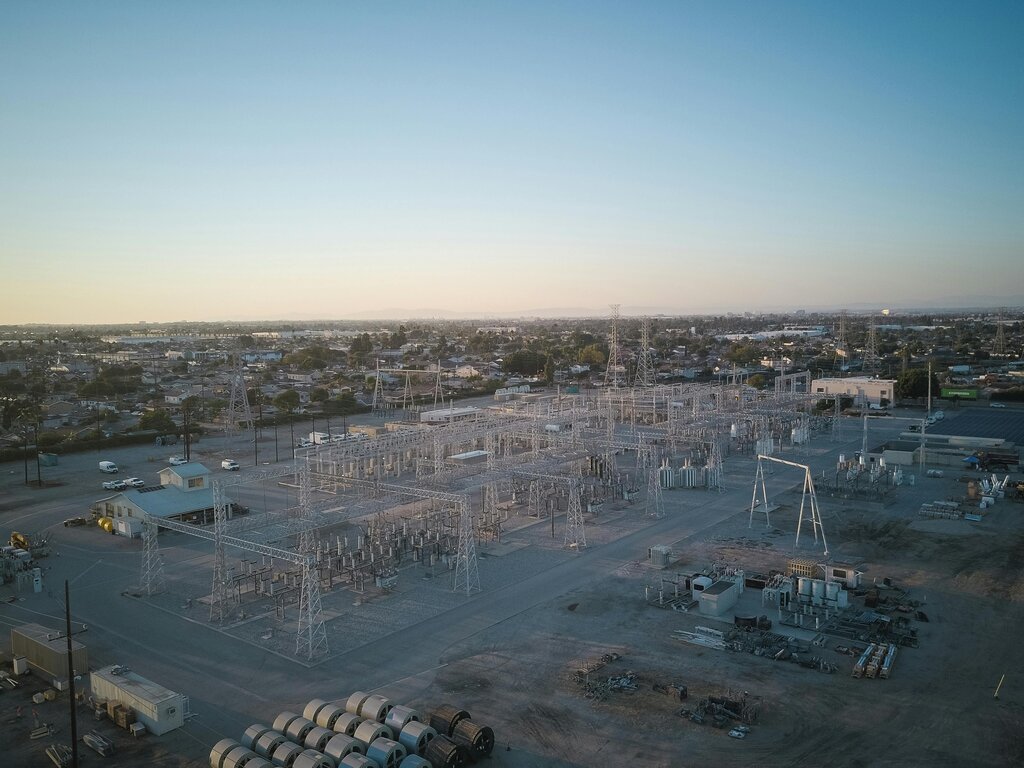
From the substation, power flows out through a series of main lines called feeders. These are the primary electrical arteries that run along major streets, either overhead on utility poles or underground. A single feeder might serve hundreds or even thousands of customers in a given area.
Of course, the voltage in a feeder is still far too high for your television or refrigerator. The final voltage reduction happens very close to the end-user, thanks to a distribution transformer.
These transformers might be the familiar gray cans mounted on utility poles in residential areas, or the large green metal boxes you see on the ground in commercial areas or newer subdivisions.
This last transformer takes the power from the feeder and steps it down one last time to the standard voltage used in homes, which is typically 120/240 volts in North America. From there, a final service line connects to the meter on the side of your house, and the journey is complete.
Reliability is Key
The distribution system's job isn't just to deliver power, but to do so reliably and efficiently. Most of the power outages that customers experience are due to problems on the distribution network, like a tree falling on a line, a car hitting a utility pole, or equipment failure.
Because of this, utility companies invest heavily in maintaining and upgrading their distribution infrastructure. The system is designed with protective devices like fuses and circuit breakers that can isolate a problem. This prevents a small issue, like a single downed power line, from causing a massive blackout across an entire city.
The distribution system is the unsung hero of the modern electrical grid. It works silently in the background, ensuring that the immense power of the transmission network is tamed and delivered precisely where it's needed, whenever we need it.
The primary objective of high-voltage transmission is to transport large amounts of electricity from generating stations to substations, where it can be transformed to lower voltage levels for distribution to consumers.
This handoff from transmission to distribution is fundamental. Without this carefully managed system of substations, feeders, and transformers, the electricity generated miles away would be useless for powering our daily lives.
What is the primary function of an electric utility distribution system?
Which component acts as the 'gateway' between the high-voltage transmission system and the lower-voltage distribution system?