Electric Guitar Launchpad
Gear Basics
The Anatomy of Your Guitar
Before you can play a note, it helps to know your way around the instrument. Let's look at the main parts of a standard electric guitar. Each piece has a specific job in creating sound and allowing you to play.
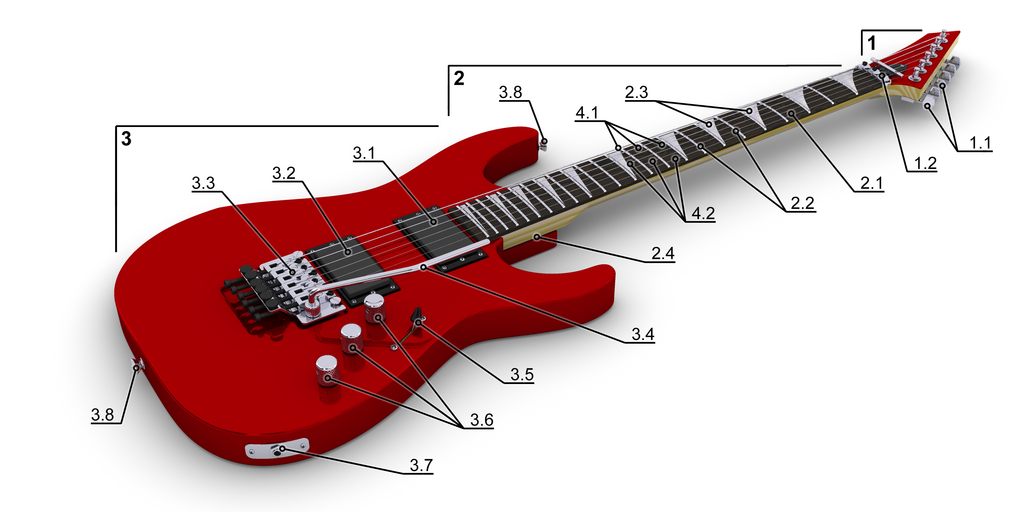
At the top, you have the headstock, which holds the tuning pegs. These pegs adjust the tension of the strings, which changes their pitch. The long piece you'll be pressing strings against is the neck, and the front surface with the metal bars is called the fretboard. Those metal bars are the frets.
The main body of the guitar holds the most important electronic components. The bridge is the metal piece on the body where the strings are anchored. Nearby, you'll see one or more rectangular components under the strings. These are the pickups, and they are the heart of your guitar's sound.
From Vibration to Voltage
An electric guitar doesn't have a large, hollow body to amplify sound like an acoustic guitar does. Instead, it uses electronics. When you pluck a steel string, it vibrates back and forth. The pickups under the strings contain magnets, and this vibration disturbs the magnetic field they create.
This disturbance creates a very small electrical signal. That signal is a perfect electronic copy of the string's vibration.
The guitar's volume knob controls how much of this signal gets sent out. The tone knob works like a filter, cutting out higher frequencies to make the sound warmer or darker. Twisting it makes the sound less sharp and more mellow.

Making it Loud
That tiny electrical signal from the pickups isn't loud enough to be heard on its own. It needs to be amplified. This is where the amplifier, or "amp," comes in. You connect your guitar to an amp using an instrument cable.
This creates a path for the electricity to travel, known as the signal chain—a simple but crucial concept. The signal flows from the guitar, through the cable, and into the amplifier, which then makes it loud enough to hear through its speaker.
Most basic amplifiers have a few common controls:
- Volume: This controls the final output level. It's how loud the sound is coming out of the speaker.
- Gain (or Drive): This controls how much the signal is boosted before the main volume control. Turning up the gain adds distortion or "crunch" to your sound.
- EQ (Equalizer): These knobs, often labeled Bass, Middle, and Treble, let you shape the tone. They adjust the low, mid-range, and high frequencies, respectively.
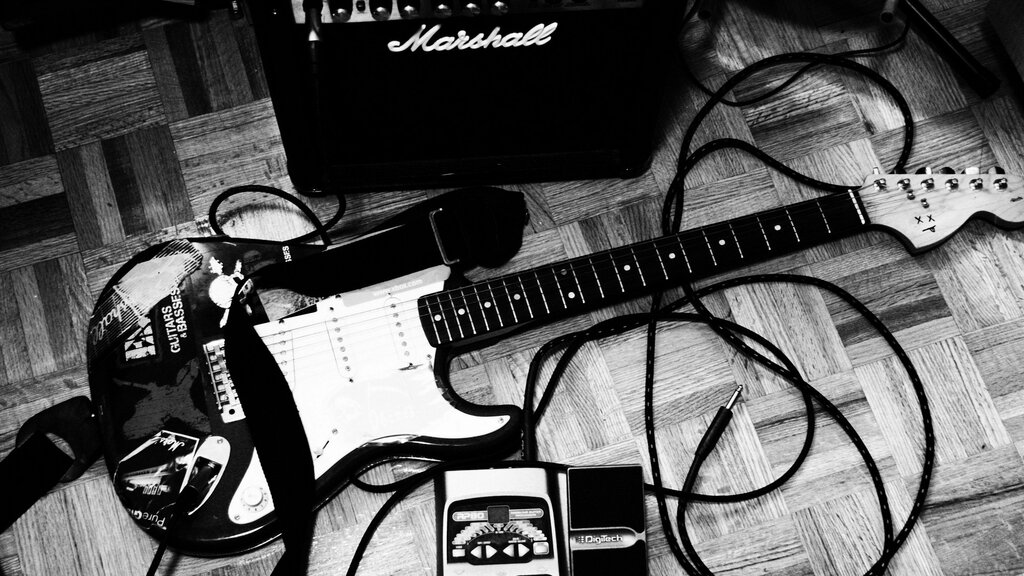
And that's it. Guitar, cable, amp. With these three pieces of gear, you have everything you need to start making music.