Electric Cars vs Gas Cars Environmental Impact
Vehicle Manufacturing
The Factory Footprint
Every new car, whether electric or gas-powered, begins its life in a factory. The process of stamping metal panels, molding plastics, and assembling thousands of parts is incredibly energy-intensive. Giant machines press, weld, and paint, all consuming vast amounts of electricity, which often comes from fossil-fuel-powered grids. So, from the very start, every vehicle has a carbon footprint before its wheels ever touch the pavement. This is often called its "embodied carbon."
While the basic chassis, interiors, and body panels of an EV and an internal combustion engine vehicle (ICEV) are quite similar, their manufacturing stories diverge significantly when we look at what makes them go: the powertrain.
Engines vs. Batteries
The heart of an ICEV is its engine, a complex machine with hundreds of moving parts. Manufacturing one involves melting and casting blocks of steel or aluminum, then precisely machining them to accommodate pistons, crankshafts, and valves. This multi-step process requires immense heat and energy.
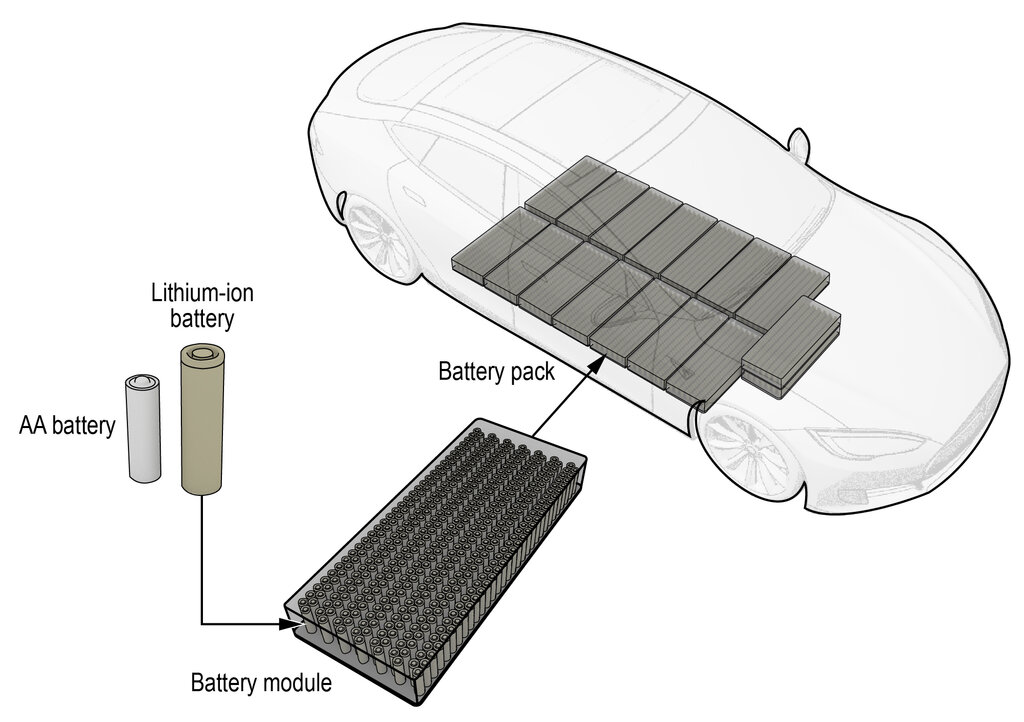
For an EV, the story is all about the battery. While the electric motor itself is relatively simple to produce compared to a combustion engine, the battery pack is another matter entirely. The environmental impact starts far away from the car factory, in mines across the world.
EV batteries require key minerals like lithium, cobalt, nickel, and manganese. Extracting these materials from the earth is an energy-intensive and often disruptive process.
Mining can lead to habitat destruction, soil erosion, and water contamination if not managed responsibly. After extraction, these raw materials must be refined to battery-grade purity, a process that consumes even more energy and chemicals.
Finally, the battery cells are assembled in highly controlled, sterile environments called "dry rooms." Maintaining these low-humidity conditions requires a constant, significant energy draw. The combination of mining, refining, and cell manufacturing means that producing an EV battery carries a heavy upfront carbon cost.
A Tale of Two Footprints
So, how do they stack up? When an EV rolls off the assembly line, it typically has a larger manufacturing footprint than its gasoline-powered counterpart. The majority of this difference comes from the energy and resources needed to produce its large lithium-ion battery.
EVs do not have exhausts pumping out emissions, but the raw materials that go into them have just as much embedded carbon, if not more, as their combustion equivalents.
This upfront environmental cost is a crucial piece of the puzzle. It's the carbon "debt" that an EV must pay off over its lifetime through zero tailpipe emissions. The table below breaks down the key differences in their manufacturing.
| Feature | Internal Combustion Engine Vehicle (ICEV) | Electric Vehicle (EV) |
|---|---|---|
| Key Component | Engine & Transmission | Battery Pack & Electric Motor |
| Primary Materials | Steel, Aluminum, various alloys | Lithium, Cobalt, Nickel, Copper, Aluminum |
| Main Impact Area | Energy for casting and machining engine parts | Mining, refining, and manufacturing battery cells |
| Upfront Emissions | Lower | Higher (due to battery production) |
This comparison isn't static. As battery manufacturing becomes more efficient and is powered by cleaner energy grids, the upfront footprint of EVs is expected to decrease. Likewise, innovations in battery chemistry aim to reduce or eliminate the need for an intensive mining process. For now, however, the factory is where the ICEV has an early environmental edge.
What is meant by a vehicle's "embodied carbon"?
What is the primary reason an electric vehicle typically has a larger manufacturing carbon footprint than a comparable gasoline-powered car?
Understanding the manufacturing stage is critical. It sets the baseline environmental cost for a vehicle before it's ever driven. Next, we'll explore what happens when these cars hit the road.