Elasticsearch for Vector Search
Introduction to Vector Search
Beyond Keyword Search
For decades, searching for information meant matching keywords. You type “best laptop for students,” and the search engine scans billions of documents for those exact words. This works, but it's a blunt instrument. It often misses what you really mean.
What if you searched for “cheap computer for college”? A keyword search might not connect that with the first query, even though the intent is nearly identical. It struggles with synonyms, context, and the nuances of human language. This is where vector search comes in. It’s a way to search based on meaning and similarity, not just word matching.
Unlike traditional databases (SQL and NoSQL) which look for exact matches, vector databases look for similar matches.
This approach unlocks a more intuitive way of finding information, allowing us to ask questions more naturally and get results that are conceptually related, not just textually identical.
Thinking in Vectors
How can a computer understand meaning? The secret lies in converting data into a universal language: numbers. AI models, specifically embedding models, act as translators. They take a piece of data—a sentence, an image, a song clip—and turn it into a list of numbers called a vector. This process creates what's known as a vector embedding.
A vector embedding is a numerical representation of data that captures its semantic features. Think of it as a coordinate that places the data in a vast, high-dimensional 'meaning map'.
On this map, items with similar meanings are placed close together. For example, the vectors for “king” and “queen” would be near each other. The vector for “throne” would also be in the same neighborhood, while the vector for “bicycle” would be far away. These relationships aren't just about simple connections; they can capture complex analogies. The distance and direction from “king” to “queen” might be very similar to the distance and direction from “man” to “woman”.
This isn't limited to text. An image of a golden retriever can be converted into a vector. A song by a specific artist has its own vector. This allows us to compare different types of data in the same mathematical space. An image of a dog can be considered 'close' to the text description “a fluffy canine friend.”
How Similarity Search Works
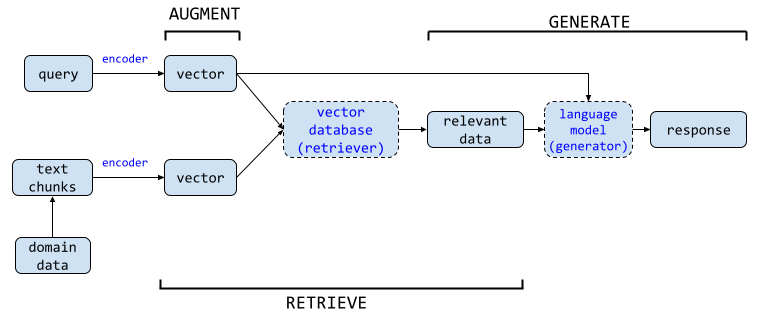
Once data is converted into a library of vector embeddings, searching becomes a matter of proximity. When you make a query, it’s first converted into its own vector using the same AI model. Then, the system searches the database for the vectors that are closest to your query vector. This is often called a similarity search or approximate nearest neighbor (ANN) search.
Instead of looking for exact keyword matches, the system finds the data points that are most similar in meaning.
This capability is transforming how we interact with technology. E-commerce sites use it to recommend products that are visually similar to one you’re viewing. Music streaming services suggest songs that have a similar vibe, not just the same genre. In Natural Language Processing (NLP), it powers more sophisticated chatbots and question-answering systems that understand the intent behind your words.
By representing data as vectors, we move from a rigid world of keywords to a fluid, contextual understanding of information. It’s a fundamental shift that makes AI applications smarter, more intuitive, and more helpful.
Ready to check your understanding?