Einstein's Relativity Explained
Introduction to Relativity
A Crack in the Foundation
For over two hundred years, Isaac Newton's laws of motion and gravity were the bedrock of physics. They described the world with stunning accuracy. From the arc of a thrown ball to the orbit of Mars, Newton's equations provided the answers. The universe, it seemed, was a giant, predictable clockwork machine.
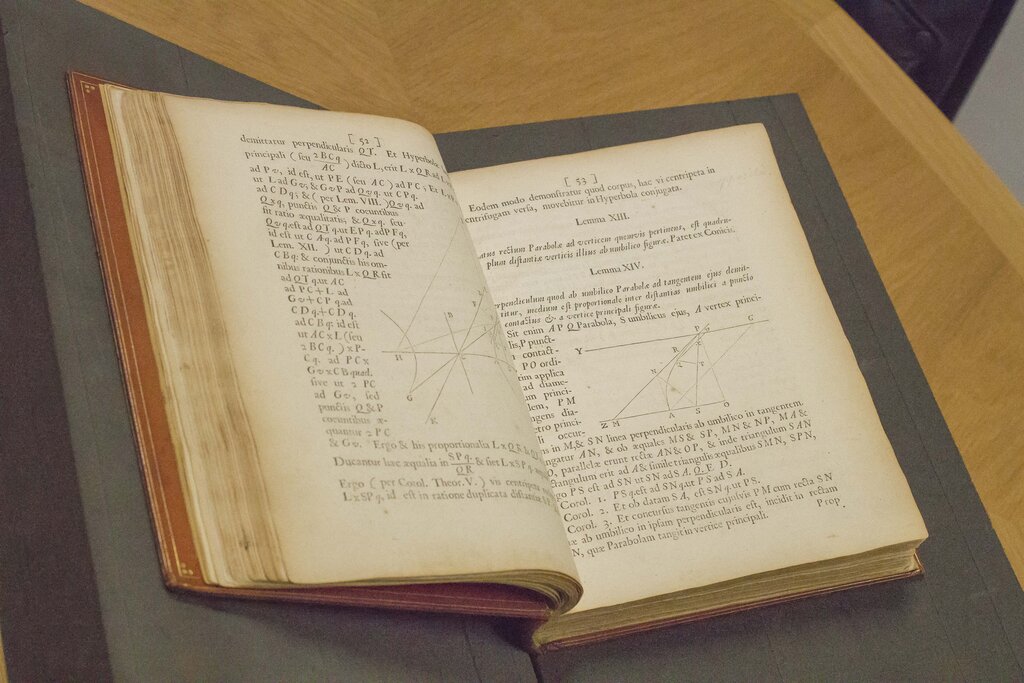
But as the 19th century came to a close, problems began to appear. Scientists studying electricity and magnetism, led by James Clerk Maxwell, developed a new set of equations. These equations described light as an electromagnetic wave and, crucially, predicted its speed. According to Maxwell, the speed of light was a universal constant, about 299,792 kilometers per second.
This created a major conflict. According to Newton's view of the world, speeds are relative. If you're on a train moving at 100 km/h and throw a ball forward at 20 km/h, someone standing on the platform would see the ball moving at 120 km/h. But Maxwell's equations suggested that if you were on a spaceship moving at half the speed of light and turned on a flashlight, both you and a stationary observer would measure the light from your flashlight traveling at the exact same speed.
Newton said speeds should add up. Maxwell said the speed of light never changes. They couldn't both be right.
Special Relativity's Two Rules
In 1905, a young patent clerk named Albert Einstein proposed a bold solution. He suggested that the problem wasn't with Maxwell's equations, but with our fundamental understanding of space and time. He built his new theory, called Special Relativity, on two simple but revolutionary ideas, known as postulates.
One of the cornerstone principles of the Theory of Special Relativity is the constancy of the speed of light.
The first postulate is the Principle of Relativity. This states that the laws of physics are the same for all observers who are not accelerating. Imagine being in a windowless train car moving on a perfectly smooth track. There's no experiment you could do inside the car to prove you're moving. A dropped ball would fall straight down, just as it would if the train were stationary. Motion is only relative to something else.
The second postulate is the Constancy of the Speed of Light. This accepts Maxwell's finding as a fundamental law of nature. The speed of light in a vacuum is the same for everyone, no matter how fast they're moving or how fast the source of the light is moving.
Accepting these two postulates means we have to abandon some common-sense ideas. If the speed of light is constant, then space and time must be flexible. They can stretch and shrink depending on your motion. This is the core of special relativity: it describes the physics of motion in the absence of gravity.
Adding Gravity to the Mix
Special relativity was a huge breakthrough, but it was incomplete. It didn't include gravity. For the next ten years, Einstein worked on a more comprehensive theory that could explain how gravity works in this new relativistic universe.
In 1915, he published his theory of General Relativity. This theory describes gravity not as a force, as Newton did, but as a curvature of spacetime caused by mass and energy. The more massive an object, the more it warps the fabric of spacetime around it. Planets orbit the sun not because they are being pulled by a force, but because they are following the straightest possible path through the curved spacetime created by the sun.
Think of it like placing a bowling ball on a trampoline. The ball creates a dip, and a marble rolled nearby will circle the dip, appearing to be attracted to the ball.
So, what's the difference? Special relativity deals with constant-speed motion and ignores gravity. General relativity is the theory of gravity and applies to all motion, including acceleration. It's the framework we use today to understand everything from the orbits of GPS satellites to the expansion of the universe and the behavior of black holes.
What fundamental conflict in 19th-century physics did Einstein's theory of Special Relativity resolve?
Which of the following best describes the "Principle of Relativity," one of the two postulates of Special Relativity?
These theories reshaped our understanding of the cosmos, showing that space and time are not a static backdrop but dynamic players in the story of the universe.