Einstein's Relativity Explained
Introduction to Relativity
Beyond Newton
For over two centuries, Isaac Newton's laws of motion and gravity were the bedrock of physics. They described why an apple falls from a tree and how planets orbit the sun with stunning accuracy. These laws worked so well that many believed the main work of physics was nearly finished.
But as the 19th century closed, a few nagging problems surfaced. Newton's mechanics, also known as classical mechanics, started to show cracks when dealing with things moving very, very fast, or when explaining the behavior of light and electricity. It became clear that while Newton's laws were perfect for the everyday world, they didn't tell the whole story.
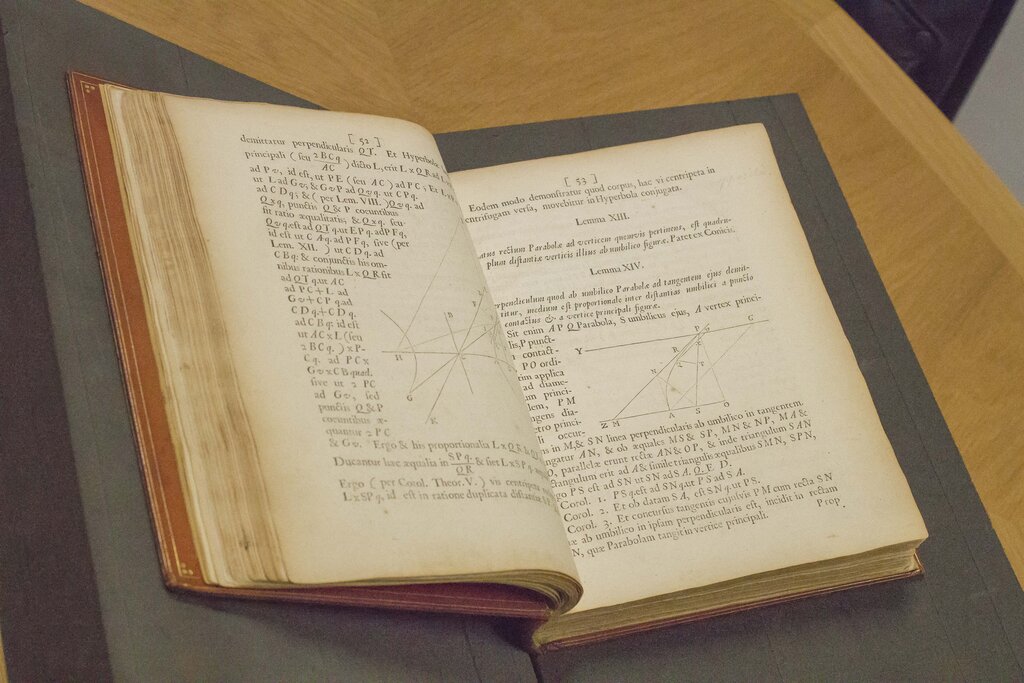
Physicists were trying to reconcile Newton's ideas with James Clerk Maxwell's brilliant new theory of electromagnetism. Maxwell's equations predicted that light was an electromagnetic wave that traveled at a specific, constant speed. This created a major conflict. According to Newton, speeds should always add up. If you're on a train moving 100 km/h and you throw a ball forward at 20 km/h, someone on the ground sees the ball moving at 120 km/h. Simple enough. But what if you turned on a flashlight? Would the light beam travel faster? The answer, surprisingly, was no.
A Universal Speed Limit
Experiments showed that the speed of light in a vacuum is always the same. It doesn't matter if you're standing still, flying in a jet, or speeding through space in a rocket. If you measure the speed of a light beam, you will always get the same value: about 299,792 kilometers per second.
This was a revolutionary idea. It broke the common-sense rules of adding speeds together. To solve this puzzle, Albert Einstein proposed a radical new framework in 1905 called special relativity. He started with two simple but powerful ideas:
- The laws of physics are the same for everyone in uniform motion.
- The speed of light in a vacuum is the same for all observers, regardless of their motion or the motion of the light source.
The consequences of that second point are mind-bending. If the speed of light is constant, then something else must be flexible. That something turned out to be space and time itself.
The Fabric of Spacetime
Einstein realized that space and time are not separate and absolute, as Newton had thought. Instead, they are deeply connected, woven together into a single, four-dimensional continuum called spacetime. You can move through space, and you are always moving through time. For Einstein, these two were different directions in the same unified reality.
This concept of spacetime resolved the light speed puzzle. To keep the speed of light constant for all observers, time can slow down and space can contract for objects moving at very high speeds, relative to a stationary observer. This isn't a trick of perception; it's a real physical effect.
But Einstein wasn't done. His theory of special relativity only applied to uniform motion. What about acceleration? And what about gravity? This led him to his greatest achievement: the theory of general relativity.
Gravity as Geometry
Newton described gravity as a mysterious force that acts instantaneously across vast distances. Einstein offered a different picture. He proposed that gravity is not a force at all, but a consequence of the curvature of spacetime. Massive objects warp the spacetime around them. Other objects then move along these curves.
Think of a bowling ball on a trampoline. The heavy ball creates a dip in the fabric. If you roll a marble nearby, it won't travel in a straight line; it will curve towards the bowling ball, caught in the dip. According to Einstein, this is what happens with planets. The sun is a massive object that curves the spacetime around it, and the Earth follows that curvature, resulting in its orbit.
This insight is captured in the equivalence principle, a key idea in general relativity. It states that the effects of gravity are indistinguishable from the effects of acceleration. If you are in a windowless elevator accelerating upwards in deep space, the feeling is identical to standing still in a gravitational field like Earth's. You would feel pressed to the floor in both cases. This simple idea has profound implications, suggesting that gravity is fundamentally linked to the geometry of spacetime.
In essence, Einstein replaced Newton's 'force' of gravity with the 'curvature' of spacetime. Mass tells spacetime how to curve, and the curvature of spacetime tells mass how to move.
This new understanding of gravity and spacetime revolutionized our view of the cosmos. It predicted black holes, gravitational waves, and the expansion of the universe, concepts that were once pure theory but are now central to modern astronomy.