Einstein and the Nobel Prize
Introduction to the Photoelectric Effect
Light's Strange Kick
Sometimes in science, an accidental observation completely changes how we see the world. The photoelectric effect is one of those cases. In simple terms, it's what happens when light shines on a material, like a piece of metal, and knocks electrons loose.
photoelectric effect
noun
The emission of electrons from a material when light shines on it.
Think of it like a game of billiards. The light acts like the cue ball, and the electrons are the other balls sitting on the table. A strike from the cue ball can send another ball flying. But as scientists in the late 19th century discovered, the rules of this game were very strange.
A Puzzling Discovery
The story begins in 1887 with Heinrich Hertz. He was busy proving the existence of electromagnetic waves—the very waves we use for radio today. During his experiments, he noticed something odd. When ultraviolet light shone on the metal conductors in his setup, the sparks they produced jumped more easily.
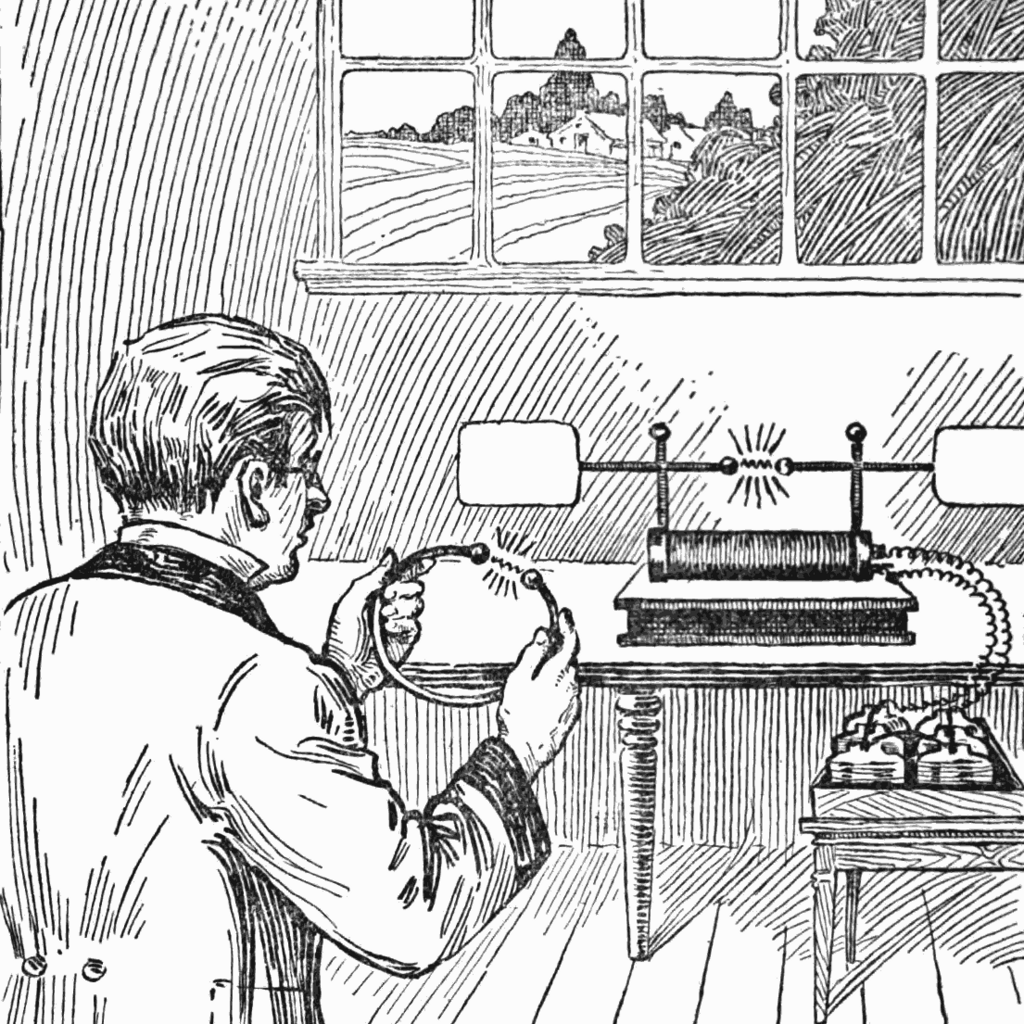
Hertz recorded the observation but didn't pursue it. It was a curiosity, a footnote to his main work. A few years later, in 1902, another physicist named Philipp Lenard took a closer look. He built an experiment where light hit a metal plate inside a vacuum tube, and he measured the electrons that were ejected.
Lenard's results were baffling. They directly contradicted the well-established theory of the time: that light was a wave.
He found that making the light brighter caused more electrons to fly off, but it didn't make them fly any faster. And for each metal, there was a specific color of light—a cutoff frequency—below which no electrons were emitted at all, no matter how bright the light was.
When a Wave Doesn't Wave
According to the classical wave theory of light, energy is delivered continuously, spread out over the wave. A brighter, more intense light is a more powerful wave. Imagine ocean waves hitting a beach. A bigger, more powerful wave will send water much farther up the sand. By this logic, a brighter light should eject electrons with more energy, making them move faster. But Lenard's experiment showed this was wrong. The energy of the ejected electrons depended only on the light's color (its frequency), not its brightness (its intensity).
There was another problem. The wave theory predicted that if you used very dim light, it should take some time for the metal to absorb enough energy to finally kick an electron out. But in reality, the electrons were ejected the instant the light hit the surface, with no detectable delay.
Classical physics was stumped. The theory that had perfectly described light for centuries was failing to explain this simple experiment. The stage was set for a revolution.
Einstein's Radical Idea
In 1905, a young Albert Einstein proposed a bold solution. He suggested that we should think about light not as a continuous wave, but as a stream of tiny, discrete packets of energy. He called these packets "light quanta," though we know them today as photons.
In this new picture, each photon carries a specific amount of energy determined by its frequency (its color). A photon of blue light has more energy than a photon of red light. When light hits the metal, it's a series of one-on-one collisions between photons and electrons.
An electron can only be knocked out if it gets hit by a single photon with enough energy to do the job. If the photon's energy is below that threshold, nothing happens. It doesn't matter how many low-energy photons you send—it's like trying to knock down a bowling pin by throwing a thousand ping-pong balls at it. You need one good throw with a bowling ball.
This elegantly explained all the mysteries. The energy of the ejected electron depends on the energy of the single photon that hit it (the light's frequency), not the number of photons (the light's intensity). And since the energy is delivered in a single, concentrated packet, the emission is instantaneous. There's no waiting for energy to build up.
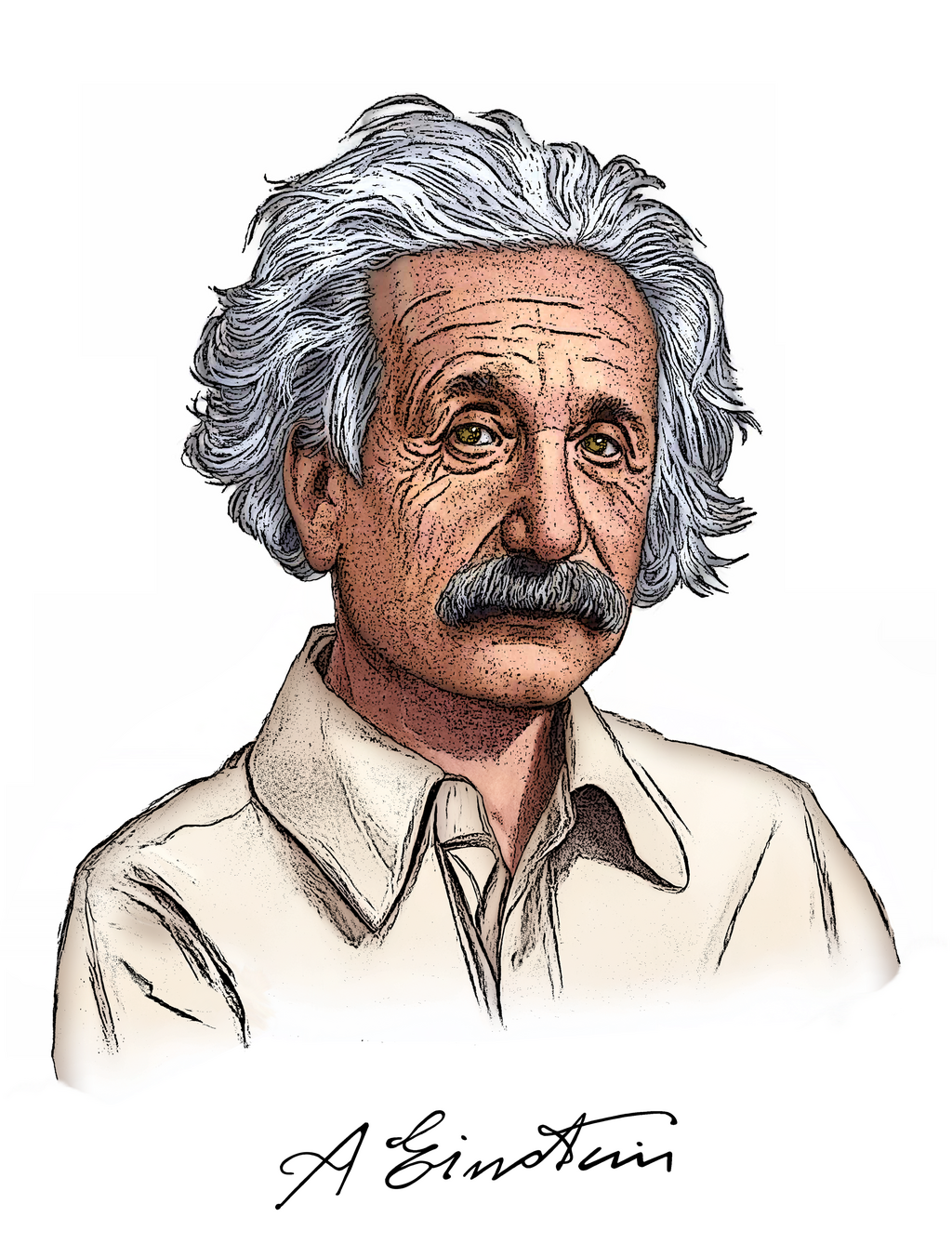
Einstein's idea was radical. It suggested light was both a wave and a particle, a concept that became a cornerstone of quantum mechanics. While his theory of relativity would make him a global celebrity, it was his work on the photoelectric effect—this strange, stubborn experimental result—that won him the Nobel Prize and helped launch the quantum revolution.
Let's test your understanding of these foundational ideas.
Who first observed that shining ultraviolet light on metal conductors made sparks jump more easily, an early observation related to the photoelectric effect?
According to the classical wave theory of light, what should happen if a very dim light is shone on a metal surface?