Eigenfunction Expansion for PDEs
Introduction to Partial Differential Equations
Equations That Shape Our World
Many things in the universe don't just depend on one variable. The temperature of a metal bar, for instance, changes not only over time but also along its length. The shape of a vibrating guitar string depends on both its position and the moment in time you look at it. To describe these situations mathematically, we need a special kind of tool: partial differential equations, or PDEs.
A partial differential equation is an equation that involves an unknown function of two or more independent variables and its partial derivatives.
Unlike ordinary differential equations (ODEs), which deal with functions of a single variable, PDEs tackle the complexity of multi-variable systems. This makes them essential for modeling everything from heat flow and wave propagation to fluid dynamics and financial markets.
Let's look at a famous example, the heat equation in one dimension:
Here, represents the temperature at a position and time . The term is the partial derivative of temperature with respect to time; it tells us how quickly the temperature is changing at a fixed point. The term describes the curvature of the temperature profile along the bar. The equation states that the rate of temperature change at a point is proportional to how 'curved' the temperature is around it. If a point is hotter than its neighbors (a peak), it will cool down. If it's cooler (a valley), it will warm up.
Three Flavors of PDEs
PDEs are often classified into three main categories based on their mathematical properties: elliptic, parabolic, and hyperbolic. This isn't just abstract labeling; the category tells us about the nature of the physical system being described and hints at how to solve the equation.
The classification for a general second-order linear PDE, , depends on the value of the discriminant, .
| Type | Discriminant Condition | Physical Behavior | Classic Example |
|---|---|---|---|
| Elliptic | Steady-state, equilibrium | Laplace's Equation | |
| Parabolic | Diffusion, evolution over time | Heat Equation | |
| Hyperbolic | Wave propagation | Wave Equation |
Elliptic PDEs describe systems that have reached a state of equilibrium or balance. Think of a stretched soap film on a wire loop. The height of the film at any point depends on the height of the entire boundary. The information is spread throughout the domain instantly. The classic example is Laplace's equation, which is used in electrostatics and steady-state heat flow.
Parabolic PDEs model diffusion-like processes that evolve forward in time. The prime example is the heat equation. The temperature at a future time depends on the current temperature distribution. These processes tend to smooth things out; sharp differences in temperature will quickly dissipate.
Hyperbolic PDEs describe phenomena where disturbances travel at a finite speed, like waves. The wave equation, which models a vibrating string or the propagation of sound, is the quintessential hyperbolic PDE. A key feature is the conservation of information; the initial shape of a wave influences its shape as it travels, without immediately smoothing out.
PDEs in Action
The applications of partial differential equations are incredibly vast and form the bedrock of modern physics and engineering.
In fluid dynamics, the Navier-Stokes equations—a complex set of PDEs—are used to model weather patterns, ocean currents, and the airflow around an airplane wing.
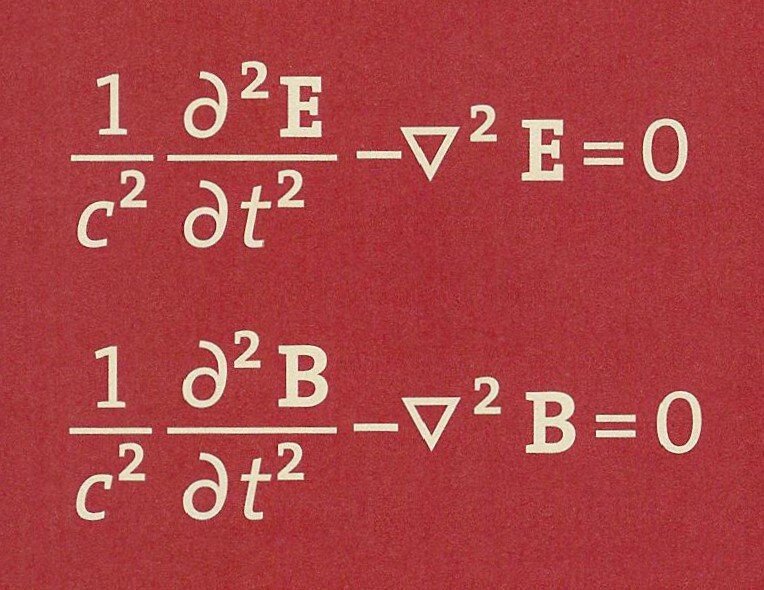
In electromagnetism, Maxwell's equations describe how electric and magnetic fields are generated and interact, forming the basis for all modern electronics and communications.
And in quantum mechanics, the Schrödinger equation is a fundamental PDE that governs the behavior of atoms and subatomic particles, describing their wave-like properties.
Understanding the basic concepts and classifications of PDEs is the first step toward harnessing their power to model and solve complex problems in the world around us.
What is the fundamental characteristic that distinguishes a Partial Differential Equation (PDE) from an Ordinary Differential Equation (ODE)?
In the context of the heat equation, , what does it mean if the term is negative at a certain point?