Effective Parenting Strategies
Child Development Basics
The Paths of Growth
A child's journey from infancy to adolescence is a remarkable process of transformation. This growth isn't just about getting bigger; it unfolds across four distinct but interconnected areas: physical, cognitive, emotional, and social. Think of these as four paths that a child walks simultaneously. Each path has its own milestones, but they all wind together to shape the whole person.
Building the Body
Physical development is the most visible type of growth. It includes everything from gaining height and weight to developing coordination and strength. We often track this progress through milestones, which are key skills that most children achieve within a certain age range.
This development is split into two main categories:
- Gross motor skills: These involve the large muscles in the arms, legs, and torso. They are the skills needed for big movements like rolling over, sitting up, crawling, walking, and jumping.
- Fine motor skills: These use the small muscles in the hands and fingers. They allow for precise actions like grasping a toy, picking up small objects, using a crayon, and tying shoelaces.
| Age Range | Gross Motor Milestone | Fine Motor Milestone |
|---|---|---|
| Infancy (0-1) | Lifts head, rolls over, sits without support | Grasps objects, brings hands to mouth |
| Toddlerhood (1-3) | Walks, runs, climbs stairs | Scribbles with a crayon, stacks blocks |
| Preschool (3-5) | Hops on one foot, rides a tricycle | Cuts with scissors, draws simple shapes |
| School-Age (6-12) | Rides a bike, plays sports | Writes clearly, ties shoes |
A Mind in the Making
Cognitive development is all about how a child's thinking and understanding of the world evolves. It covers memory, problem-solving, language, and the ability to reason. Early on, a baby learns that an object still exists even when they can't see it—a huge leap called object permanence. As they grow, their thinking becomes more complex.
A toddler might sort blocks by color, showing an emerging ability to categorize. A school-aged child can follow multi-step instructions and understand cause and effect. Later, an adolescent begins to think abstractly, grappling with concepts like justice, morality, and their own identity.
This progression shows how a child's mind builds on earlier skills to tackle increasingly complex challenges.
Feelings and Friendships
Emotional and social development are deeply intertwined. Emotional growth involves learning to identify, express, and manage feelings. A baby cries to show distress, while a toddler might throw a tantrum out of frustration because they don't yet have the words to express their big emotions. Over time, children learn to use language to describe their feelings and develop strategies for coping with them.
Social development is about how children learn to interact with others. An infant is fascinated by faces. A toddler engages in 'parallel play,' playing alongside other children but not directly with them. A preschooler starts to learn about sharing and taking turns. By school age, friendships become more complex, built on trust and shared interests. Through these interactions, children learn social rules, empathy, and how to see things from another person's perspective.
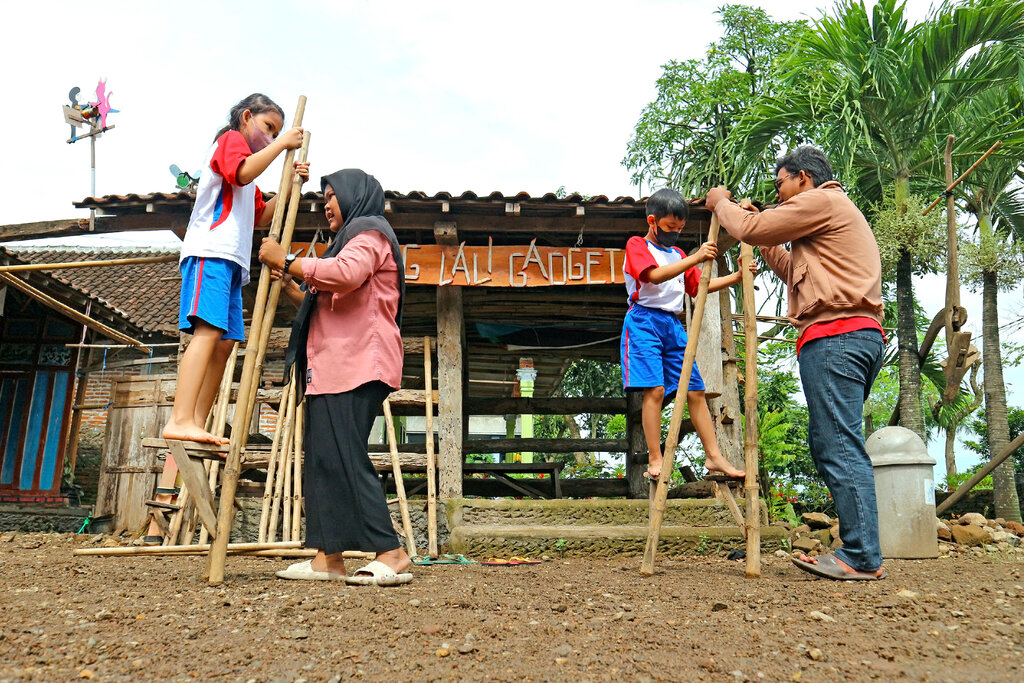
These four paths of development don't progress in isolation. Learning to crawl (physical) allows a baby to explore new parts of a room and discover new objects (cognitive). Learning to share a toy (social) requires managing the frustration of not having it (emotional). Every new skill is a product of growth in multiple areas.
Early experiences matter tremendously. The first few years of life are a period of rapid brain development. Positive, stable relationships and a stimulating environment create a strong foundation for all future learning and growth.
Finally, every child's journey is unique. While developmental milestones provide a general guide, children grow at their own pace. This individuality is shaped by a mix of genetics (nature) and their environment, relationships, and experiences (nurture). Understanding these basic principles helps in appreciating the incredible journey each child takes.
The development of large muscle groups for actions like walking, jumping, and sitting up falls under which category of skills?
A child learning that a toy still exists even after it's hidden under a blanket is a major cognitive milestone known as object permanence.