Effective ESOL Instruction for Adult Refugees in the UK
Understanding Refugee Learners
The Journey's Weight
Leaving one's home isn't a simple act of moving. For a refugee, it's often a sudden, violent tear from everything they know. This experience, known as displacement, leaves deep psychological marks. Imagine losing your home, your community, and perhaps family members, all at once. The journey to safety is often perilous, and the arrival in a new country brings a new set of stressors.
Learners may be dealing with grief, anxiety about the future, and concern for loved ones left behind. The process of seeking asylum is long and uncertain, adding another layer of constant stress. This isn't just background noise; it directly affects their ability to learn. Memory, concentration, and motivation can all be impacted by this heavy psychological load.
Beyond a Single Story
The term 'refugee' describes a legal status, not a person. Your learners will come from a vast range of countries, cultures, and backgrounds. One may be a surgeon from Syria, another a farmer from Sudan. Their educational experiences will be just as diverse, from postgraduate degrees to no formal schooling at all.
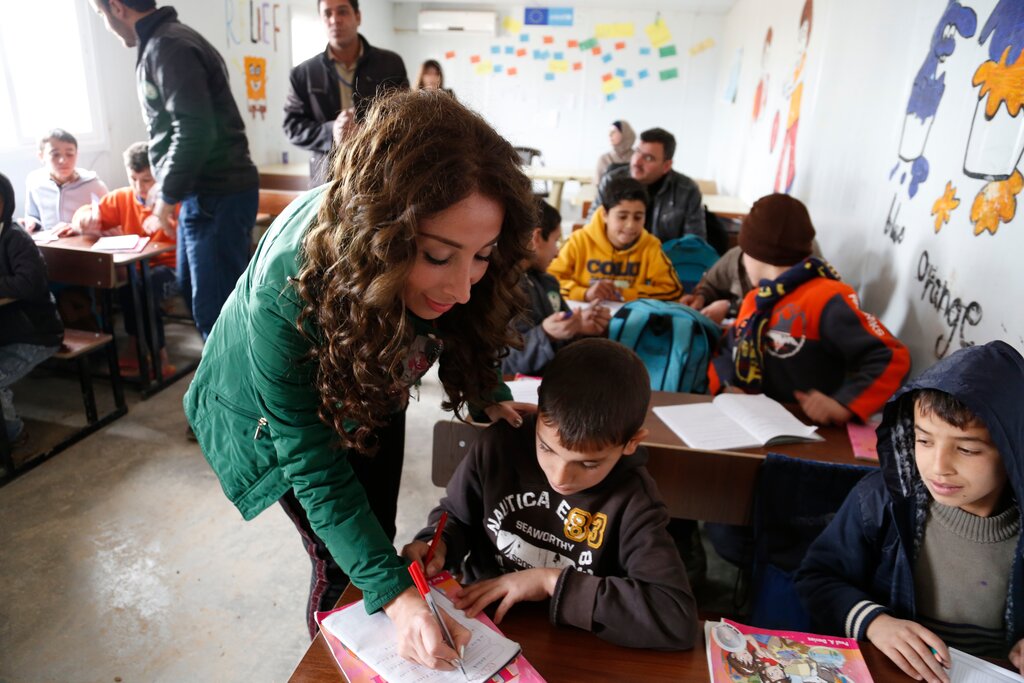
Cultural norms around teaching and learning can vary dramatically. In some cultures, students are expected to listen passively and never question the teacher. In others, active debate is encouraged. There may also be different understandings of time, personal space, and communication styles. The key is to avoid assumptions. Get to know each learner as an individual, with a unique history and perspective.
A Trauma-Informed Approach
Many refugees have experienced trauma. This could be from war, persecution, or the dangerous journey to safety. A trauma-informed approach doesn't mean you're a therapist. It means you understand the potential prevalence of trauma and create a learning environment that promotes healing and avoids re-traumatization.
The core principle is shifting the question from “What’s wrong with you?” to “What happened to you?” This simple change fosters empathy and understanding, creating a foundation of safety and trust.
This approach is built on five key pillars:
- Safety: Creating a predictable and calm environment, both physically and emotionally.
- Trustworthiness: Being consistent, reliable, and clear in your communication.
- Choice: Giving learners a sense of agency by offering choices whenever possible.
- Collaboration: Working with learners, not just teaching at them. Value their input and experience.
- Empowerment: Focusing on strengths and building skills to help learners regain a sense of control over their lives.
Recognizing the Signs
Trauma can manifest in many ways. Recognizing potential signs can help you respond with patience and understanding. Remember, your role is not to diagnose, but to notice and support. Some learners may show no obvious signs, while others might display several.
| Category | Potential Signs |
|---|---|
| Cognitive | Difficulty concentrating, memory problems, confusion. |
| Emotional | Sudden mood swings, anxiety, irritability, numbness. |
| Behavioral | Withdrawal from the group, being easily startled, avoiding certain topics. |
| Physical | Chronic fatigue, headaches, unexplained aches and pains. |
If a student suddenly becomes withdrawn or agitated, a trauma-informed response is to consider what might have triggered this reaction. Was it a loud noise? A topic of discussion? This awareness allows you to adapt your approach with compassion.
Adapting Your Teaching
Adapting your methods doesn't require a complete overhaul. Small, thoughtful changes can make a huge difference in creating a supportive space where trauma-affected learners can thrive.
Start by establishing clear and predictable routines. Knowing what to expect each day reduces anxiety and creates a sense of stability. Write a simple agenda on the board at the start of every class.
Offer choices to restore a sense of control. This can be as simple as letting learners choose between two different activities or deciding whether to work alone or in a pair.
Break down complex information into small, manageable steps. Use clear, simple language and plenty of visuals to support understanding. Check for comprehension frequently, but in a low-pressure way. Patience is essential; learning a new language is hard enough without the added weight of trauma.
Above all, focus on building positive relationships. A warm smile and a genuine interest in your learners as individuals can build the trust they need to feel safe and ready to learn.
According to the text, the psychological stress of displacement primarily affects a refugee's ability to learn by:
Which of the following is NOT one of the five key pillars of a trauma-informed approach?
These practices help create a classroom that is not only effective for learning English but is also a space of welcome, safety, and respect.