Effective Collaboration in K-12 Central Offices
Understanding K-12 Central Office Roles
The District's Command Center
Think of a school district's central office as its brain and nervous system. While teachers and principals work directly with students in schools, the central office provides the essential support, resources, and direction that make their work possible. Its primary job is to handle the district-wide functions that allow individual schools to focus on learning.
The specific structure can vary greatly depending on the size of the district. A small, rural district might have a handful of people wearing many hats, while a large urban district will have specialized departments for different functions. However, most central offices follow a similar hierarchical pattern.
At the top sits the Superintendent, who is hired by the elected school board and serves as the district's chief executive officer. Reporting to the superintendent are several key departments, each with a distinct area of focus.
Who Does What?
Each department in the central office handles a critical piece of the educational puzzle. Understanding their roles is the first step in seeing how the entire system works together.
| Department | Primary Responsibilities |
|---|---|
| Curriculum & Instruction | This is the academic core of the district. They decide what students should learn and when (the curriculum), ensure teachers have the right materials, and provide professional development to help educators improve their craft. |
| Human Resources (HR) | HR manages the people. This department is responsible for recruiting, hiring, and retaining teachers, administrators, and support staff. They also handle payroll, benefits, and employee relations. |
| Finance & Operations | This department manages the money and the physical infrastructure. They create the district budget, oversee spending, and manage facilities, maintenance, student transportation, and food services. |
| Student Services | This group focuses on supporting the whole child. They oversee special education programs, school counseling, nursing and health services, and student discipline policies. Their goal is to remove barriers to learning. |
| Technology | In a modern district, the technology department is crucial. They manage the computer networks, student and staff devices, instructional software, and the systems that store student data securely. |
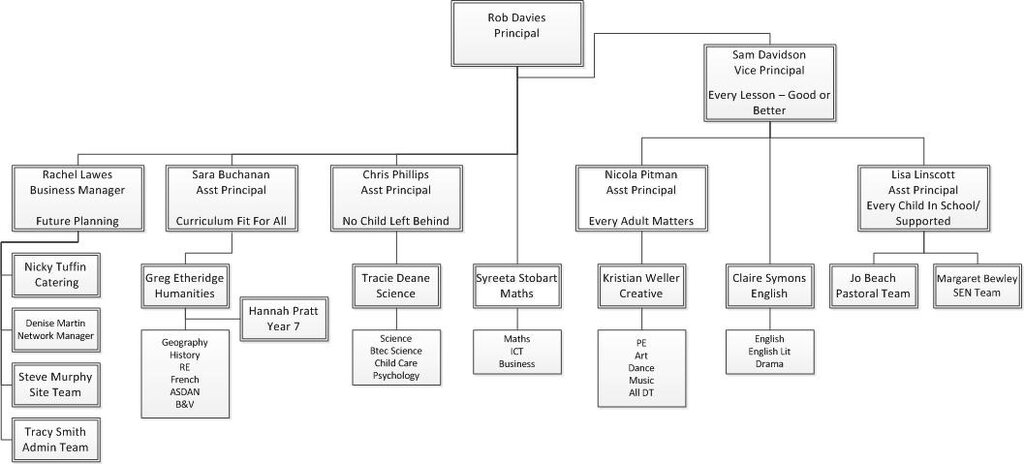
Connecting the Dots
No department works in a vacuum. Effective school districts rely on constant collaboration between these central office teams. When they work together, they create a seamless support system for schools.
For example, when the Curriculum department decides to adopt a new digital math program, they must work with Technology to ensure schools have the right devices and network capacity. They also need to coordinate with Finance to budget for the purchase and with HR to plan for teacher training.
This interconnectedness is vital. A breakdown in communication between departments can lead to problems at the school level. A new teacher might be hired by HR without the Curriculum department knowing they need specific training, or a school building's internet might not be ready for a new online testing initiative. When collaboration is strong, resources are used efficiently and schools get the support they need to help students succeed.
These principles clarify the respective roles of educators, learners, and technologies in shaping curricula, designing instruction, assessing learning, and cultivating community.
Now that you have a map of the central office, you can see how each role contributes to the district's larger mission.
What is the primary job of a school district's central office?
Who serves as the chief executive officer of the school district and is hired by the school board?