Effective Assignment Time Management
Academic Eisenhower Matrix
Beyond the To-Do List
As a university student, you're familiar with the constant tug-of-war for your attention. Deadlines loom, readings pile up, and social events beckon. You already know the basics of time management, but let's move beyond simple to-do lists. The key to academic success isn't just managing time; it's managing priorities. The Eisenhower Matrix is a powerful tool for this, helping you sort tasks by urgency and importance.
But in academia, 'importance' has a very specific meaning. It's not just a feeling; it's directly tied to your final grade. A task's weight in your module's grading rubric is the ultimate measure of its importance.
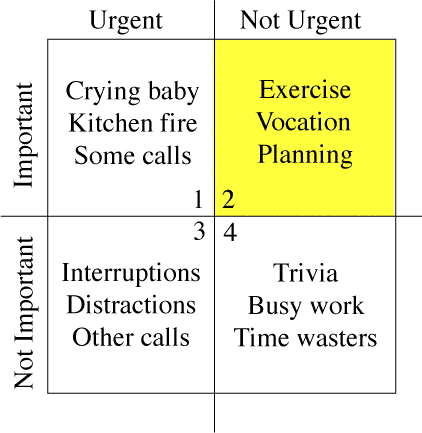
Decoding Your Academic Tasks
Let's break down the matrix in a university context. Everything you have to do, academic or otherwise, can be placed into one of four quadrants.
Quadrant 1: Urgent & Important (Do) These are the tasks with immediate, high-stakes consequences. Think of a 15% quiz that's happening tomorrow, or a major project due at midnight. These tasks demand your immediate attention.
Quadrant 2: Not Urgent & Important (Plan) This is where strategic students thrive. These tasks are important for your grade but aren't due right away. A 40% research paper due in three weeks lives here. So does studying for final exams, networking for post-grad opportunities, or reviewing lecture notes from the first month of term. Neglecting this quadrant leads to everything eventually becoming a Quadrant 1 crisis.
Quadrant 3: Urgent & Not Important (Delegate/Minimise) These are the time sinks. They feel urgent but have little to no impact on your academic goals. Examples include responding to non-essential emails immediately, attending an optional club meeting with no clear purpose, or running errands for a housemate right when you planned to study. The urgency is often set by others, not by your own priorities.
Quadrant 4: Not Urgent & Not Important (Eliminate) This quadrant is for activities that are neither urgent nor important. Endless social media scrolling, binge-watching a TV series during a busy week, or worrying about a grade from a past assignment you can't change. These are tasks to consciously reduce or eliminate to free up valuable time and mental energy.
Quadrant 2: The Strategy Zone
The most successful students spend most of their time in Quadrant 2. It’s about proactive planning, not reactive fire-fighting. When you look at your semester, identify the heaviest-weighted assignments on your grading rubrics. These are your Quadrant 2 cornerstones.
Take that 40% research paper. It’s far more 'important' than the 15% quiz due tomorrow. While the quiz is urgent, you can't let it completely derail progress on the paper. A smart approach would be to allocate a specific, limited time block to study for the quiz (Quadrant 1), and then dedicate a separate, protected block of time to work on a small part of the research paper (Quadrant 2), like drafting an outline or finding sources. This prevents the 'tyranny of the urgent' from consuming all your focus.
Your personal life fits into this matrix, too. Commitments like part-time work, sports practice, or significant family events are often important. Some are urgent (your shift starts in an hour), while others are not (a family wedding next month). By placing these on the matrix alongside your academic tasks, you get a holistic view of your time. This allows you to see trade-offs clearly. Maybe you can't take an extra shift at work (Quadrant 3) because you need that time for your final project (Quadrant 2).
This method moves you from a reactive state, where your day is dictated by whatever feels most urgent, to a proactive one. You decide what matters most based on clear criteria, which is the and your long-term goals, and you allocate your energy accordingly.
According to the Eisenhower Matrix as applied to university studies, what is the most accurate measure of a task's 'importance'?
A major research paper worth 40% of your grade is due in one month. In which quadrant of the Eisenhower Matrix does this task initially belong?
Applying this framework consistently helps reduce stress and improves the quality of your work. You're no longer just busy; you're effective.