EEG Data Analysis
Introduction to EEG
The Brain's Electrical Symphony
Your brain is always busy. Even when you're sleeping, billions of tiny cells called neurons are firing, sending messages to each other. This communication isn't silent; it's electric. Neurons generate tiny electrical pulses, creating a constant hum of activity throughout your brain. Electroencephalography, or EEG, is a way to listen in on this electrical conversation.
The technique was first discovered by German psychiatrist Hans Berger in the 1920s. He was the first to record the brain's faint electrical signals from the human scalp, naming these rhythmic patterns "brain waves." It was a revolutionary discovery that opened a new window into the workings of the mind.
How It Works
So, how can we measure something happening deep inside the skull from the outside? It’s a bit like listening to the roar of a crowd from outside a stadium. You can't hear individual conversations, but you can get a good sense of the crowd's overall excitement.
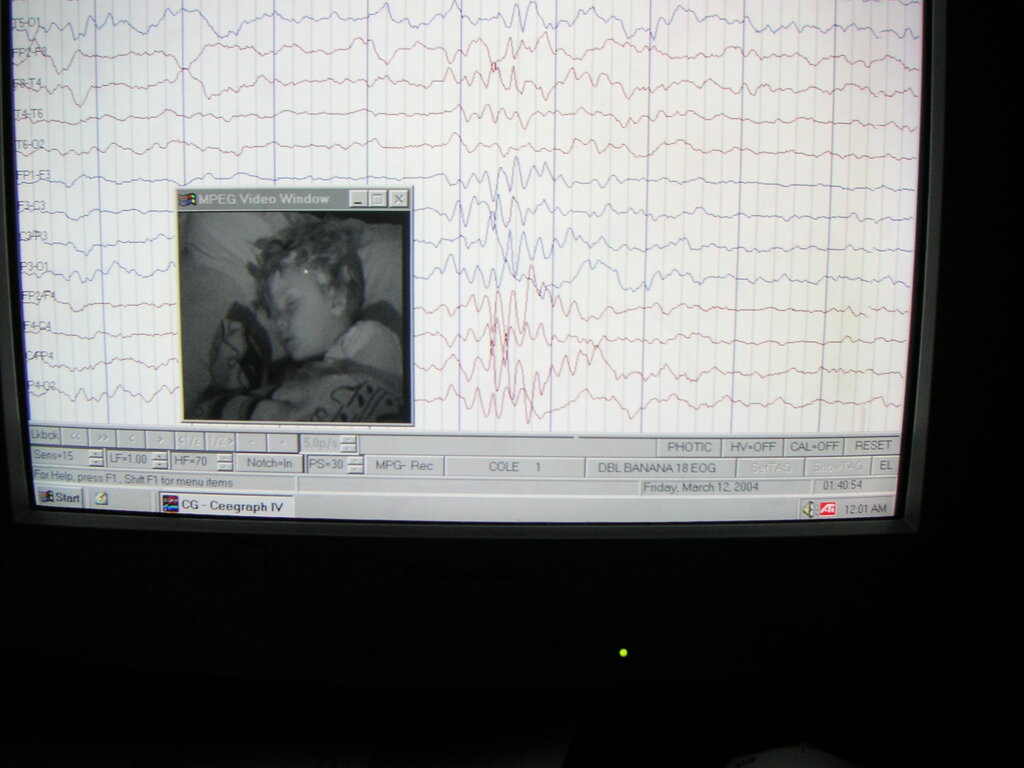
Similarly, an EEG doesn't record the activity of a single neuron. Instead, small metal discs called electrodes are placed on the scalp. These electrodes are sensitive enough to detect the combined electrical activity of millions of neurons firing together in the cerebral cortex, the brain's outer layer. The signals are very weak, so they are amplified and recorded, creating a visual representation of brain activity over time.
This recorded activity isn't just random noise. It follows distinct patterns, or frequencies, known as brain waves.
Brain Waves
Brain waves are categorized based on their frequency, which is measured in cycles per second, or Hertz (Hz). Different states of consciousness, like being awake and focused, relaxed, or deeply asleep, are associated with different dominant brain waves. Think of it like a musical score; sometimes the tempo is fast and complex, and other times it's slow and simple.
| Wave Type | Frequency (Hz) | Associated State |
|---|---|---|
| Gamma | > 30 Hz | High-level information processing, concentration |
| Beta | 13-30 Hz | Active, busy thinking, focused attention |
| Alpha | 8-13 Hz | Awake but relaxed, calm, creative state |
| Theta | 4-8 Hz | Drowsiness, light sleep, deep meditation |
| Delta | < 4 Hz | Deep, dreamless sleep, unconsciousness |
No single brain wave is ever firing alone. Your overall mental state is a product of the complex interplay between all of these different frequencies, with certain ones becoming more dominant depending on what you're doing.
What EEG is Used For
Because EEG provides a real-time look at brain function, it has a wide range of applications in both medicine and research. In a clinical setting, it's a vital tool for diagnosing conditions that affect the brain's electrical activity.
Neurologists use EEG to diagnose and monitor epilepsy, as seizures are caused by sudden, abnormal bursts of electrical activity. It's also used to study sleep disorders, evaluate brain function after a head injury or stroke, and sometimes to help determine if a patient in a coma has any brain activity.
In research, EEG helps scientists understand the brain processes behind thinking, learning, memory, and emotion. By presenting a person with a specific stimulus, like a sound or an image, researchers can observe the immediate electrical response in the brain. This helps them map which parts of the brain are involved in different cognitive tasks and how quickly the brain processes information.
From diagnosing sleep disorders to understanding how we learn, EEG gives us a direct, non-invasive glimpse into the brain's dynamic electrical landscape.
Let's check your understanding of these core concepts.
Who is credited with first recording the brain's electrical signals from the human scalp?
What does an EEG primarily measure?
By measuring the collective hum of our neurons, EEG provides a powerful way to study the brain in action.