Eduqas GCSE Design Technology
Impact of Technology
The Forces Driving Innovation
New products don't just appear out of nowhere. They are born from two key forces that constantly shape the world of design and technology: technology push and market pull.
Technology push happens when new scientific discoveries or manufacturing capabilities make it possible to create a new product. Companies develop a technology first and then look for a market to sell it to. Think of the first touchscreen phones. There wasn't a huge public demand for them initially, but the underlying technology became viable, and companies 'pushed' the new product into the market, creating a new desire.
On the other hand, market pull is driven by consumer demand. This is when customers have a problem or a need, and companies respond by designing a product to solve it. An example is the rise of reusable coffee cups. Growing public awareness about single-use plastic waste created a demand, or 'pull', for more sustainable alternatives, and companies rushed to fill that gap. Often, these two forces work together, creating a cycle of innovation where a new technology creates a new market, which then demands further improvements.
The Global Factory
Today, it's common for a product's parts to be made in several different countries before being assembled and sold in another. This system of global production allows companies to reduce costs and access specialised skills. However, this complexity can hide serious ethical problems. The drive for lower prices can lead to worker exploitation, where people endure unsafe conditions and unfair wages.
In the most extreme cases, this includes the use of child labour, which robs children of their education and exposes them to harmful work. As a designer, it's crucial to consider where your materials come from and who is making your products.
Initiatives like Fair Trade aim to combat these issues. Fair Trade is a certification system that ensures producers in developing countries receive fair prices for their goods and work in decent conditions. When you see the Fair Trade logo on a product, it means the company has met specific social, economic, and environmental standards. It's one way consumers and designers can vote with their wallets for a more ethical production system.
A Product's True Cost
Every product has a story that starts long before it's on a shelf and ends long after it's thrown away. Understanding this entire journey is key to sustainable design. (LCA) is a method for assessing the environmental impact of a product throughout its entire life, from 'cradle to grave'.
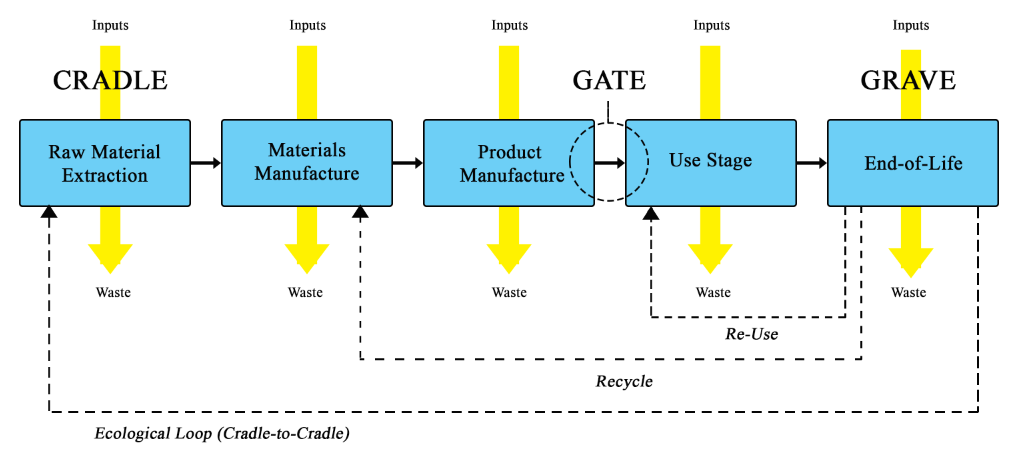
This analysis quantifies inputs like energy and raw materials and outputs like emissions and waste. A key part of this is calculating a product's carbon footprint, which is the total amount of greenhouse gases, primarily carbon dioxide, emitted throughout its lifecycle. A smaller carbon footprint means less impact on climate change.
A major contributor to a product's footprint is the type of energy used in its production. Non-renewable energy sources like coal, oil, and natural gas are finite and produce significant emissions. In contrast, renewable energy from sources like wind, solar, and hydropower is naturally replenished and much cleaner. Many modern factories are now integrating solar panels on their roofs or using wind turbines on-site to reduce their reliance on the grid and lower their environmental impact.
Designing for a Better Future
As a designer, you have the power to make choices that reduce negative impacts. A powerful framework for this is the '6 Rs of Sustainability'. These principles guide you to create products and systems that are more environmentally and socially responsible.
| R | Meaning | Example |
|---|---|---|
| Rethink | Question the need for the product itself. | Can this task be done without a new product? Could it be a service instead? |
| Reduce | Minimise the amount of material and energy used. | Design a product with fewer components or thinner, yet strong, walls. |
| Reuse | Design the product to be used multiple times. | Create a durable glass jar for jam that can be used for storage afterwards. |
| Repair | Make the product easy to fix. | Use screws instead of glue, and make spare parts available. |
| Recycle | Choose materials that can be easily recycled. | Use standard plastics like PET or HDPE and avoid composite materials. |
| Refuse | Don't use materials or processes that are harmful. | Refuse to use single-use plastics or materials from unethical sources. |
By applying the 6 Rs, you shift from a linear 'take-make-dispose' model to a more circular approach. This mindset is essential for creating products that are not only functional and desirable but also responsible.
A company notices a growing consumer demand for home-compostable food packaging and develops a new product line to meet this need. This is a classic example of:
What is the primary purpose of the Fair Trade certification?