Educational Software Design Principles
Instructional Design Fundamentals
The Blueprint for Learning
Imagine trying to build a house without a blueprint. You might end up with a crooked wall or a door that leads nowhere. Instructional design is the blueprint for creating effective learning experiences. It's a systematic process for planning, creating, and delivering educational content that ensures people actually learn what you're trying to teach.
Instead of just presenting information, instructional design focuses on creating a structured path for learners to acquire new skills and knowledge efficiently.
This is especially crucial when developing educational software. Good software isn't just about flashy features; it's about whether it helps someone learn. By following a structured design process, you can create programs that are not only engaging but also genuinely effective. One of the most common and foundational frameworks for this is the ADDIE model.
The ADDIE Model
The ADDIE model is a straightforward, five-phase framework that guides the creation of any learning program. The letters stand for Analysis, Design, Development, Implementation, and Evaluation. Think of it as a continuous cycle, where the insights from one stage feed into the next, and the final evaluation often leads back to the beginning for improvements.
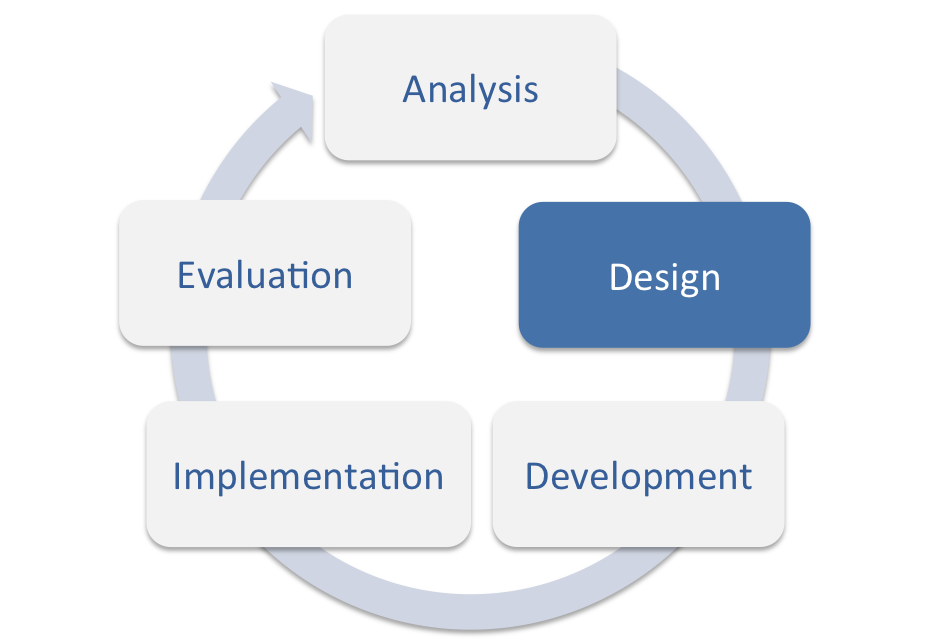
Let's break down each phase.
Phase 1: Analysis
The Analysis phase is all about research and discovery. Before you can design a solution, you need to understand the problem. This means gathering information to answer key questions:
- Who are the learners? What is their current knowledge level, background, and learning style? Are they beginners or experts?
- What is the goal? What specific skills or knowledge should learners have after completing the instruction? These are your learning objectives.
- What are the constraints? What is the budget, timeline, and what technological resources are available?
Skipping this step is like a doctor prescribing medicine without diagnosing the illness. A thorough analysis ensures that the learning experience is relevant and tailored to the audience's needs.
Phase 2: Design
With a clear understanding from the analysis phase, you can now create the blueprint. The Design phase is where you map out the structure and strategy for the course. This isn't about creating the content itself, but rather planning what it will look like and how it will function.
During this stage, an instructional designer will:
- Outline the course content and sequence of topics.
- Choose instructional methods (e.g., videos, interactive simulations, readings).
- Design assessments to measure if learners are meeting the objectives.
- Create storyboards or prototypes for visual and interactive elements.
This phase turns the requirements from the Analysis phase into a concrete plan for development.
Phase 3: Development
This is the production phase where the blueprint from the design stage comes to life. Developers, writers, and graphic designers work together to create all the components of the course. This includes writing the text, recording and editing videos, programming interactive elements, and assembling all the materials into a cohesive learning experience.
In educational software development, this is where programmers write the code for the application, artists create the graphics, and content experts write the instructional text and quiz questions. The end result of this phase is a finished, ready-to-use product.
Phase 4: Implementation
The Implementation phase is the rollout. It's time to deliver the instruction to the learners. This could mean uploading the course to a Learning Management System (LMS), installing software on computers, or conducting an in-person training session.
This phase also involves preparing the learning environment and the instructors. For example, you might need to train teachers on how to use the new software or ensure learners have the necessary technical support. The goal is a smooth launch where learners can easily access and begin the course.
Phase 5: Evaluation
The final phase, Evaluation, measures the effectiveness of the instruction. Did it achieve the learning objectives set out in the Analysis phase? Did learners acquire the intended skills?
Evaluation isn't just a final step; it should happen throughout the entire process. There are two main types:
- Formative Evaluation: This happens during each phase of the ADDIE model. It's an ongoing check-in to catch issues early, like getting feedback on a prototype during the Design phase.
- Summative Evaluation: This happens after the course has been implemented. It's a final assessment of the overall success, often using tests, surveys, and feedback from learners.
The results of the evaluation often reveal areas for improvement, which can kick off a new cycle of the ADDIE process to refine and enhance the course.
What is the primary goal of instructional design?
Which of the following lists the phases of the ADDIE model in the correct order?