Educational Design and Instructional Technology
Applying Design Thinking
From Content-First to Human-First
Instructional design has traditionally focused on organizing content and defining learning objectives. While this structured approach has its merits, it can sometimes miss a critical element: the learner's actual experience. What if we started not with the content, but with the person who needs to learn it? This is the core of human-centered design in education.
Design thinking is essentially a human-centered approach to solving complex problems by understanding user needs, collaborating across disciplines, embracing experimentation, and iterating on solutions.
Instead of designing for students, we aim to design with them. This shift in perspective moves us from being architects of information to facilitators of understanding. It means treating learning challenges not as content deficits, but as complex human problems that require empathy to solve.
Empathize and Define
The first stages of Design Thinking are Empathize and Define. Empathy is about deeply understanding the learner’s world. It’s about observing their environment, listening to their frustrations, and seeing the challenges through their eyes. We move past assumptions and gather real insights into their motivations, pain points, and goals.
An empathy map is a great tool for this. It helps organize observations into what a learner says, thinks, does, and feels. This raw data is then synthesized into —fictional, yet realistic, profiles of your target learners. A persona might be "Maria, the time-crunched working parent" or "David, the skeptical recent graduate."
With these rich insights, you can move to the Define stage. Here, you frame the core instructional challenge. Instead of a bland objective like, "Learners will understand topic X," a well-defined problem statement might be, "How might we help Maria quickly grasp the key takeaways of each module so she feels confident applying them at work, even with only 15 minutes to study?" This reframing is crucial. It turns a content problem into a human-centered challenge ripe for creative solutions.
Iterate, Don't Just Implement
Traditional models like are often linear: you Analyze, Design, Develop, Implement, and then Evaluate. While systematic, this can be rigid and slow. If your initial assumptions were wrong, you might not find out until you've already built the entire course. It's an expensive way to learn.
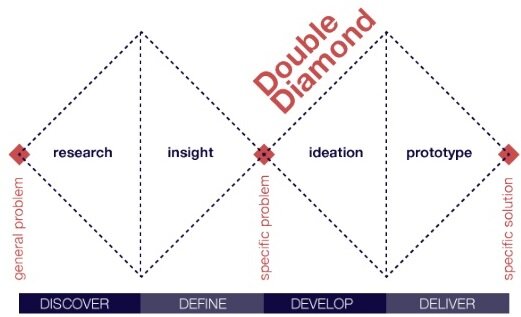
Design Thinking, in contrast, embraces rapid, iterative prototyping. Instead of building the whole thing, you build the smallest possible version of an idea to test your hypothesis. For an instructional design problem, a prototype might not even be digital. It could be a simple paper-based activity, a role-playing scenario, or a storyboard of a video you plan to create.
The goal is to get feedback early and often. Does this activity actually reduce confusion? Does this explanation resonate with learners? Each prototype is a chance to learn and refine your solution. This cycle of building, testing, and learning is far more flexible and responsive to the real needs of learners than a rigid, linear process.
Now, let's see how well you've grasped these concepts.
What is the fundamental shift in perspective in human-centered instructional design?
In the Design Thinking process, which stage immediately follows the 'Empathize' stage?
By shifting from a content-first to a human-first approach, we can create learning experiences that are not only effective but also engaging and meaningful.