Educational AI for Children
Choosing Educational AI
Generalists vs. Specialists
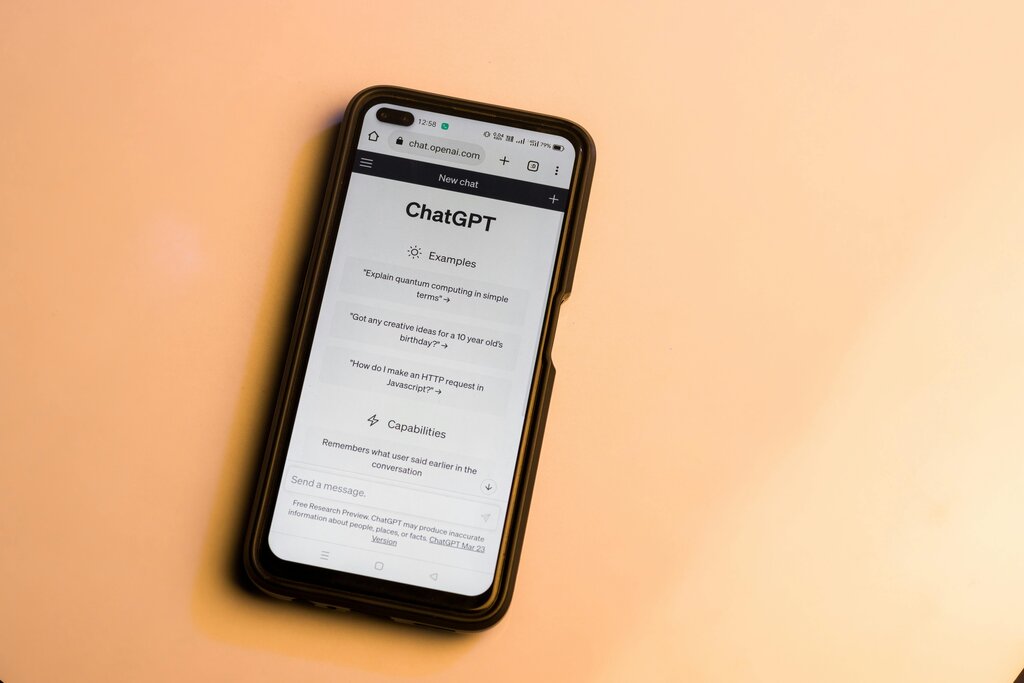
Not all AI tools are created equal, especially when it comes to learning. On one side, you have general-purpose models like ChatGPT. It's a versatile, creative partner, capable of explaining quantum physics one moment and drafting a sonnet the next. For a student, it can be a powerful brainstorming tool or a quick way to get a definition. However, its flexibility is also its weakness in an educational context. It's designed to provide the most direct answer, which can short-circuit the learning process. It doesn't know your child's specific curriculum and won't hesitate to simply do the homework for them.
On the other side are specialized tools like Khanmigo. Built on a similar powerful AI, its purpose is fundamentally different. It's designed as a tutor, not an answer key. Instead of giving the solution to a math problem, it will ask guiding questions, mimicking the to help a student arrive at the answer on their own. It is aligned with a specific curriculum and works to foster a growth mindset by emphasizing the process of learning, not just the result. The trade-off is focus. Khanmigo is for academic tutoring; it won't help you write a screenplay.
Choosing between them depends on your goal. Do you need a creative partner for a broad project, or a structured tutor to master a specific skill?
A Framework for Choosing
When evaluating an AI tool for a student, it's helpful to move beyond the marketing and analyze it through a clear framework. Consider these three pillars: age appropriateness, curriculum alignment, and pedagogy.
Age & Safety: Is the tool designed for your child's age group? A platform for a high schooler will have a different interface and content style than one for an elementary student. More importantly, what are its safety protocols? Look for tools that are compliant with privacy laws like (Children's Online Privacy Protection Act). These regulations limit how companies can collect and use data from children under 13, providing a crucial layer of protection.
Curriculum Alignment: How well does the tool match what your child is learning in school? Some AI is designed for general homework help, offering quick support on nightly assignments. Others are meant for long-term skill building, focusing on foundational concepts that might span an entire semester. A tool that's tightly aligned with a school's curriculum can reinforce classroom learning, while a more general one might be better for exploring topics out of curiosity.
Pedagogy: What is the tool's philosophy of teaching? This is the most important, yet often overlooked, factor. A tool that provides direct answers teaches dependency. A tool that guides, coaches, and encourages struggle teaches resilience and critical thinking. Are you looking to solve an immediate problem (e.g., "What's the answer to question 5?") or build a long-term capability (e.g., "How do I approach these types of problems in the future?"). The best educational tools focus on the latter.
Low-Lift vs. High-Lift Tools
Educational AI also varies in its level of integration. We can think of this as 'low-lift' versus 'high-lift' solutions.
Low-lift tools are designed to slide easily into existing routines. Think of a service like SchoolAI, which might help a teacher generate a lesson plan or create differentiated worksheets. These tools act as assistants. They augment the current educational process but don't fundamentally change it. They are supplements, designed to make a teacher's or student's life a bit easier without requiring a major shift in behavior.
High-lift tools are a different category entirely. These are comprehensive platforms that often become the core learning environment for a subject. They require a significant commitment from the school, teacher, and student. These platforms are often like DreamBox, ALEKS, or Carnegie Learning's MATHia. They don't just present information; they create a personalized learning path for each student. The system analyzes a student's answers in real-time, identifies knowledge gaps, and serves up new problems or instructional content tailored to that student's specific needs. This creates a deeply individualized experience that a static textbook or even a single teacher managing 30 students cannot replicate.
Choosing the right tool means first identifying the need. Is the goal to save a teacher time on administrative tasks, or is it to provide a deeply personalized math curriculum for a student who is either struggling or ready to jump ahead? The answer determines whether a low-lift supplement or a high-lift platform is the right fit.
What is the primary pedagogical difference between a general-purpose AI like ChatGPT and a specialized educational AI like Khanmigo, according to the text?
When evaluating an AI tool for a 12-year-old, looking for compliance with the Children's Online Privacy Protection Act (COPPA) falls under which evaluation pillar?
Ultimately, integrating AI into education is about using the right tool for the right job. By understanding the trade-offs between different types of platforms and evaluating them with a clear, student-centered framework, parents and educators can make informed choices that truly support learning.