Edge Networking and Veea Solutions
Edge Computing Convergence
From Centralized Cloud to Distributed Edge
For years, the cloud computing model has been the standard. Data is generated at the user's location, sent to a massive, centralized data center for processing, and the results are sent back. This works well for many applications, but it has a fundamental weakness: distance. The round trip that data must travel introduces delays, known as latency. For applications needing split-second responses, like controlling robotic arms in a factory or processing transactions at a busy store, this latency is a critical failure point.
Edge Computing is a transformative approach that decentralizes computation, bringing data processing closer to the source of data generation—whether it's Internet of Things (IoT) devices, sensors, or edge servers.
This is where edge computing comes in. Instead of sending everything to a distant cloud, it moves compute power and storage closer to where the data is created. This foundational shift reduces the distance data travels, drastically cutting down latency. The 'Edge' isn't a single place, but a concept: a decentralized network of processing power located near the action.
The All-in-One Hub
In a typical business, the network is a patchwork of devices. You have a router for internet access, a gateway for IoT devices, a separate server for local applications, and maybe multiple Wi-Fi access points. This fragmented stack is complex to manage, expensive to maintain, and creates multiple points of failure.
The VeeaHub architecture consolidates these disparate functions into a single, unified device. It’s a converged node that acts as a router, a multi-protocol IoT gateway, a powerful local computer, and a mesh network access point all at once. This convergence simplifies the entire IT infrastructure.
By bringing high-performance computing to the local network, a VeeaHub can handle data-intensive tasks right where they happen. It integrates modern connectivity standards like and cellular (4G/5G) to ensure fast and reliable communication for all devices. It also supports a wide array of IoT protocols, allowing it to talk to everything from Bluetooth sensors to Zigbee smart lights without needing extra hardware.
Saving Bandwidth and Ensuring Autonomy
A major benefit of local processing is bandwidth conservation. Imagine a security system with dozens of high-definition cameras. Streaming all that video to the cloud 24/7 would consume an enormous amount of bandwidth and be incredibly expensive. With an edge device like a VeeaHub, the video can be analyzed locally in real-time. The system can be programmed to only send data to the cloud when a specific event occurs, such as detecting motion in a restricted area. This intelligent filtering drastically reduces the amount of data traversing the network.
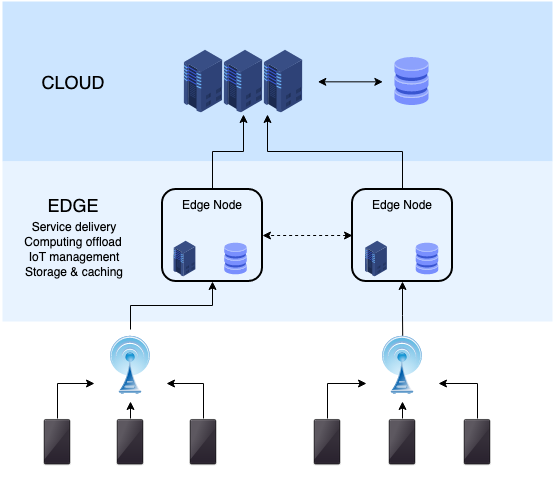
This leads to another key concept: edge autonomy. In many mission-critical environments, such as a hospital or a remote industrial site, a lost internet connection can be catastrophic. If all your systems depend on the cloud, a network outage means a complete shutdown. Because a VeeaHub has its own compute and storage, it can continue to operate essential local applications and services even if the connection to the wider internet is severed. Devices on the local network can still communicate with each other and the VeeaHub, ensuring operations continue uninterrupted.
The final piece of the puzzle is the VeeaONE platform, which demonstrates the powerful synergy between hardware and software. The VeeaHub is the physical device, but the VeeaONE software platform is what unlocks its full potential. It provides a unified dashboard for managing all your VeeaHubs, deploying applications, and securing your network. This integration allows businesses to easily deploy and run containerized applications at the edge, turning a simple network device into a powerful, distributed computing platform.
What is the primary weakness of the traditional cloud computing model that edge computing is designed to solve?
A retail store loses its internet connection during a power outage. However, its point-of-sale systems and local inventory management can still operate and communicate with each other. This is an example of which edge computing concept?
This shift towards integrated edge platforms isn't just a technical upgrade; it's a new way of thinking about network architecture, prioritizing speed, efficiency, and resilience.