Economics Fundamentals
Introduction to Economics
The Heart of Economics
At its core, economics is the study of choice. It's a way of thinking about how people, businesses, and governments decide how to get what they want and need. Every day, we're faced with decisions about how to use our limited resources, like time and money. Economics provides a framework for understanding those decisions.
Economics – the study of scarcity and choice.
Think about your morning. Did you buy a coffee? That was an economic decision. Did you take the bus instead of driving? Another economic decision. The world is full of these choices, and economics helps us see the patterns and consequences behind them.
Scarcity and Trade-offs
The central problem in economics is scarcity. This doesn't mean there's not enough of something to go around. It means that human wants are effectively unlimited, but the resources available to satisfy those wants are finite. You can't have everything you want, all at once.
Scarcity
noun
The fundamental economic problem of having seemingly unlimited human wants in a world of limited resources.
Because of scarcity, every choice involves a trade-off. A trade-off is what you give up when you choose one thing over another. If a city government decides to spend $1 million on a new park, that's $1 million it can't spend on repairing roads or hiring more teachers. It has traded one benefit for another.
This leads to a crucial concept: there's no such thing as a free lunch. Every choice has a cost.
The real cost of any decision is not just the money you spend, but the opportunity you lose. This is called the opportunity cost. It’s the value of the next-best alternative you had to forgo. If you spend two hours watching a movie, your opportunity cost is what you could have done with those two hours, like studying, working, or exercising. You chose the movie, so you gave up the benefits of the other options.
| Decision | Choice A | Opportunity Cost of Choice A |
|---|---|---|
| How to spend $100 | Buy a new video game | The dinner out with friends you can't afford now |
| How to use Saturday afternoon | Work an extra shift | The time you could have spent relaxing at the beach |
| Government spending | Build a new high-speed rail line | The funding for dozens of new schools that wasn't approved |
Two Lenses on the Economy
Economists look at these choices through two main lenses: microeconomics and macroeconomics. Think of it like looking at a forest. You can study a single tree, or you can study the entire forest ecosystem.
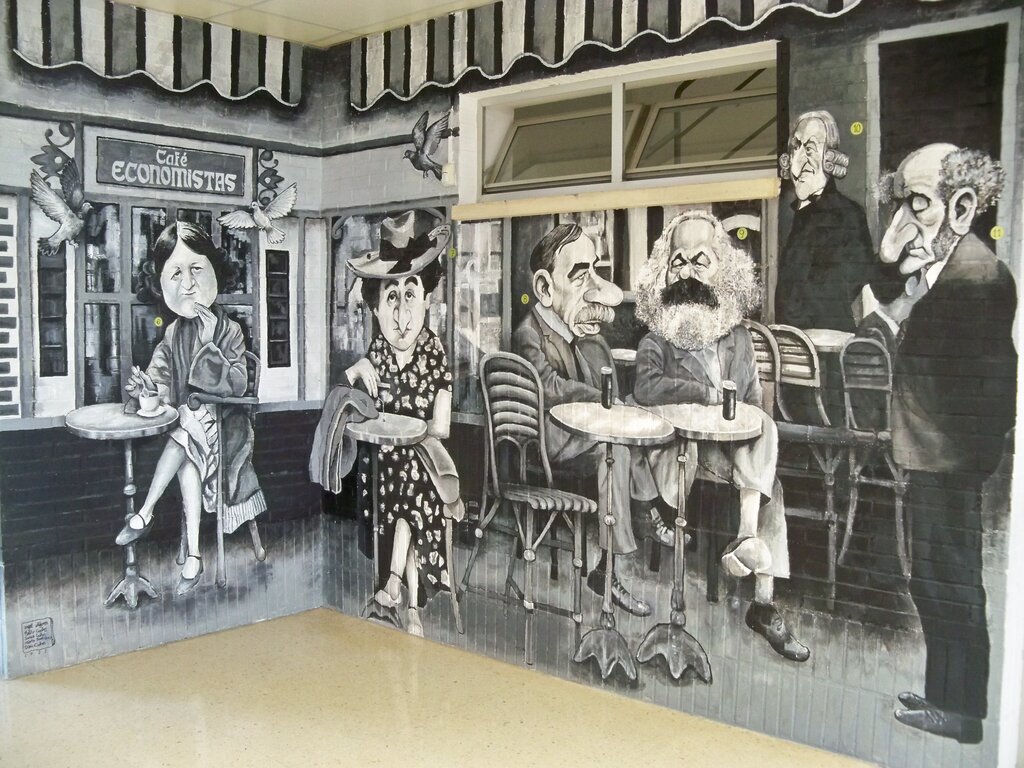
Microeconomics is the study of individual trees. It focuses on the decisions made by individuals, households, and businesses. It asks questions like: How does a company decide what price to charge for its product? Why do people choose to buy more strawberries when they are on sale? How does a student decide how much to spend on textbooks versus entertainment?
Macroeconomics looks at the entire forest. It studies the economy as a whole. It's concerned with large-scale issues like inflation, unemployment, and economic growth. Macroeconomists ask questions like: What causes the unemployment rate to rise? How can a government fight a recession? What factors determine a country's overall standard of living?
| Microeconomics | Macroeconomics | |
|---|---|---|
| Focus | Individual economic agents (households, firms) | The economy as a whole |
| Scope | A single market, an industry, a specific price | National income, overall price level, unemployment |
| Example Question | Why is the price of gasoline higher this month? | What is the current inflation rate in the country? |
While they look at different scales, microeconomics and macroeconomics are deeply connected. The overall health of the forest depends on the health of the individual trees. The decisions made by millions of individuals and firms add up to create the macroeconomic trends we observe.
Time to check your understanding of these core ideas.
At its most fundamental level, what is economics the study of?
You have a free afternoon. You could either read a book (which you value at 10), or work an extra hour at your job (which would earn you $20). If you choose to work, what is your opportunity cost?
Understanding these foundational concepts—scarcity, opportunity cost, and the two branches of economics—gives you a new way to see the world. You can start to analyze the choices you and others make every day through an economic lens.