Economic Productive Potential
Introduction to Productive Potential
What Is Productive Potential?
Every economy has a limit to how much it can produce. This limit isn't just about money. It's about all the resources available: workers, technology, factories, and natural resources. The maximum possible output an economy can generate when all these resources are used fully and efficiently is called its productive potential.
Think of a small bakery. Its productive potential is the maximum number of loaves of bread and cakes it can bake in a day. This depends on the size of its ovens, the number of bakers, and the amount of flour and sugar it has. The bakery can't produce more than its resources allow. An entire country's economy works the same way, just on a much larger scale.
A Measure of What's Possible
Productive potential is the ceiling of an economy's output at a specific moment in time. Economic growth happens when that ceiling gets higher. When a country's ability to produce goods and services increases, its productive potential expands. This could be because of new technology, a more educated workforce, or new infrastructure.
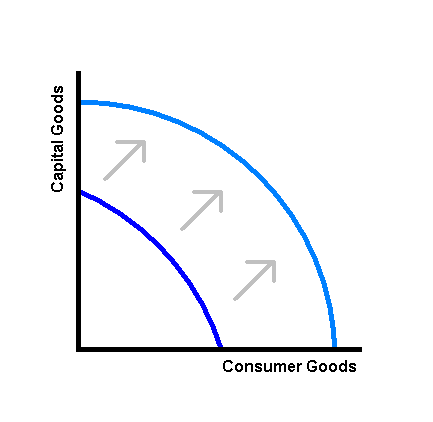
This concept helps economists and policymakers understand what an economy is capable of. By comparing an economy's actual output to its potential output, they can gauge its health. If actual output is far below potential, it signals that resources are being wasted, like unemployed workers or idle factories.
Making Smart Choices
Because resources are limited, every economy faces trade-offs. Deciding to produce more of one thing means producing less of something else. Productive potential shows us the different combinations of goods and services an economy can produce when it's running at full steam. It forces a country to think about how to allocate its resources.
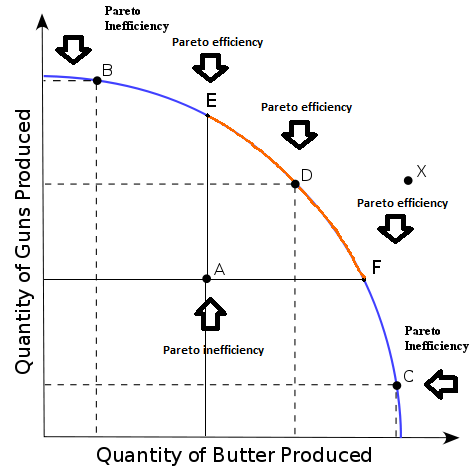
The goal is to operate on the edge of this potential, a state called efficiency. Any point on the curve represents an efficient use of resources. A point inside the curve means the economy is inefficient; it could be producing more of both goods with its existing resources. A point outside the curve is unattainable with current resources and technology.
Productive potential frames the fundamental economic problem: how to use scarce resources to satisfy unlimited wants.
Let's review the main idea we've covered.
Now, let's check your understanding.
What is 'productive potential' in the context of an economy?
If a country's actual economic output is significantly lower than its productive potential, what does this indicate?
Understanding this concept is the first step toward analyzing how economies grow and manage their resources.