eBay Dropshipping Fundamentals and Growth
Introduction to E-commerce and eBay
What is E-commerce?
At its core, e-commerce is simply the buying and selling of goods or services using the internet. Instead of walking into a store, you browse a website or an app, click a button, and have something delivered to your door. This might seem normal now, but it's a relatively recent way of doing business.
The earliest forms of e-commerce emerged in the 1970s, but it was the rise of the World Wide Web in the 1990s that truly opened the floodgates. Companies like Amazon and eBay were pioneers, creating new ways for people to shop from the comfort of their homes. What started as a niche way to buy books or collectibles has grown into a global industry that covers nearly every product imaginable.
E-commerce is the activity of electronically buying or selling products on online services or over the Internet.
The Role of Marketplaces
Think of an online marketplace as a digital shopping mall. Instead of a single brand selling its own products, a marketplace hosts thousands of different sellers under one virtual roof. It provides the infrastructure—the website, payment processing, and search functions—that connects buyers with a vast array of sellers.
This is different from a standalone online store, where a single business sells directly to its customers. By gathering many sellers in one place, marketplaces like Amazon, Etsy, and eBay attract a huge number of potential buyers. For a new seller, this is a massive advantage. You don't have to build an audience from scratch; the customers are already there.
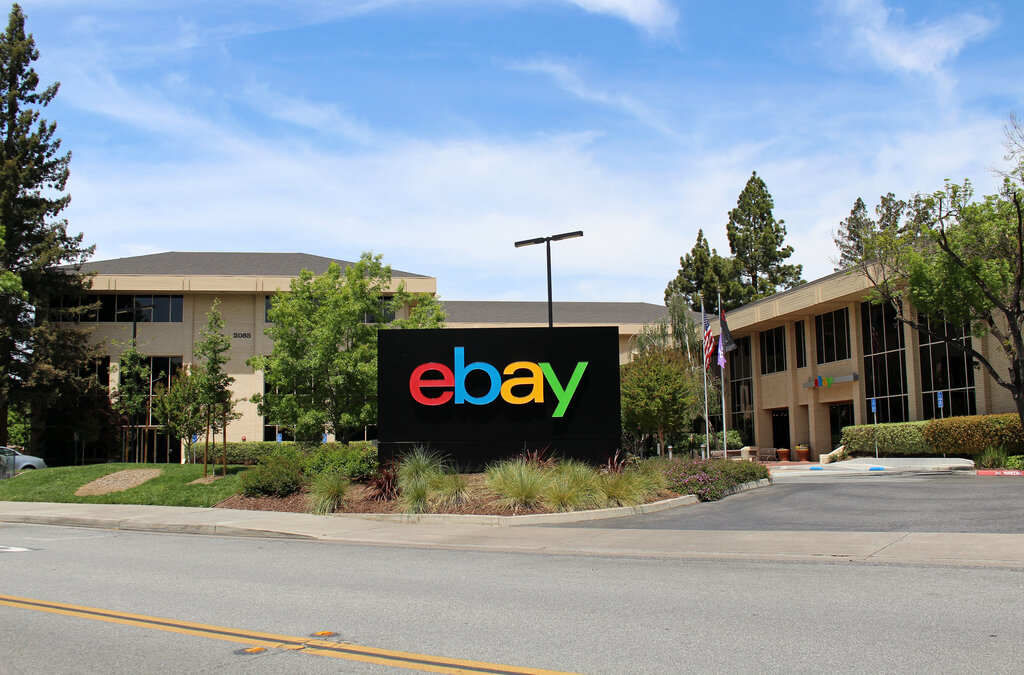
A Closer Look at eBay
eBay was one of the first major online marketplaces, founded in 1995 by Pierre Omidyar. The first item listed was a broken laser pointer, which sold for $14.83. This surprising sale proved a key concept: people would buy and sell almost anything online. It started as an auction site, a place for collectors and individuals to trade secondhand goods. Over time, it evolved into a global platform where individuals and businesses sell both new and used items.
What makes eBay unique is its blend of two selling formats:
- Auctions: The classic eBay model. Sellers set a starting price, and buyers place bids over a set period. The highest bidder at the end wins the item.
- Buy It Now: A fixed-price format. This works just like a typical retail store, where you can purchase an item immediately for a set price.
This flexibility allows sellers to cater to different types of products and buyers, from rare collectibles best suited for auction to common goods sold at a fixed price.
Selling on eBay
Selling on a platform like eBay comes with clear advantages. The most significant is access to a massive, built-in customer base. Millions of people around the world already use and trust eBay, so you don't need to spend a fortune on marketing to find buyers. The platform provides all the tools you need to list items, process payments, and manage sales.
| Benefit | Challenge |
|---|---|
| Huge existing customer base | High level of competition |
| Established and trusted platform | Various seller fees can add up |
| Easy to list products and start selling | Managing reputation and feedback is crucial |
| Built-in payment processing | Logistics of packing and shipping |
However, there are also challenges. Because the barrier to entry is low, competition can be fierce. You're not just competing with other small sellers but also with large businesses. eBay also charges fees, including insertion fees (for listing an item) and final value fees (a percentage of the total sale amount), which eat into your profits.
Furthermore, your reputation is everything. A seller's success depends heavily on their feedback score, which is based on ratings from buyers. Negative feedback can seriously impact your ability to make sales. Finally, you are responsible for the entire fulfillment process, from safely packing the item to shipping it to the customer on time.