Earth's Rotation Explained
Earth's Basic Spin
Earth's Constant Turn
Just as a basketball spins on a player's finger, Earth is constantly spinning. This movement is called rotation. It's not a wobble or a tumble through space, but a steady turn around an invisible line.
This line is called the rotation axis. It’s an imaginary pole that runs straight through the planet, connecting the North Pole to the South Pole. Everything on Earth, from oceans to mountains, is carried along for this daily ride.
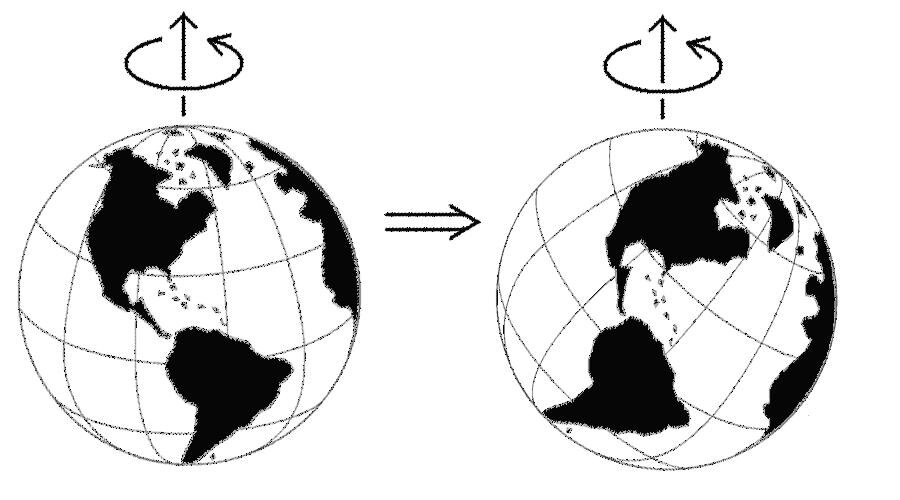
The direction of this spin is always the same: from west to east. This is why the Sun, Moon, and stars appear to rise in the east and set in the west each day. If you were looking down on the North Pole from space, you would see the planet spinning counter-clockwise.
This complete spin takes a predictable amount of time, known as the rotational period an idea that seems simple but has some interesting nuances. While we round it to 24 hours to define our day, the exact duration varies slightly. This rotation is remarkably consistent, a reliable rhythm that has governed life on the planet for billions of years.
It’s important to remember that this rotation happens while Earth is also completing its much longer journey, or revolution, around the Sun. The planet is both spinning on its axis and moving through the solar system at the same time, like a spinning top sliding across a floor. These two motions, rotation and revolution, are fundamental to understanding seasons, time, and our place in the cosmos.
What is the term for Earth's steady spin around an invisible line?
The imaginary line that runs from the North Pole to the South Pole, around which the Earth spins, is called the: