Earths Prehistoric Journey to the Age of Dinosaurs
Earth's Molten Beginnings
A Molten Beginning
About 4.6 billion years ago, our solar system wasn't much to look at. It was just a vast, spinning cloud of gas and dust. But gravity is patient. Over millions of years, it pulled clumps of this material together.
First came small dust bunnies, then pebbles, then rocks, and eventually, city-sized chunks called planetesimals. These planetesimals collided and stuck together in a chaotic process called planetary accretion, gradually building up the planets we know today, including our own.
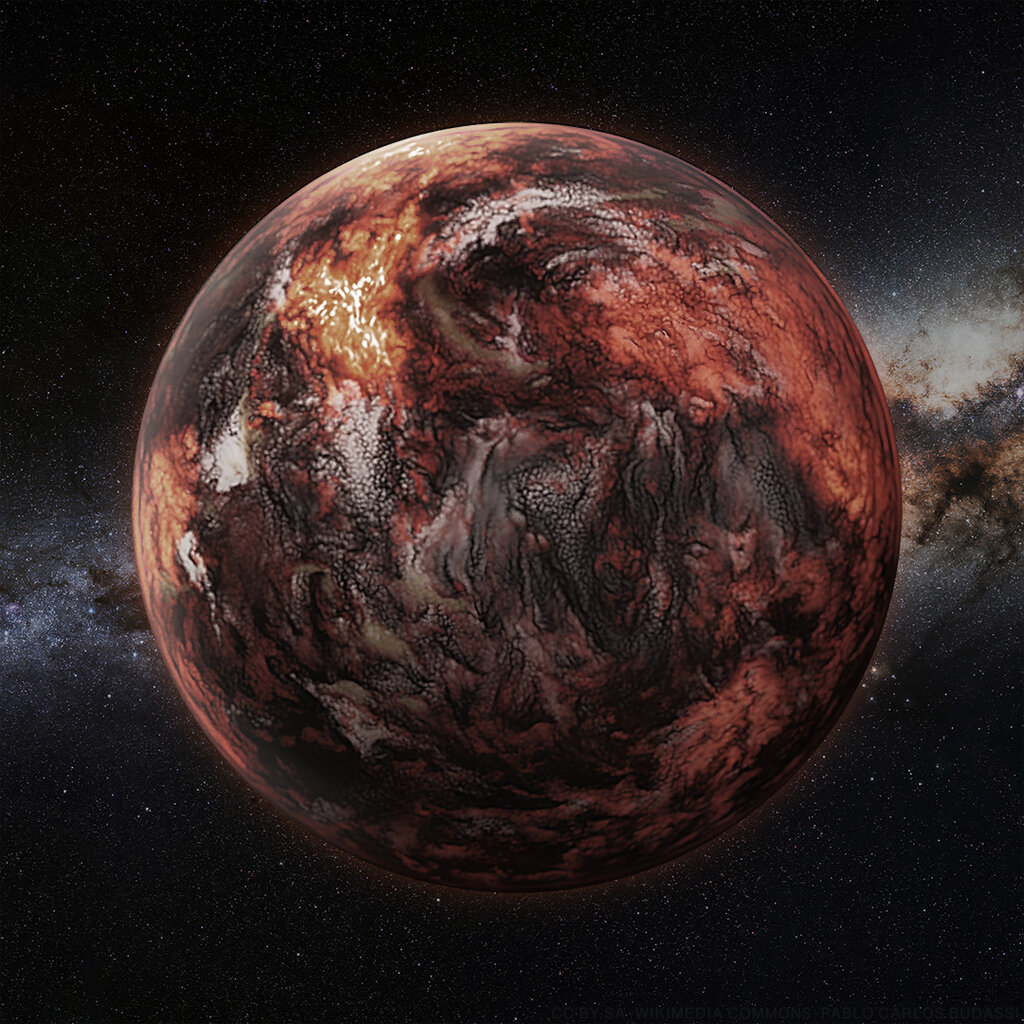
Early Earth was not the blue and green world we see now. It was a glowing ball of molten rock and metal, a planet-sized lava lamp. The constant collisions from accretion generated incredible heat. On top of that, radioactive elements trapped inside the young planet were decaying, releasing even more energy. The surface temperature was hot enough to melt rock.
The Great Splat
While Earth was still forming, it had a catastrophic encounter. A Mars-sized object, which scientists have named Theia, slammed into our planet. This wasn't just a bump; it was a world-shattering collision.
The impact was so immense that it liquefied both bodies. A massive spray of vaporized rock was blasted into orbit around the newly merged, larger Earth. Gravity went to work again, pulling this ring of debris together. Over thousands of years, this material coalesced to form our Moon.
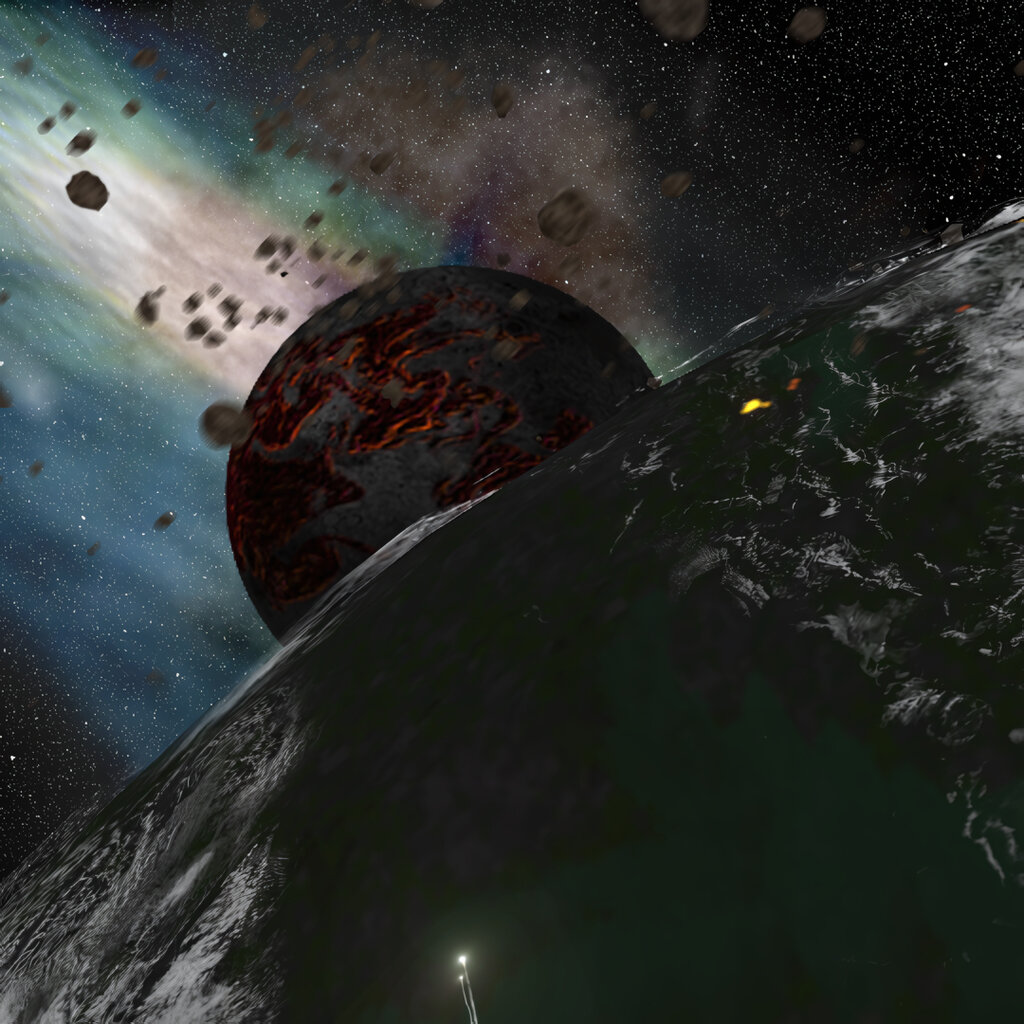
This event, known as the giant-impact hypothesis, is the leading theory for the Moon's origin. It explains why the Moon is made of rock similar to Earth's outer layers and why it has a relatively small iron core. The impact also likely knocked Earth onto its current 23.5-degree tilt, giving us our seasons.
Layers of a Planet
After the impact, Earth was a churning, superheated mess. But over time, a crucial sorting process began. This process, called differentiation, is how our planet separated into layers.
Think of it like a bottle of salad dressing. If you let it sit, the dense oil sinks while the lighter vinegar rises. On a planetary scale, the heaviest materials, mostly iron and nickel, sank toward the center under the pull of gravity. They formed Earth's incredibly dense core. Lighter molten rock, rich in silicon and oxygen, floated upwards to form the thick mantle and, eventually, a thin outer crust.
This separation wasn't just about organization. It set up the engine for our planet. The hot core is what drives the movement of the mantle, a process that would later power plate tectonics and volcanism. And the differentiation process released huge amounts of gas that had been trapped in the rock, forming Earth’s very first atmosphere.
This early atmosphere was nothing like the air we breathe. It was a toxic cocktail of steam, carbon dioxide, and nitrogen, spewed from countless volcanoes. As the planet slowly began to cool, this steam would eventually condense into the first oceans, but for now, the Earth remained a hostile and alien world.
The Hadean Eon was a time of fire, impacts, and planetary formation, setting the physical stage for everything that would come next.
What is the name of the chaotic process where city-sized chunks of rock collided and stuck together to gradually build up planets like Earth?
The leading theory for the Moon's formation is the giant-impact hypothesis. What was the name of the Mars-sized object that collided with Earth?