Early Atomic Models Dalton to Rutherford
Dalton's Atomic Theory
A New Idea for Matter
For centuries, people wondered what stuff was really made of. If you cut a piece of gold in half, and then in half again, and kept going, would you ever reach a point where you couldn't cut it anymore? The ancient Greeks had a word for this tiniest possible piece: atomos, meaning "uncuttable."
This idea of atoms remained just a philosophical thought for over 2,000 years. It wasn't until the early 1800s that an English schoolteacher named John Dalton brought it into the world of science. He conducted experiments with gases and carefully observed how different substances combined. His work led him to propose a groundbreaking theory that became the foundation of modern chemistry.
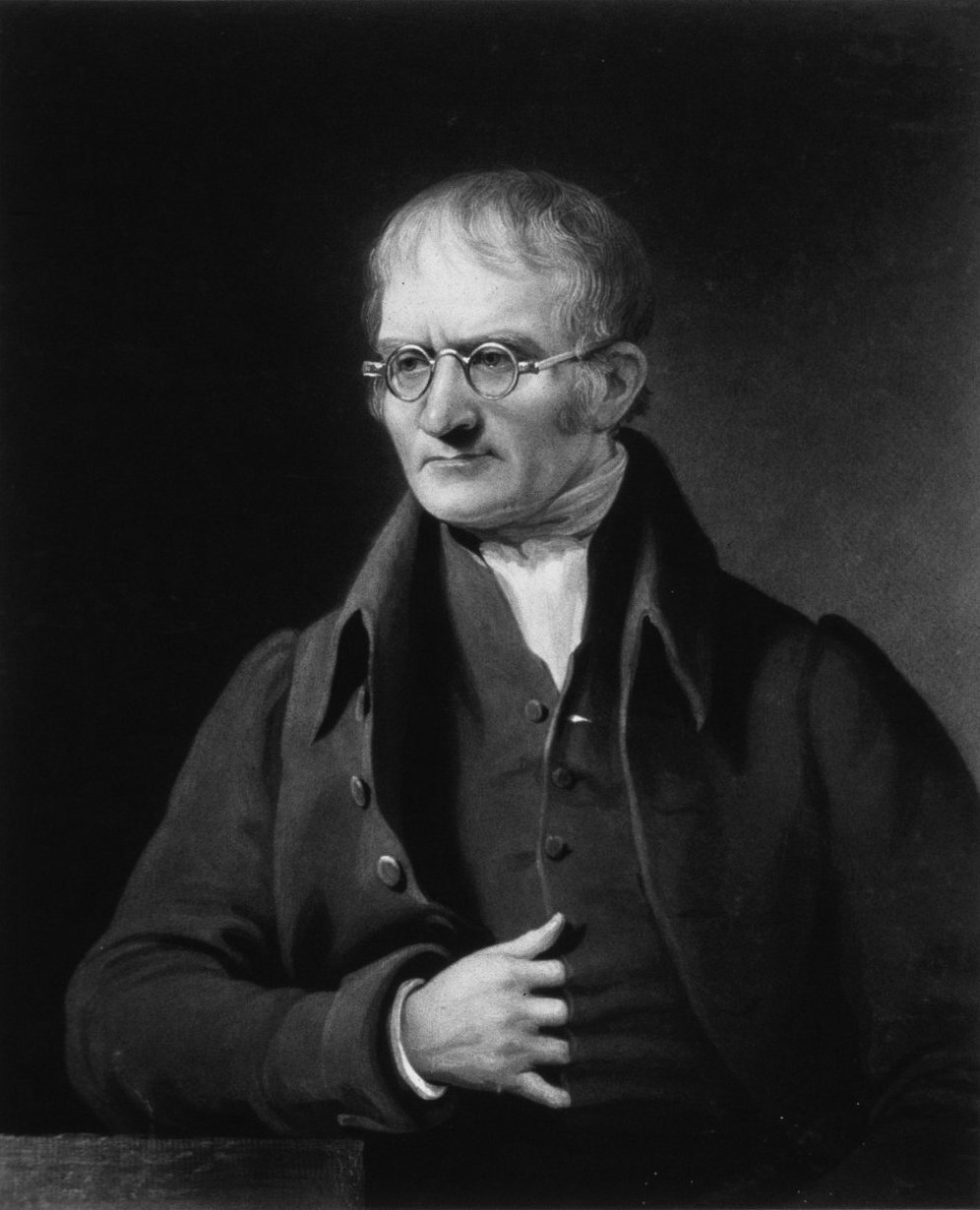
Dalton's theory wasn't just a guess; it was a way to explain the results he was seeing in his experiments. It proposed a set of rules for how matter behaves on the smallest scale.
The Rules of Atoms
Dalton imagined atoms as tiny, solid, indestructible spheres, like microscopic billiard balls. According to his theory, these spheres followed a few simple but powerful rules.
- All matter is made of atoms, which are indivisible and indestructible.
- All atoms of a given element are identical in mass and properties.
- Compounds are formed by a combination of two or more different kinds of atoms.
- A chemical reaction is a rearrangement of atoms.
Let's break that down. The first rule states that everything is built from these fundamental particles. The second rule is crucial: it means an atom of gold is different from an atom of iron. Each element has its own unique type of atom, with a specific weight and character. This explained why gold is always gold and iron is always iron.
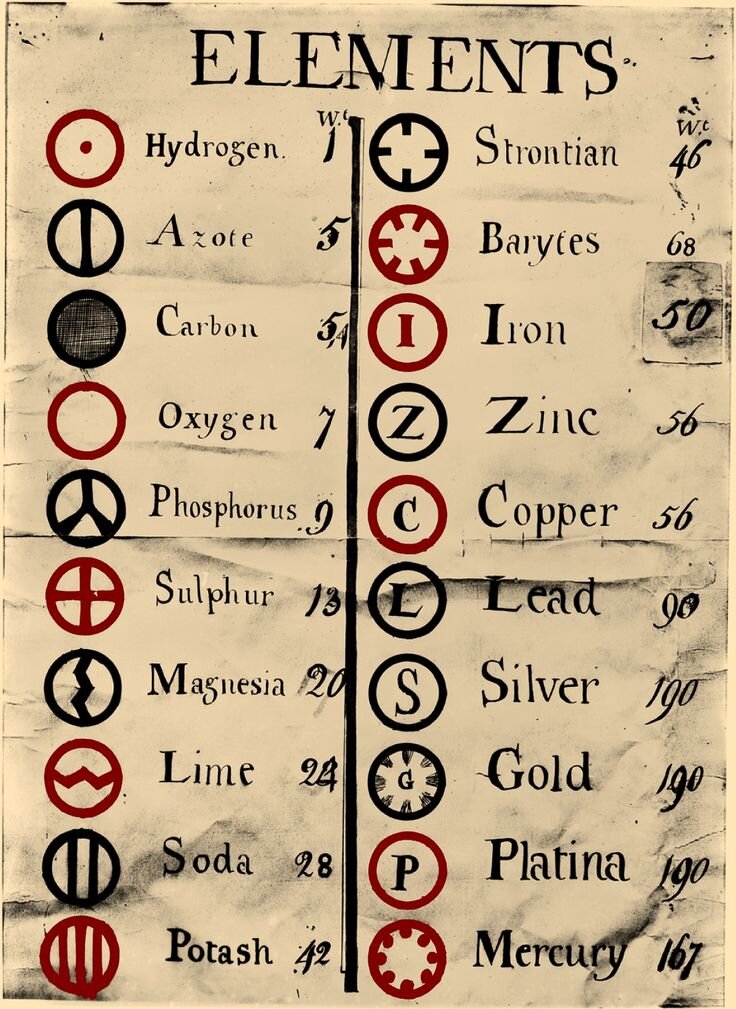
Perhaps the most important part of his theory was how it explained compounds. A compound, like water or table salt, isn't just a random mashup of elements. Dalton proposed that atoms combine in simple, whole-number ratios.
For example, to make water, you always need two hydrogen atoms for every one oxygen atom. This ratio is fixed. You can't have one-and-a-half hydrogen atoms; atoms are indivisible.
This rule, known as the Law of Definite Proportions, was a massive step forward. It explained why a specific compound always has the same composition by mass. For instance, 18 grams of water will always contain 2 grams of hydrogen and 16 grams of oxygen.
Dalton’s model wasn’t perfect. We now know that atoms are not indivisible—they are made of even smaller particles. But his theory was a revolutionary starting point. It transformed chemistry from a collection of recipes and observations into a quantitative science, paving the way for our modern understanding of atoms and molecules.