Dystopian Reality Podcast Production
Dystopian Narrative Frameworks
Finding Your Orwellian Lens
To create a compelling political podcast, you need more than just opinions. You need a lens, a specific framework for viewing the world that gives your analysis focus and power. For our purposes, we'll use an 'Orwellian' lens. This doesn't just mean referencing "1984." It means actively looking for modern parallels to the themes George Orwell explored: pervasive surveillance, the manipulation of language, and the concentration of power.
Think about contemporary American society. Where do you see echoes of Orwell's warnings? It might be in the way social media platforms use algorithms to shape what you see, creating a personalized reality not unlike the Party's control over information. It could be in the vast collection of personal data by corporations, a form of surveillance that is voluntary but also nearly unavoidable. Or perhaps you see it in corporate monopolies that wield more influence over daily life than many government bodies.
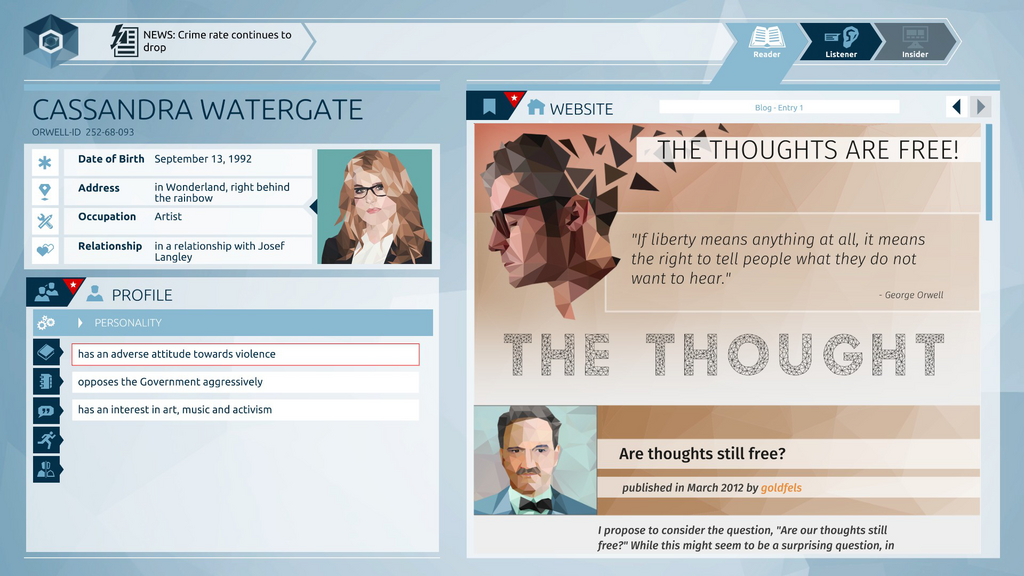
Your first task is to define this lens for your podcast. Don't try to cover everything. Pick a specific area where the parallels feel strongest to you. Is it digital privacy? Algorithmic bias in hiring or lending? The way political language, or doublethink as Orwell termed it, is used to obscure meaning? This specific focus is the foundation of your entire series.
doublethink
noun
The acceptance of or mental capacity to accept contrary opinions or beliefs at the same time, especially as a result of political indoctrination.
From Critique to Investigation
A common mistake in commentary is to simply state a critique. An essay can argue that "corporate data collection is bad." A great audio story shows it. This means shifting your mindset from that of an essayist to that of an investigator. Your podcast series needs a driving question that you will explore over several episodes.
This central question forms your investigative thesis. It's the engine of your narrative. Instead of just stating your point, you are taking the listener on a journey to uncover the answer. This creates suspense and keeps people listening. It turns your abstract social critique into a tangible search for answers.
Good Thesis: "This series investigates how algorithmic credit scoring systems in the US perpetuate historical biases, effectively creating a modern-day redlining system."
Weak Thesis: "This series is about the problems with algorithms in banking."
Your thesis should be specific, arguable, and investigative. It promises the listener that you're going to dig into a complex issue, present evidence, and connect the dots between an abstract system and its real-world consequences for actual people.
Mapping Your Narrative Beats
With your lens and thesis in place, you can start outlining your series. A podcast series is not a list of facts; it's a story. Each episode should function as a narrative beat in a larger story arc. Think of it like a detective story. The first episode introduces the mystery (your driving question). Subsequent episodes uncover clues, interview witnesses, and follow leads. The final episode brings the evidence together to present a conclusion.
| Beat Type | Function in Your Podcast | Example (Thesis on Algorithmic Redlining) |
|---|---|---|
| The Hook | Introduce the problem through a personal story. | Episode 1: The story of a family denied a home loan by an algorithm, despite having a good financial record. |
| The System | Explain the abstract mechanism at play. | Episode 2: How do these credit algorithms actually work? Who builds them? What data do they use? |
| The History | Provide context. How did we get here? | Episode 3: A look back at the history of redlining and housing discrimination in the United States. |
| The Conflict | Who benefits from this system? Who is fighting it? | Episode 4: Interviews with both a tech CEO defending the algorithms and an activist lawyer suing the company. |
| The Stakes | What is the larger social consequence? | Episode 5: Exploring the long-term impact on generational wealth and community segregation. |
These narrative beats transform your critique into an engaging investigation. You're no longer just telling the audience what to think. You're presenting a case, piece by piece, allowing them to connect the evidence with you. This structure provides and respects the listener's intelligence. It makes the abstract systemic conflict feel personal and urgent.
This is how you build a podcast that doesn't just inform, but captivates. By applying an Orwellian lens to a specific modern issue, framing it as an investigation, and structuring it with clear narrative beats, you can create a powerful piece of audio storytelling that challenges the status quo.