Dynamics of Unsaturated Solutions
Solubility Dynamics
The Molecular Dance
When you drop a sugar cube into water, it doesn't just sit there. It vanishes. But where does it go? The water molecules, constantly in motion, bombard the sugar crystal. This isn't a gentle nudge; it's a relentless assault. The water molecules, being polar, pull on the sugar molecules, breaking them away from the crystal and surrounding them. This process continues as long as there are enough free water molecules to carry away the sugar.
Unsaturated Solution
adjective
A solution that contains less solute than the maximum amount the solvent can dissolve at a given temperature and pressure. More solute can still be dissolved into it.
An unsaturated solution is simply one that has spare capacity. There are still plenty of solvent molecules available to dissolve more solute. Think of it like a dance floor. At the start of the night, there's lots of room. As more people (solute) arrive, the floor (solvent) fills up. An unsaturated solution is a dance floor with plenty of space left. The dissolving process is driven by the random motion of molecules and the balance of intermolecular forces between solute-solute, solvent-solvent, and solute-solvent particles. For dissolving to occur, the attraction between the solvent and solute particles must be strong enough to overcome the forces holding the solute particles together.
How Much is Dissolved?
Chemists need a precise way to describe a solution's 'capacity.' We do this by measuring concentration, which tells us how much solute is present in a certain amount of solvent or solution. One of the most common units of concentration is molarity.
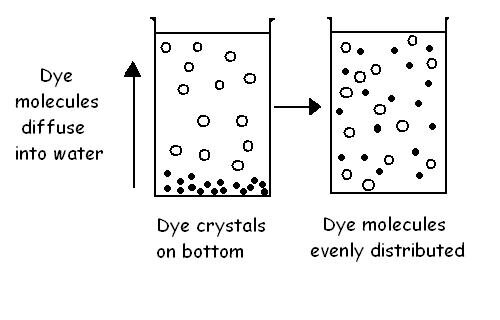
For an unsaturated solution, the calculated molarity will always be less than the solvent's maximum capacity at that temperature. This dynamic is where concentration gradients come into play. Initially, the concentration of solute is highest right next to the crystal and zero farther away. This difference drives solute particles to diffuse outward, spreading evenly throughout the solvent until the entire solution reaches a uniform concentration. In an unsaturated solution, this process can continue as long as you keep adding solute.
Visualizing Solubility
How do we know the maximum capacity of a solvent? Scientists compile this information into solubility curves. These graphs plot the maximum amount of a solute that can dissolve in a given amount of solvent (usually 100g) over a range of temperatures.
Any point that falls below the curve for a specific substance represents an unsaturated solution. For most solids, like the Potassium Nitrate shown above, solubility increases with temperature. Why? Higher temperatures give the solvent molecules more kinetic energy. They move faster and collide with the solute more forcefully and frequently, which helps break apart the solute's structure and allows more of it to dissolve.
Understanding this relationship between concentration, temperature, and intermolecular forces is key to controlling chemical reactions and creating solutions with specific properties.