Dynamics of the Hydrological Cycle
Global Energy Dynamics
A Planet-Sized Heat Engine
The familiar water cycle is more than just water moving around. It’s a massive thermodynamic engine, powered by the sun. Solar energy drives the entire system, not just by warming the planet, but by fuelling the constant phase changes of water. This movement of energy is what shapes our weather and climate.
When solar radiation strikes a water body, its energy is absorbed. This energy doesn't just raise the water's temperature; it excites the water molecules enough to break their bonds and escape as vapour. This process requires a tremendous amount of energy, known as the (). For water, this is about 2.5 million joules per kilogram. The energy isn't lost, but stored within the water vapour, ready to be released elsewhere when the vapour condenses back into liquid.
Similarly, the energy required to melt ice into liquid water is called the latent heat of fusion (), and it's about 334,000 joules per kilogram. While smaller than , it's still a significant factor in polar and alpine regions.
The Surface Energy Budget
The Earth's surface constantly juggles incoming and outgoing energy. The balance of this exchange is called net radiation (). It's the difference between the solar energy the Earth absorbs and the thermal energy it radiates back out to space. This available energy at the surface has to go somewhere. It gets partitioned into three main pathways, described by the surface energy balance equation.
Think of net radiation as your monthly income. You can spend it on different things: heating your house (sensible heat), paying for your water bill (latent heat), or putting some into savings (ground heat). How this energy 'income' is spent determines the local climate. Over a desert, most of the energy becomes sensible heat, making the air very hot. Over a forest or ocean, a large portion becomes latent heat, fuelling evaporation and making the air more humid.
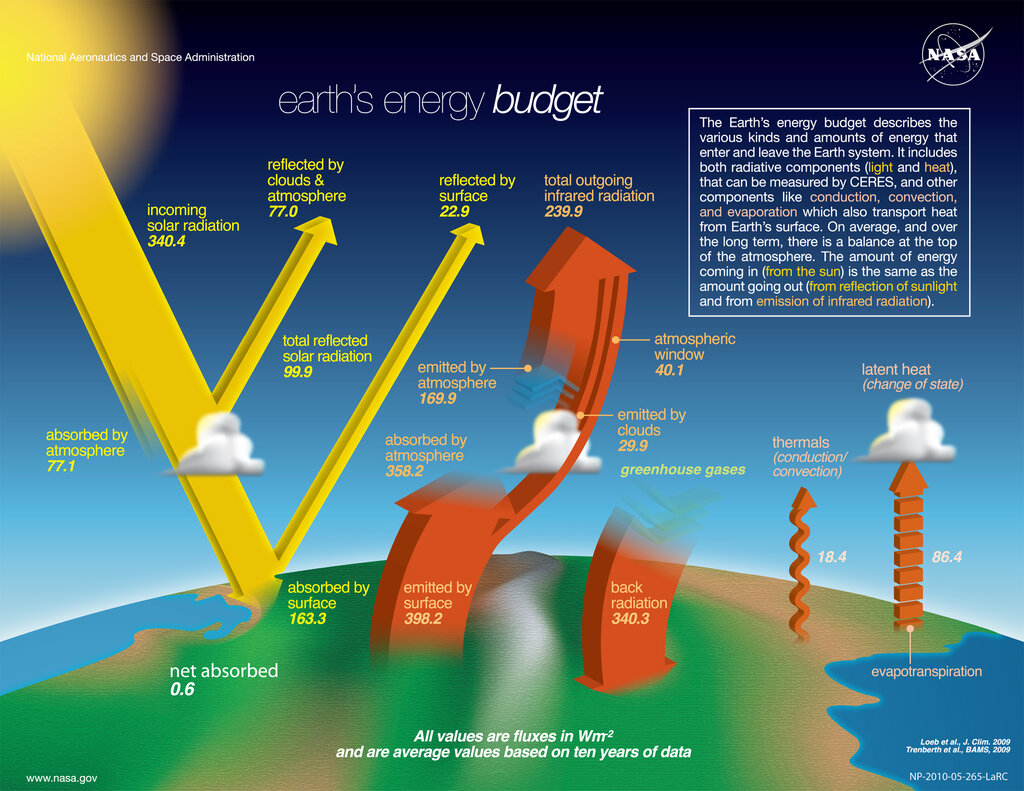
Partitioning the Energy
How do we measure the split between sensible and latent heat? Meteorologists use a simple but powerful tool called the (). It's the ratio of sensible heat to latent heat flux. This value tells us what the atmosphere is doing with the available energy at the surface.
The partitioning of energy isn't just a local phenomenon. On a global scale, these differences in heating create pressure gradients in the atmosphere. The tropics receive more direct solar radiation, leading to high rates of evaporation (low Bowen ratio) and a massive upward transport of heat and moisture. This warm, moist air rises and moves toward the poles, releasing its latent heat as it cools and condenses. This process is the fundamental driver of global atmospheric circulation patterns, like the Hadley cells, which transport energy from the equator to higher latitudes.
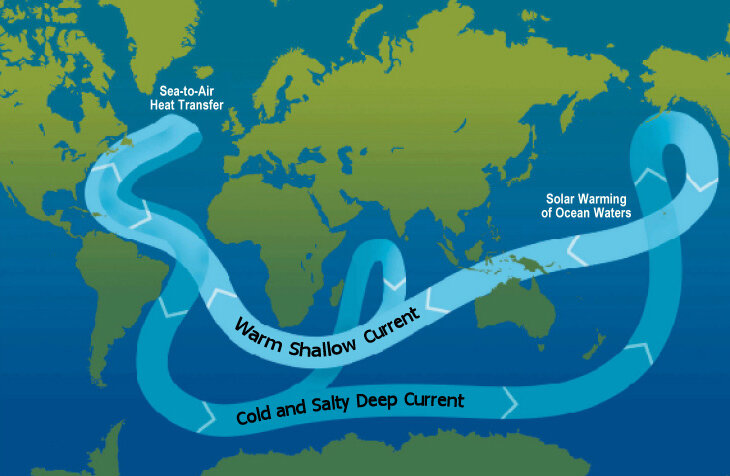
Understanding the thermodynamics of the water cycle reveals the deep connection between energy and water. The movement of water across the globe is fundamentally a story of energy being absorbed, transported as latent heat, and released elsewhere, shaping everything from local humidity to planet-wide climate systems.
What is the primary energy source that powers the Earth's water cycle?
The energy absorbed by water to change from a liquid to a vapour is known as: