Dynamics of the Earth Surface
Equilibrium and Thresholds
The Landscape's Balancing Act
Landscapes aren't static sculptures. They are dynamic systems in a constant state of flux, governed by a delicate balance between opposing forces. This condition is known as dynamic equilibrium. While a mountain range might look unchanged over a human lifetime, it's actually responding to a continuous tug-of-war. On one side are the driving forces, like gravity pulling material downslope, the energy of flowing water, or the immense power of tectonic uplift pushing land skyward.
On the other side are the resisting forces. These include the internal strength of rock, the friction between soil particles, and the binding power of plant roots. In a state of dynamic equilibrium, the rate of material being added or uplifted is roughly equal to the rate at which it's being eroded and carried away. The overall form of the landform, like the average slope of a hillside, remains relatively constant over long periods.
Think of it like a treadmill. The belt is constantly moving backward (erosion), but you keep running forward (uplift or sediment supply) to stay in the same place. The system is active, but your position is stable.
When the Balance Breaks
This equilibrium doesn't last forever. Systems can be pushed past a critical point, or geomorphic threshold, where they abruptly shift to a new state. Imagine slowly adding sand to a pile. For a long time, each grain just makes the pile slightly bigger. Then, one final grain triggers a collapse. That's a threshold.
These tipping points can be triggered in two main ways. An extrinsic threshold is crossed due to an external event. A stable slope might withstand average rainfall for centuries, but a single, exceptionally intense storm can provide enough water to saturate the soil, overcome friction, and trigger a landslide. The storm is the external shock.
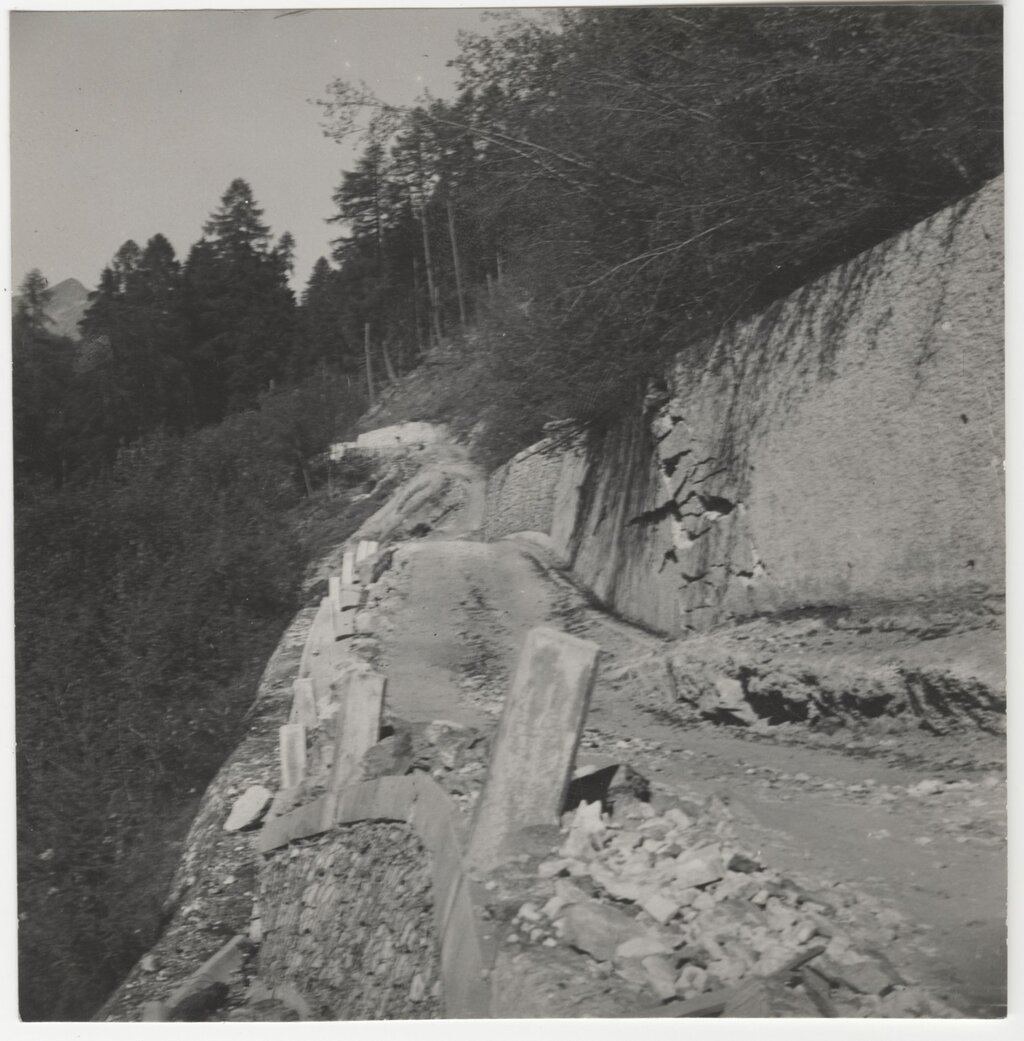
Conversely, an intrinsic threshold is crossed when the system changes itself to the point of failure. A river might slowly carve away at the base of a cliff. Each grain of sediment it removes is a tiny, incremental change. Eventually, the cliff becomes so undercut that its own weight is enough to cause a collapse, without any external trigger. The system's own evolution pushed it past the breaking point.
Cycles of Change
Once a threshold is crossed, the system enters a period of adjustment. The time it takes for the landscape to react to a disturbance and find a new equilibrium is called relaxation time. After a major landslide, for example, the new, gentler slope is out of balance with the river at its base. The river will work to erode the landslide debris, and new vegetation will slowly colonize the scar. This process of re-stabilization might take decades or even centuries.
These changes are often driven by feedback loops, where the output of a process influences the process itself. A negative feedback loop is self-regulating and promotes stability. If a river channel gets too steep, the water flows faster, causing more erosion. This erosion lowers the channel bed, reducing the slope and slowing the water down again. The initial change (steepening) triggers a response (erosion) that counteracts it.
A positive feedback loop, on the other hand, is self-reinforcing and drives accelerating change. Consider the formation of a gully on a bare hillside. A small channel concentrates runoff. This concentrated flow has more erosive power, which deepens and widens the channel. The larger channel can now capture even more runoff, which further increases its erosive power, and so on. The process amplifies itself, rapidly transforming the landscape. These loops are often what push a system across a threshold.
Finally, the force-resistance relationship is the fundamental equation governing all these processes. When driving forces like shear stress from flowing water exceed the resisting forces like the cohesion of a riverbank's sediment, erosion occurs. Change happens at the specific point where force overcomes resistance. Understanding this balance, the thresholds that disrupt it, and the feedback loops that guide the response is key to reading the story written on the landscape.
Time to check your understanding of these dynamic processes.
What is the best definition of "dynamic equilibrium" in the context of landscapes?
A river slowly undercutting the base of a cliff over many years, eventually causing it to collapse under its own weight, is an example of a system crossing an ______ threshold.
By moving beyond simple descriptions of landforms, we can see the landscape as a complex system of inputs, outputs, and adjustments. It's a world defined not by permanence, but by a constant, dynamic search for balance.