Dynamics of the Cold War Era
Containment and Truman Doctrine
The Iron Curtain Descends
The celebrations at the end of World War II were short-lived. The alliance between the United States and the Soviet Union, born of necessity, quickly fractured. Deep ideological rifts, papered over during the war, re-emerged with a vengeance. The world wasn't entering an era of peace, but a new kind of conflict: a cold war.
Winston Churchill, in a 1946 speech in Fulton, Missouri, gave this new reality a name. He declared that "from Stettin in the Baltic to Trieste in the Adriatic, an has descended across the Continent." This wasn't a physical wall, not yet, but a stark ideological and political barrier. On one side were the democratic, capitalist nations of the West. On the other were the communist states being brought under the heel of the Soviet Union.
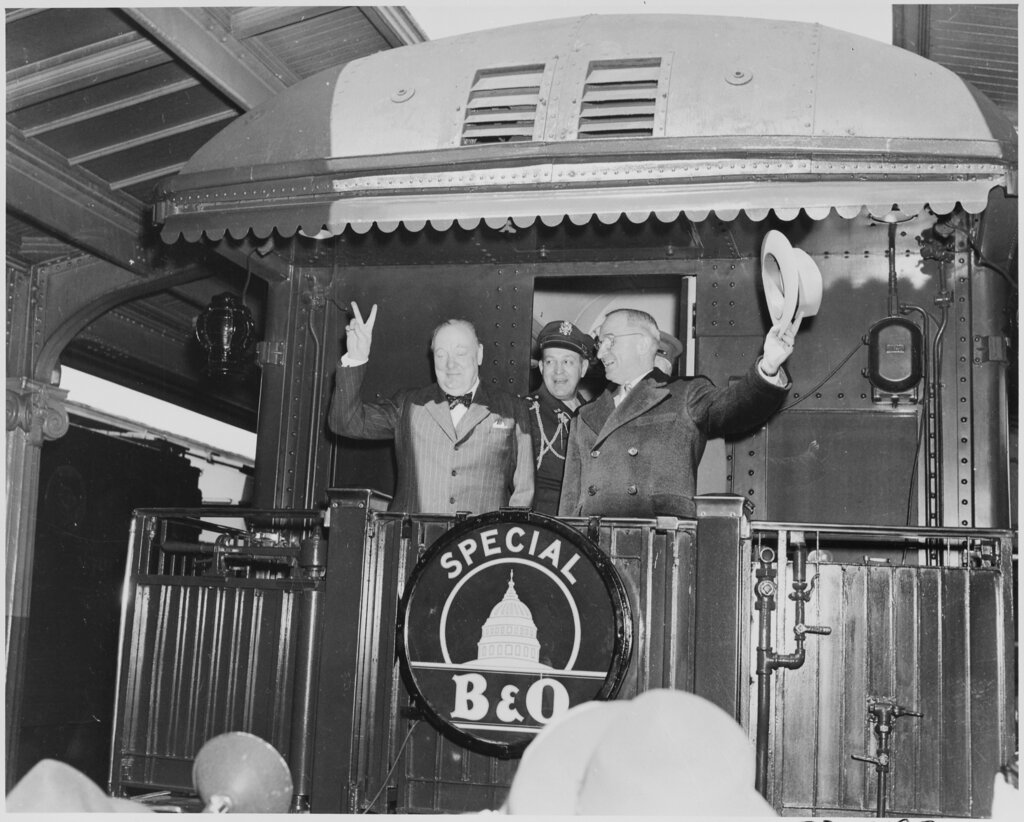
The Architect of Containment
American policymakers scrambled to understand the new Soviet threat. The guidance came from an unlikely source: a long, detailed diplomatic cable. In 1946, George F. Kennan, an American diplomat in Moscow, sent what became known as the Long Telegram to the State Department. In 8,000 words, he laid out a new strategy for dealing with the USSR.
Kennan argued that the Soviet Union was driven by a mix of traditional Russian insecurity and communist ideology. He believed they saw the world as hostile and were committed to expanding their sphere of influence. Direct military confrontation was too risky. Instead, Kennan proposed a policy of "containment."
The idea was simple but powerful: the U.S. and its allies should focus on preventing the spread of communism to new countries. Rather than trying to liberate nations already under Soviet control, they should apply firm, patient counter-pressure wherever the Soviets tried to expand. This marked a radical departure from America's traditional policy of isolationism.
From Theory to Practice
The first test of containment came quickly. By 1947, Great Britain, financially exhausted from the war, could no longer provide aid to Greece and Turkey. Greece was fighting a communist insurgency, and Turkey was under pressure from the Soviets over control of the Dardanelles strait. It seemed both countries might fall into the Soviet orbit.
President Harry S. Truman decided the U.S. had to act. In a speech to Congress, he outlined what became known as the Truman Doctrine.
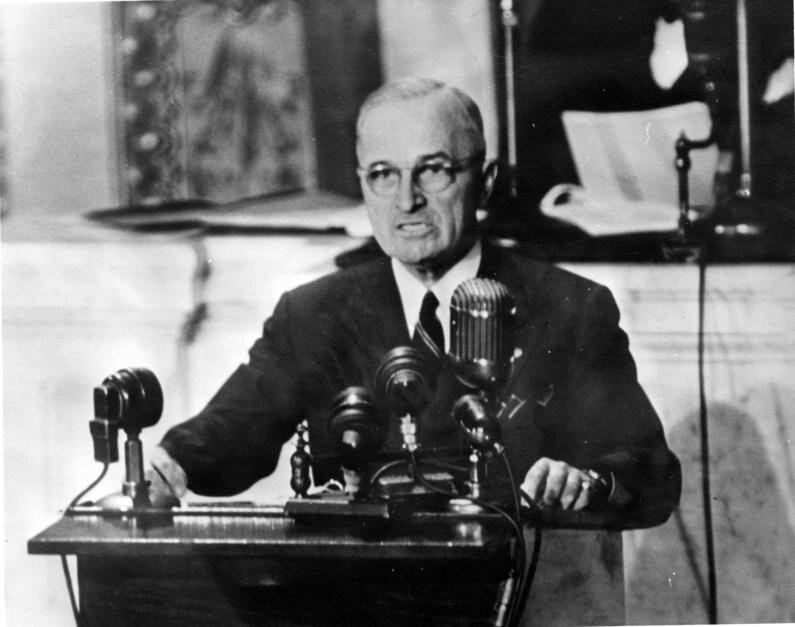
I believe that it must be the policy of the United States to support free peoples who are resisting attempted subjugation by armed minorities or by outside pressures.
This was a global pledge. The U.S. was no longer on the sidelines; it was now committed to defending nations against communist expansion. But containment wasn't just about military aid. American leaders believed economic instability was fertile ground for communism. A ruined Europe was a vulnerable Europe.
This led to the European Recovery Program, better known as the , named after Secretary of State George C. Marshall. From 1948 to 1951, the U.S. poured billions of dollars (over $150 billion in today's money) into rebuilding Western European economies. The aid was offered to all European nations, including the Soviet Union and its satellites, but Stalin forbade them from accepting it, deepening the continent's divide.
The Berlin Test
The first direct confrontation of the Cold War occurred in the heart of the old German empire. After the war, Germany and its capital, Berlin, were each divided into four occupation zones controlled by the U.S., Britain, France, and the Soviet Union. As the Western powers moved to unify their zones and create a new West German state, Stalin saw a threat.
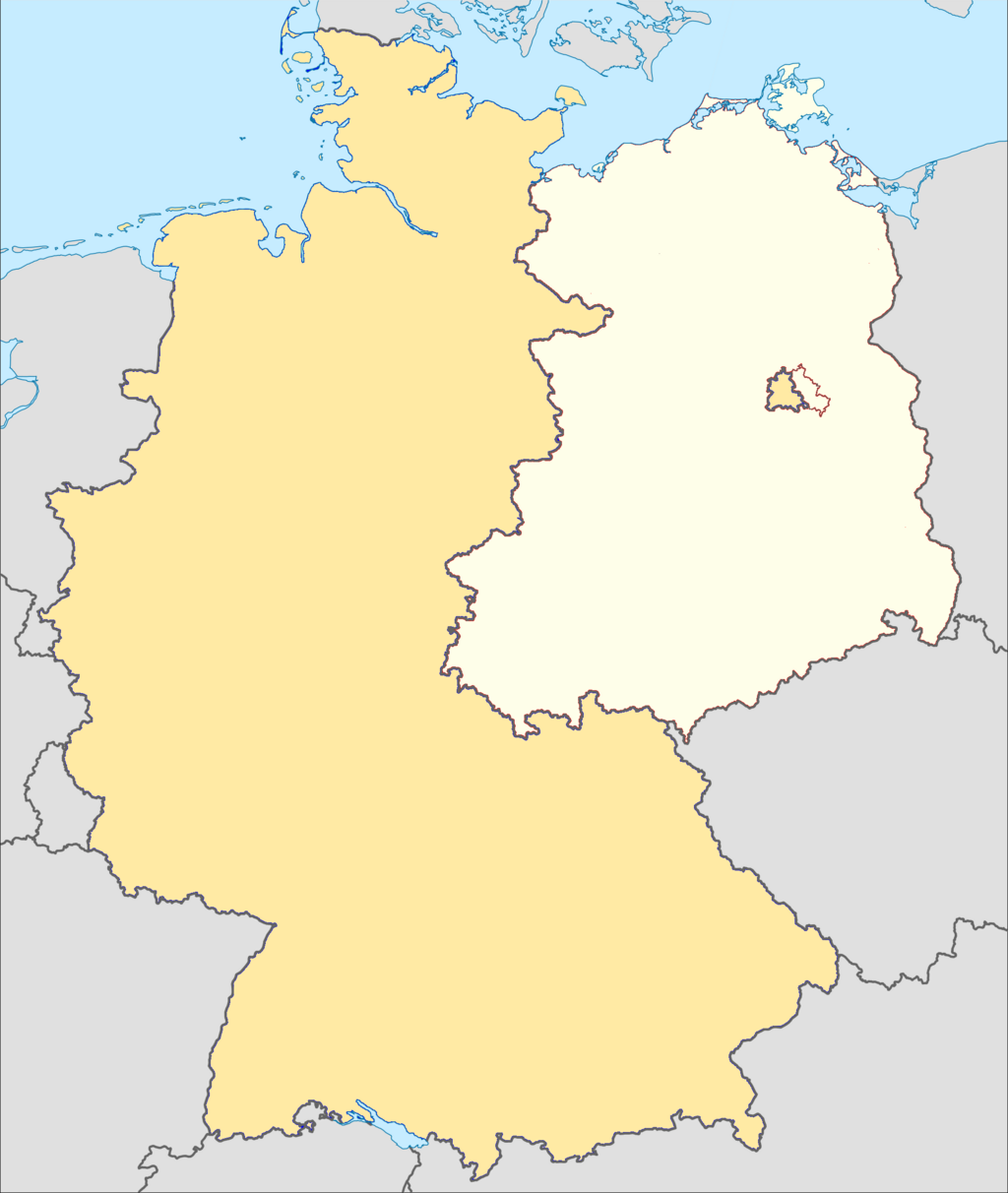
In June 1948, the Soviets cut off all road, rail, and canal access to West Berlin, which lay deep inside the Soviet zone. Their goal was to starve the 2.5 million inhabitants into submission and force the Western allies to abandon the city. Instead of retreating or forcing the blockade with tanks, the allies responded with a staggering logistical feat: the Berlin Airlift.
For nearly a year, American and British planes flew around the clock, landing every few minutes at Tempelhof Airport to deliver food, fuel, and supplies. They delivered over 2.3 million tons of cargo in total. By May 1949, it was clear the blockade had failed, and Stalin lifted it. The airlift was a massive political and propaganda victory for the West, demonstrating its resolve and capability without firing a shot.
Alliances Solidify
The Berlin Blockade convinced the Western powers that a formal military alliance was necessary for collective defense. In 1949, they formed the North Atlantic Treaty Organization (NATO). Its core principle, Article 5, stated that an attack on one member was an attack on all. This was a direct warning to the Soviet Union.
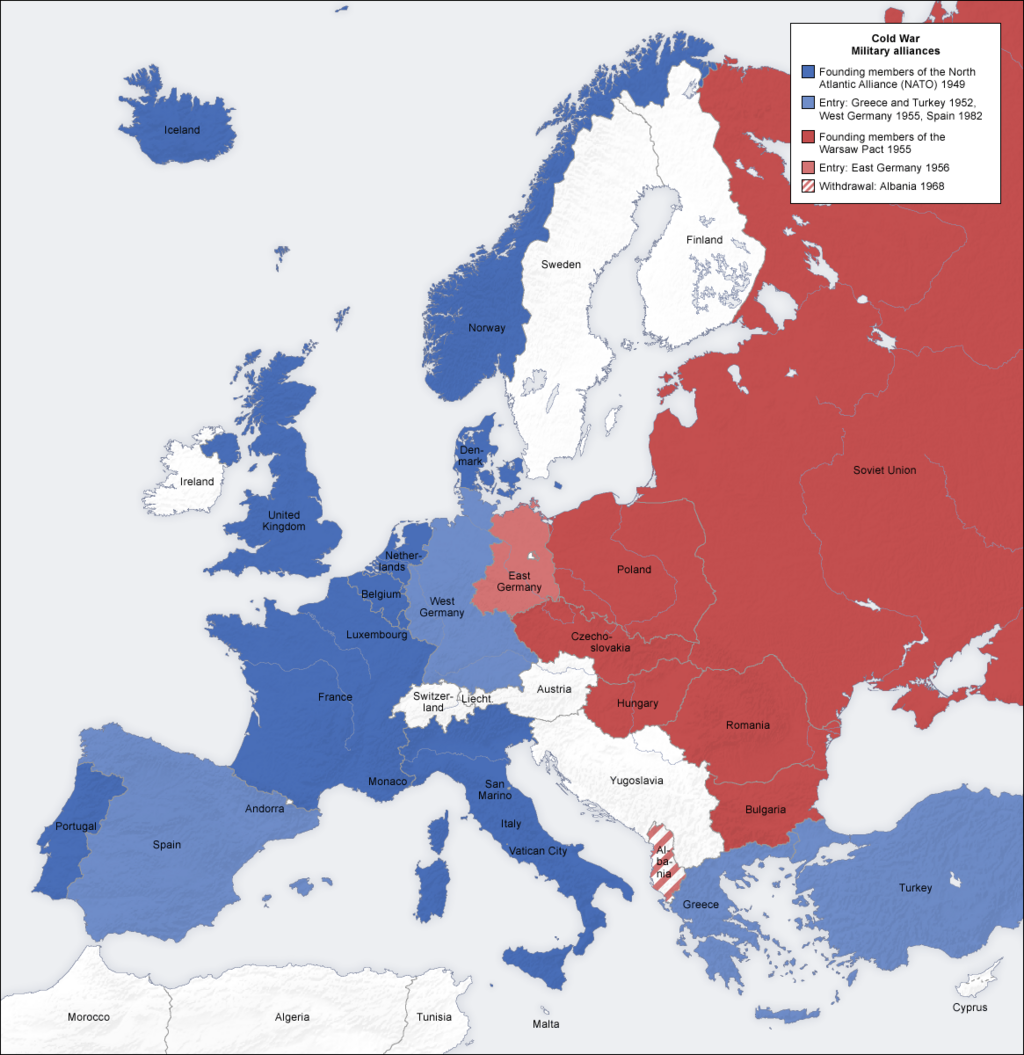
The Soviet Union responded in 1955 by creating its own military alliance, the Warsaw Pact, which formalized its military control over its Eastern European satellite states like Poland, Hungary, and Czechoslovakia. With the creation of these two opposing blocs, the Iron Curtain was no longer just a metaphor. It was a militarized border dividing a continent, setting the stage for decades of tense standoff.
Who famously declared that an "iron curtain" had descended across Europe, signifying the start of the Cold War?
What was the primary goal of the U.S. policy of "containment" as outlined in the Long Telegram?