Dynamic Stochastic General Equilibrium Models
Introduction to DSGE Models
Models That Run on Stories
Modern macroeconomics tries to understand the entire economy all at once. To do this, economists build complex simulations called Dynamic Stochastic General Equilibrium models, or DSGE models for short. It's a mouthful, but the name tells you everything you need to know.
Think of a DSGE model as a virtual economy in a computer. It has households, businesses, and a government, all making decisions based on a set of rules.
Let's break down the name:
- Dynamic: These models unfold over time. A decision made today, like saving for retirement or a company investing in a new factory, has consequences for the future. The model connects the present to what might happen next.
- Stochastic: The economy is full of surprises. A sudden spike in oil prices, a breakthrough technology, or a global pandemic are all unexpected “shocks.” DSGE models include these random events to better reflect the uncertainty of the real world.
- General Equilibrium: In the economy, everything is connected. The price of coffee is linked to farmers' wages, which are linked to what they buy at the grocery store. General equilibrium means the model tries to capture all these connections, ensuring that supply and demand balance out across all markets simultaneously.
Macroeconomic outcomes emerge from individuals' decisions, making it essential to model how agents interact with macro policy via consumption, investment, and labor choices.
These models are built on “microfoundations.” Instead of just looking at big-picture data like GDP and inflation, they start with the behavior of individual households and firms. The model assumes households try to maximize their well-being and firms try to maximize their profits. The interactions of these millions of decisions create the macroeconomic trends we observe.
A Brief Evolution
DSGE models weren't created overnight. They evolved from earlier ideas. In the 1980s, a group of economists developed Real Business Cycle (RBC) models. These were the first to use this micro-founded, general equilibrium approach. RBC models tried to explain economic booms and busts as rational responses to shocks, mainly in technology.
But RBC models had a limitation: they assumed prices and wages adjusted instantly to any shock. In reality, prices can be “sticky.” A restaurant doesn't print a new menu every day just because the price of tomatoes changed. This stickiness matters, as it can lead to periods of unemployment that RBC models couldn't easily explain.
This led to the development of New Keynesian models. They kept the core structure of RBC models but added price stickiness and other real-world frictions. This combination proved much more powerful for explaining how the economy actually behaves, especially in the short run. Today, most DSGE models used by policymakers are New Keynesian.
A Lab for Policy
So, what are these models for? Their primary use is policy analysis. Central banks like the Federal Reserve and international organizations like the International Monetary Fund (IMF) use DSGE models as a kind of economic flight simulator.
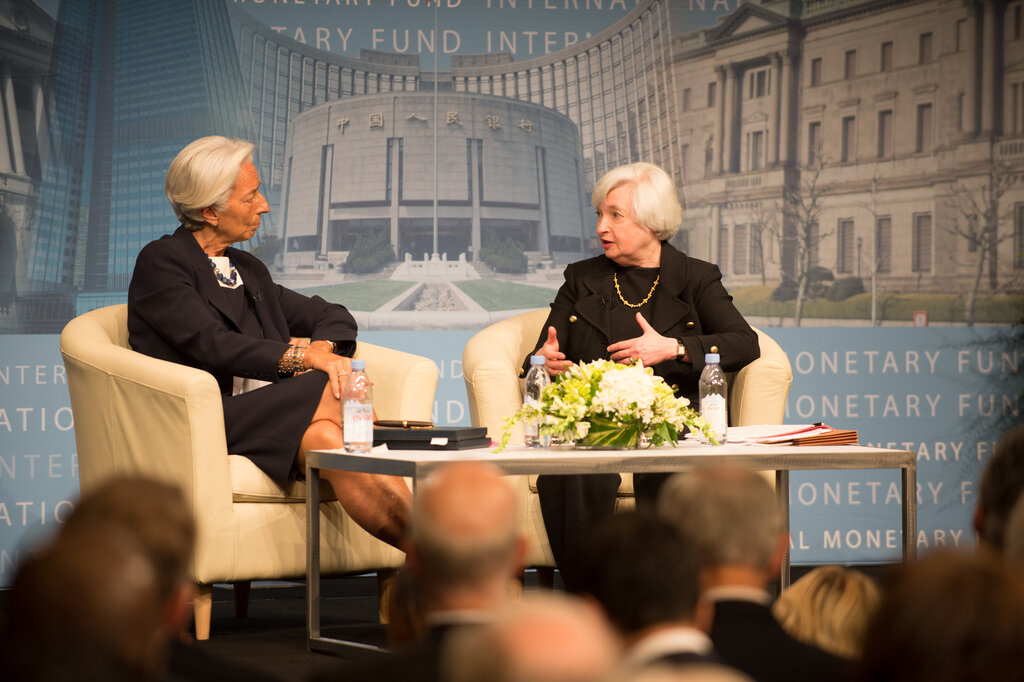
Policymakers can use the models to ask “what if” questions. What might happen to inflation and unemployment if the central bank raises interest rates by half a percent? What would be the economic fallout of a major disruption to global trade? The model simulates how households and firms would likely react, giving policymakers a glimpse into the potential future.
These simulations help guide difficult decisions. By running different policy scenarios through the model, economists can compare potential outcomes and advise leaders on the best course of action. They aren't crystal balls—the real world is always more complex than any model—but they provide a structured way to think through the consequences of major economic policies.
Time to check your understanding.
In the context of DSGE models, what does the term "Stochastic" refer to?
What is the primary purpose of using DSGE models for institutions like the Federal Reserve or the IMF?
DSGE models represent a powerful attempt to create a coherent story of the entire economy, starting from the basic motivations of the people and businesses within it.