DS3231 Real-Time Clock Explained
Introduction to Real-Time Clocks
The Clock That Never Sleeps
Most electronic devices know what time it is. Your phone, your computer, your car's dashboard—they all display the current time and date. But what happens when you turn them off? How do they remember the time when you power them back on? The answer is a tiny, specialized component called a Real-Time Clock, or RTC.
An RTC is essentially a digital wristwatch for a circuit board. Its single, dedicated job is to keep track of seconds, minutes, hours, days, months, and years. Unlike the main processor in a device, which is busy doing many things at once, the RTC just focuses on time. This is incredibly useful because it frees up the main system from the constant task of timekeeping.
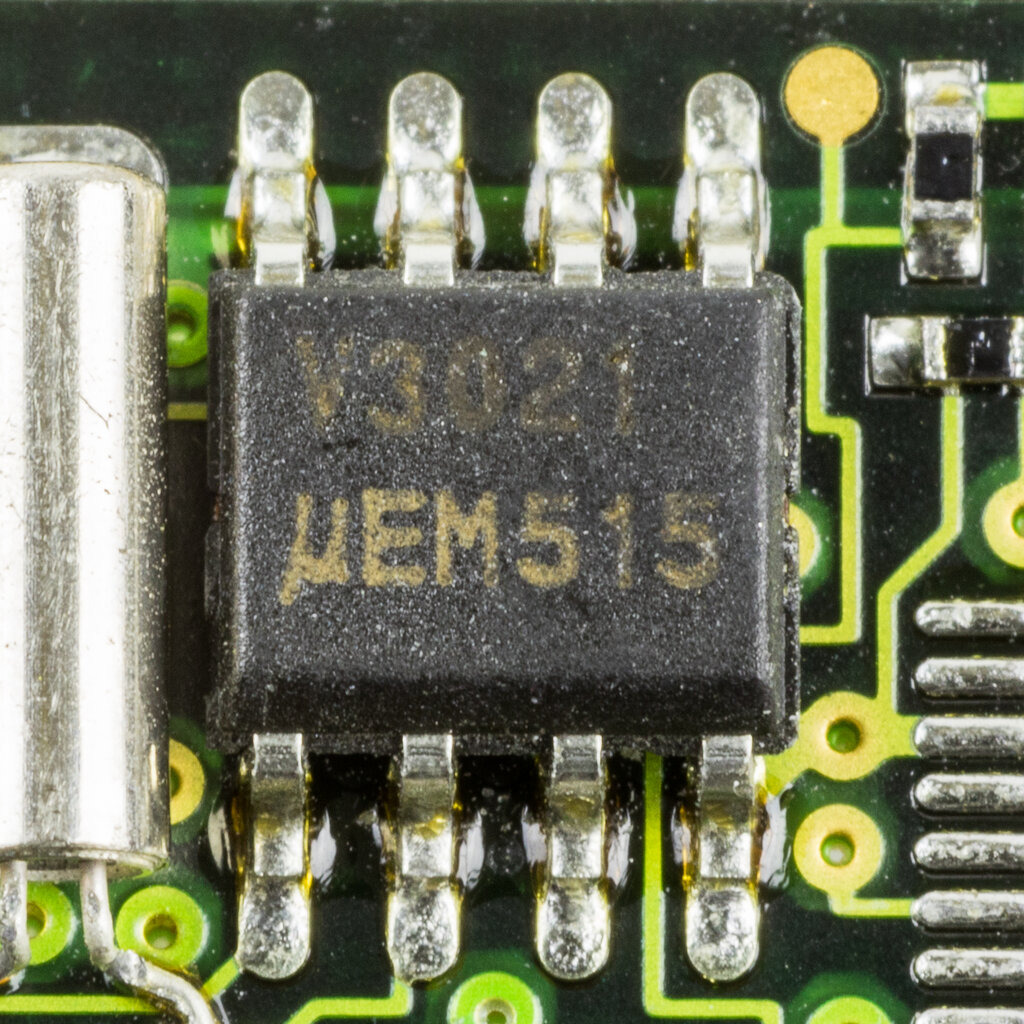
The most important feature of an RTC is that it continues to run even when the main device has no power. It's an independent timekeeper.
How an RTC Works
An RTC is a simple but clever system made of a few key parts. At its core is a crystal oscillator. This is usually a tiny piece of quartz crystal that vibrates at a very precise, stable frequency when a small voltage is applied to it.
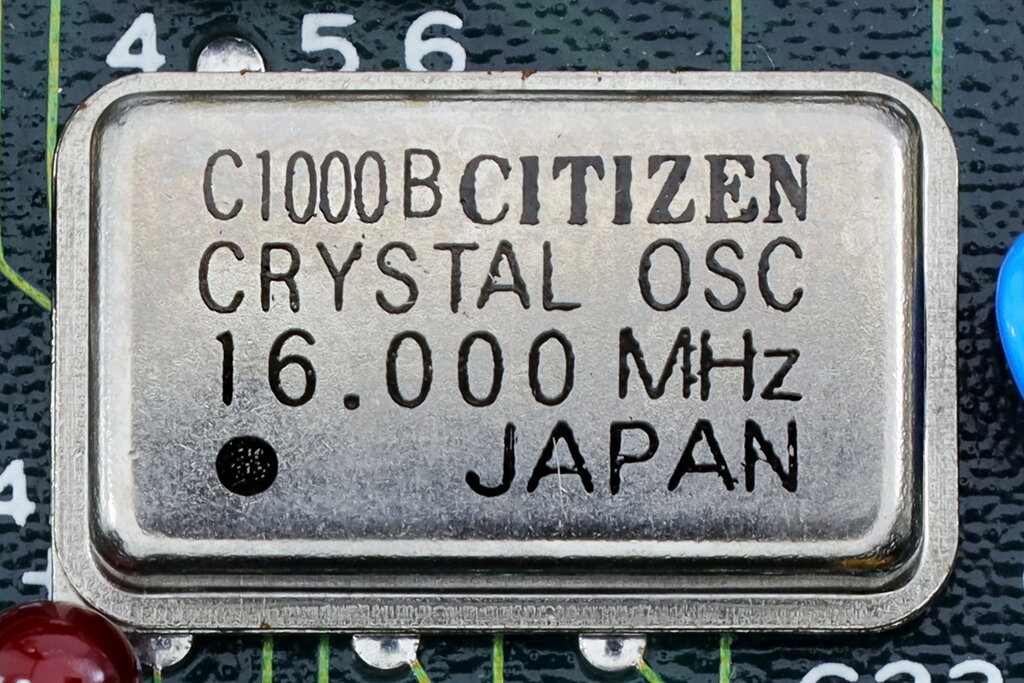
Think of it as a microscopic tuning fork humming at a perfect pitch. The standard frequency for a watch or RTC crystal is 32,768 times per second. This number isn't random—it's exactly $2^{15}$. This makes it very easy for digital logic circuits to divide the frequency down to get a perfect one-second pulse.
Counter circuits inside the RTC chip count these pulses. After 32,768 pulses, one second has passed. The counter adds one to the 'seconds' value. When the seconds roll over from 59 to 0, it adds one to the 'minutes' value, and so on, all the way up to the year.
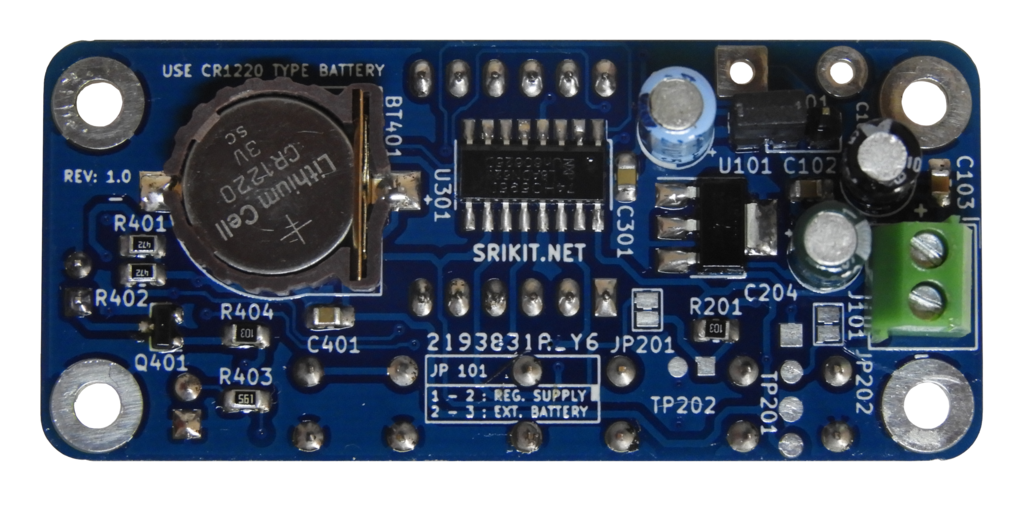
To keep running when the main power is off, the RTC has its own power source: a small battery. This is often a little coin cell that can power the low-energy RTC circuit for years.
Why Accuracy is Crucial
In many applications, knowing the exact time is not just a convenience; it's essential. Imagine a scientific instrument in a remote location logging environmental data. Each measurement—temperature, humidity, pressure—needs an accurate timestamp. Without it, the data is just a list of numbers with no context. You wouldn't know if a temperature spike happened at noon or in the middle of the night.
Accurate timekeeping turns raw data into a meaningful story.
This need for precision extends everywhere. Automated systems in factories rely on precise timing to coordinate machinery. Network routers need synchronized clocks to manage data traffic efficiently. Even a simple sprinkler system needs to know when to turn on and off. In all these cases, the RTC provides a reliable, independent source of time.
RTCs in Embedded Systems
For hobbyists and engineers working with microcontrollers like Arduino or Raspberry Pi, RTCs are a fundamental building block. If you want to build a device that performs actions based on a schedule, you'll likely need an RTC.
Some common projects that use RTCs include:
- Custom alarm clocks that can trigger lights, sounds, or other devices.
- Data loggers for gardens, aquariums, or home energy monitoring.
- Automated pet feeders that dispense food at specific times each day.
- Time-based security systems that arm or disarm on a schedule.
By adding an RTC module to a project, you ensure that it can maintain accurate time for years, regardless of power outages or system resets. It makes the device more robust and reliable.
Ready to check your understanding?
What is the primary function of a Real-Time Clock (RTC)?
The standard crystal oscillator in an RTC vibrates at 32,768 Hz. Why is this specific number used?
Now you know how devices keep a steady sense of time, all thanks to this small but vital component.