Drumming Fundamentals
Drum Kit Setup
Meet Your Drum Kit
A standard drum kit is a collection of drums, cymbals, and hardware working together. While setups can get complex, most are built around the same five-piece core. Let's get to know the key players.
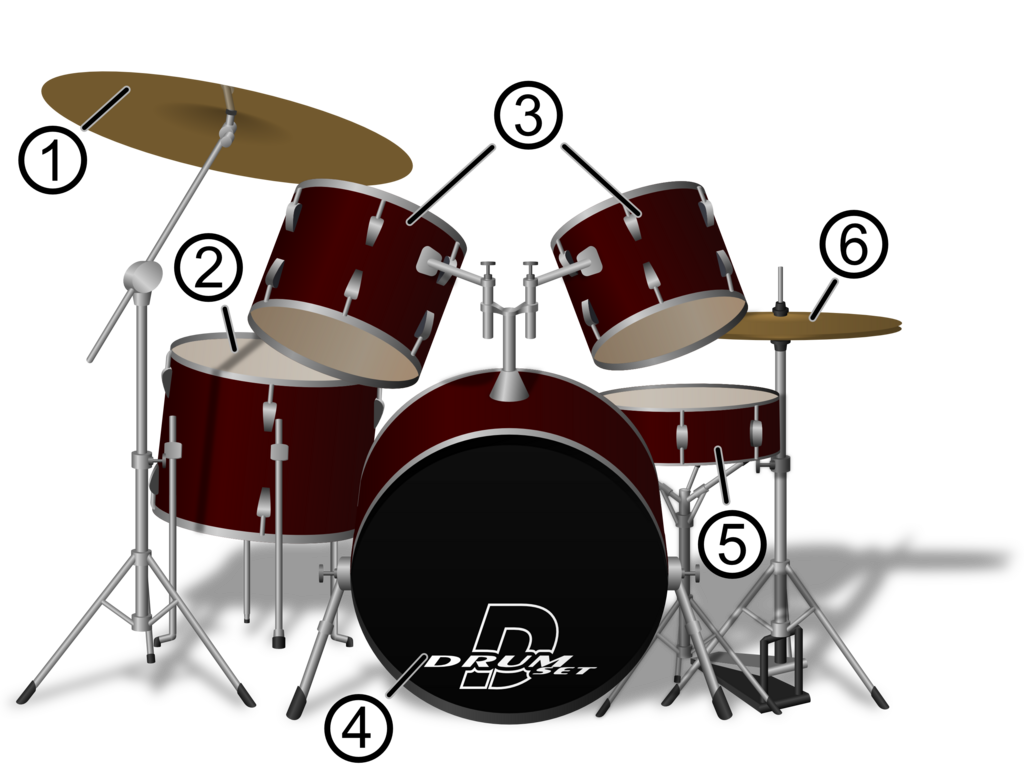
Here's a quick rundown of what you're looking at:
- Bass Drum (or Kick Drum): This is the large drum that sits on the floor. You play it with a foot pedal, and it provides the low-end punch of the beat.
- Snare Drum: Positioned right in front of you, the snare is the heart of the kit. It has metal wires (snares) stretched across the bottom head, which give it a sharp, crisp crack.
- Toms (or Tom-Toms): These drums provide tonal variety. A standard kit has two mounted on top of the bass drum (rack toms) and a larger one standing on its own legs (a floor tom).
- Hi-Hat: This is a pair of cymbals mounted on a stand with a foot pedal. You can play them with sticks while they're closed, open them with the pedal for a "swoosh" sound, or close them sharply with your foot.
- Cymbals: Besides the hi-hat, you'll typically have a large ride cymbal for playing steady patterns and a crash cymbal for accents.
Setting Up for Comfort
How you arrange your kit has a huge impact on your playing. A good setup feels natural, prevents injuries, and helps you play more efficiently. It all starts with you.
Position and Posture are essential for learning to play an instrument.
First, adjust your drum throne (your stool). Sit down and set the height so your thighs are angled slightly downward. Your feet should be flat on the floor.
Next, position the bass drum pedal and the hi-hat pedal. Place them where your feet naturally rest. You shouldn't have to strain to reach either one. The bass drum itself will be attached to its pedal.
A good rule of thumb: Your knees should be just below your hips, forming an angle slightly greater than 90 degrees.
Now, bring in the snare drum. Place it between your legs. Adjust the height and angle so you can strike the center of the drum without hitting the rim accidentally. Your arms should be relaxed.
With the core pieces in place, add the toms. Mount the rack toms over the bass drum and place the floor tom to your side. Arrange them in a gentle arc so you can move between them smoothly just by rotating your torso, not by stretching your arms out awkwardly.
Finally, position your cymbals. The ride cymbal usually goes on the same side as your floor tom, and the crash goes on the other. Set them at a height and angle that's easy to strike. The goal is to have everything within a comfortable reach.
Why It Matters
Taking the time to set up your kit properly isn't just about comfort, it's about building a solid foundation. An ergonomic setup allows your body to move naturally, which means you can play for longer without getting tired or sore. It prevents bad habits from forming and makes complex patterns easier to learn later on.
A comfortable drummer is a better drummer. Your setup should feel like an extension of yourself, allowing you to focus on what really matters: making music.
What component gives the snare drum its characteristic sharp, crisp "crack" sound?
According to proper ergonomic setup, your drum throne should be set at a height where your thighs are...
Once your kit is set up, you're ready to start playing.