Drumming Fundamentals for Beginners
Drum Kit Setup
Your Drum Kit's Anatomy
A standard drum kit is a collection of drums and cymbals that form a single instrument. While setups can get complex, most are built around a few key pieces. Let's start with the drums themselves.
The core of the kit consists of the bass drum, the snare drum, and a set of toms.
The bass drum, or kick drum, is the largest drum and sits on the floor. You play it with a foot pedal, and it provides the low-end punch of the beat. The snare drum sits on a stand between your legs. It has a set of metal wires (snares) stretched across its bottom head, which give it a sharp, rattling sound. Finally, you have the toms, which come in various sizes. Most kits have two mounted on top of the bass drum (rack toms) and a larger one standing on its own legs (a floor tom). They provide a range of melodic tones.
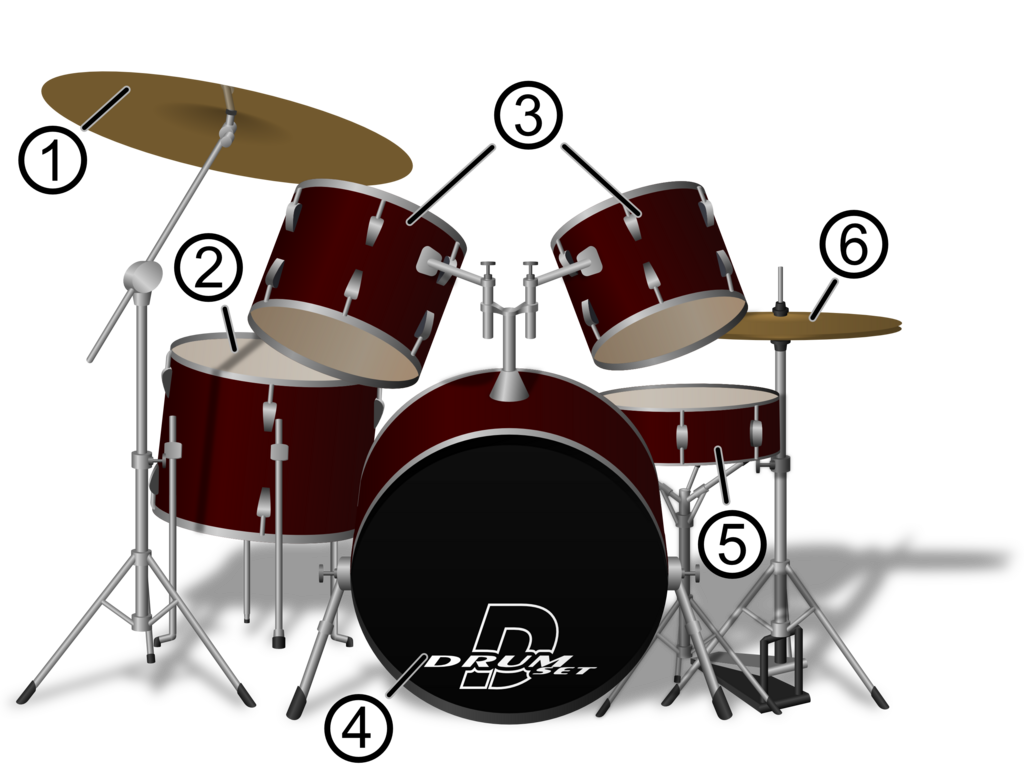
Next are the cymbals, which add shimmer and accent to the rhythm. The hi-hat is a pair of cymbals mounted on a stand with a foot pedal. You can play it with sticks while it's closed, open it with the pedal for a sizzling sound, or close it sharply with your foot.
The ride cymbal is typically the largest cymbal in the kit. It's used for playing steady, rhythmic patterns. The crash cymbal is used for accents, creating a loud, explosive sound that decays quickly. Most basic kits come with one of each, but drummers often add more.
Building Your Command Center
Setting up your drum kit is about creating an ergonomic cockpit where everything is within comfortable reach. The goal is efficiency, so you can play without twisting, stretching, or straining. Your setup starts not with a drum, but with your seat.
Your drum throne is the foundation of your entire setup. If your throne isn't right, nothing else will be.
Adjust the height of your throne so that your thighs are angled slightly downward when your feet are flat on the floor. A 90-degree angle at your knees is okay, but a slightly more open angle (around 100-110 degrees) is even better. This position gives you balance and power without putting stress on your lower back or hips.
Once your throne is set, place your bass drum pedal and hi-hat pedal. Sit on the throne and let your feet fall naturally. Where they land is where your pedals should go. Your bass drum pedal will be for your dominant foot (usually your right foot for right-handed players), and the hi-hat pedal will be for your other foot. Place the bass drum itself where the pedal feels most natural.
With your foundation in place, bring in the snare drum. Position it directly between your legs. It should be low enough that you can strike the center without hitting the rim, but high enough that your thighs don't get in the way. Angle it slightly towards you for a natural wrist angle.
Next, add the toms. Mount the rack toms over the bass drum so they form a comfortable arc, easy to move between. The floor tom should sit next to your dominant leg, at roughly the same height and angle as your snare drum. Finally, place your ride and crash cymbals. The ride cymbal usually goes above the floor tom, and the crash cymbal goes above the hi-hat and snare. Adjust their height and angle so you can strike them easily without overextending your arms.
Finding Your Posture
Proper posture is crucial for preventing injury and building stamina. Think of it as the alignment that lets your body work with you, not against you.
Sit up straight on your throne, keeping your spine naturally aligned. Imagine a string pulling the top of your head towards the ceiling. Your weight should be centered on the throne, balanced between your seat and your feet. Keep your shoulders relaxed and down, not hunched up by your ears.
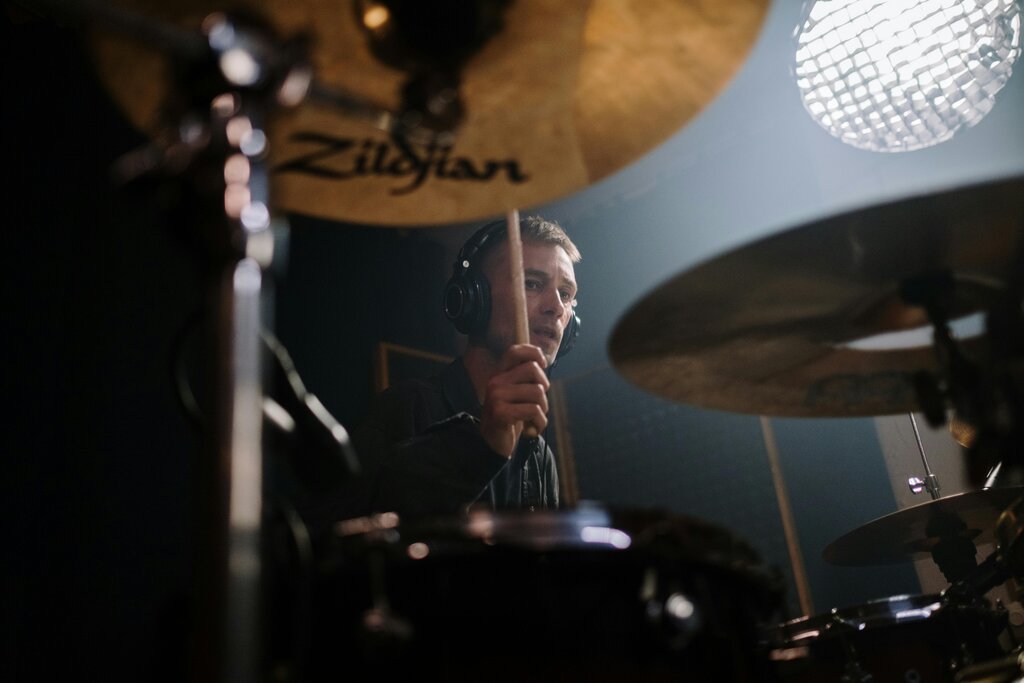
Your arms should hang loosely from your shoulders. When you bring your hands up to play, your elbows should be at a comfortable, open angle, not tucked in tightly or flared out wide. This relaxed frame allows for fluid motion across all the drums and cymbals.
Everything about your setup and posture should feel natural. If you find yourself reaching, twisting, or feeling any pain, stop and readjust. A comfortable drummer is a better drummer.
Which drum in a standard kit gets its characteristic sharp, rattling sound from a set of metal wires stretched across its bottom head?
What is the primary function of a ride cymbal?