Drum Rhythms and Fills
Warm-Up Exercises
The Foundation of Good Drumming
Before a sprinter runs a race, they stretch. Before a drummer plays, they warm up. It’s not just about getting your muscles loose; it’s about preparing your mind and body to work together. Warming up builds control, improves timing, and primes your muscle memory for the patterns you’re about to play.
The best way to do this is with drum rudiments. Think of them as the scales a pianist plays or the alphabets of drumming. They are the fundamental sticking patterns that form the basis of nearly everything you'll play on the drum set.
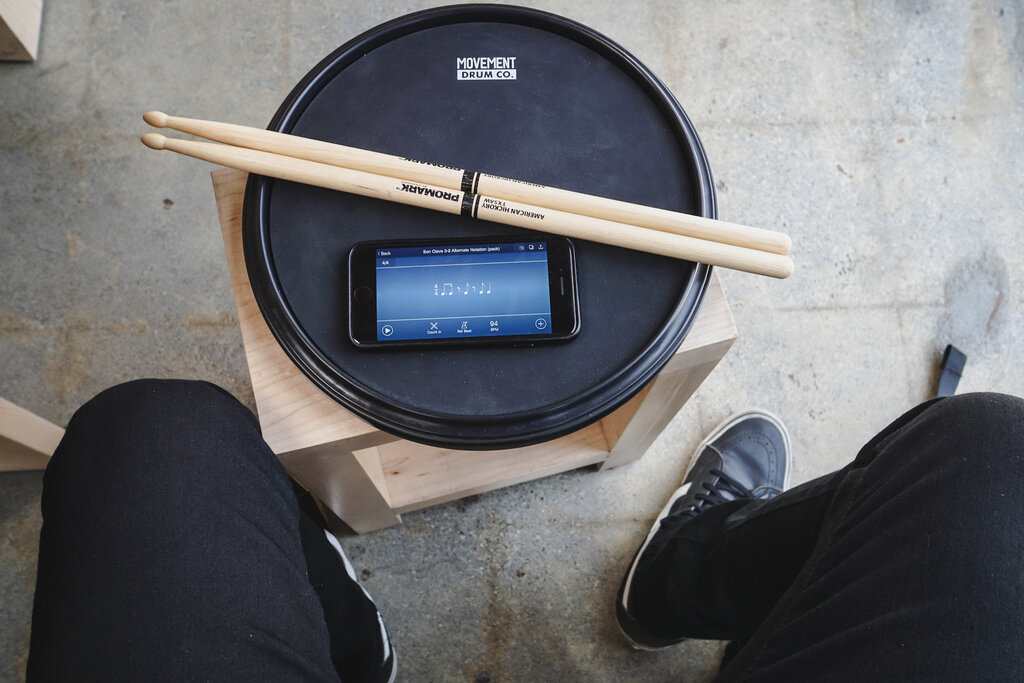
Practice tip: Start slow and gradually speed up as you get comfortable. Play along with a metronome to keep a steady pace.
Using a metronome is non-negotiable. It forces you to be honest with your timing and helps you build a solid internal clock. Start every exercise at a slow tempo where you can play it perfectly, and only then begin to gradually increase the speed.
The Basic Building Blocks
Let’s start with three of the most important rudiments. Focus on making every stroke sound even in volume and consistent in timing.
Single Stroke Roll This is the most straightforward pattern: alternating strokes between your hands. The goal is a smooth, even sound, like a machine.
Next is the double stroke roll. This one requires more control, as you'll play two notes with each hand before switching.
Double Stroke Roll The key here is to make the second note of each double (the "rebound" stroke) just as loud and clear as the first. It takes practice to develop this finger and wrist control.
Finally, the paradiddle combines single and double strokes into one fluid pattern. The name itself sounds like the rhythm it creates.
Paradiddle This rudiment is fantastic for developing coordination and is incredibly useful for creating interesting fills and grooves around the drum kit.
Connecting Hands and Feet
Drumming involves all four limbs, so coordination between your hands and feet is essential. Simple exercises can build this independence, which is often a hurdle for new drummers.
One of the biggest challenges for a beginner is when the drum pattern requires a different performance from the hands or feet.
Let's try a basic coordination drill. Play a continuous single stroke roll with your hands on a snare drum or practice pad. While your hands are playing, add in quarter notes with your right foot on the bass drum (or just tap your foot on the floor). Your foot should play along with every right hand stroke.
| Beat | 1 | & | 2 | & | 3 | & | 4 | & |
|---|---|---|---|---|---|---|---|---|
| Hands | R | L | R | L | R | L | R | L |
| Right Foot | X | X | X | X |
Once you feel comfortable with that, try other combinations. Can you play the bass drum on the off-beats (the "&")? What about playing all four quarter notes with your left foot on the hi-hat pedal while your hands and right foot play different patterns? Starting simple is the key to building complex coordination without getting frustrated.
Now let's review what you've learned about these fundamental warm-ups.
What is the primary purpose of warming up with drum rudiments before playing?
According to the text, what tool is 'non-negotiable' for building an honest sense of timing and a solid internal clock?
Consistent practice of these warm-ups will build a strong foundation for everything else you learn.