Drum Programming and Rhythmic Groove
Understanding Rhythm
The Pulse of Music
Rhythm is the heartbeat of a song. It’s the pattern of sounds and silences that makes you want to tap your foot or nod your head. To build a drum part, you first need to understand the framework that holds this pulse together: the time signature.
A time signature looks like a fraction. It tells you two things: how many beats are in each measure (the top number) and what kind of note gets one beat (the bottom number).
The most common time signature is 4/4, often called "common time." The top 4 means there are four beats in every measure. The bottom 4 means a quarter note gets one beat. Just count "1, 2, 3, 4" over and over, and you’ve got the basic pulse of most pop, rock, and dance music.
Other time signatures create different feels. For example, 3/4 time has three quarter-note beats per measure. This creates the familiar "one-two-three, one-two-three" pulse of a waltz. The feel is completely different from the steady four-count of 4/4, which shows how the time signature defines a song's rhythmic foundation.
Slicing the Beat
Once you have the basic pulse, you can start dividing it into smaller pieces. This is done with different note values. Each note value has a specific duration, telling a musician how long to hold the sound.
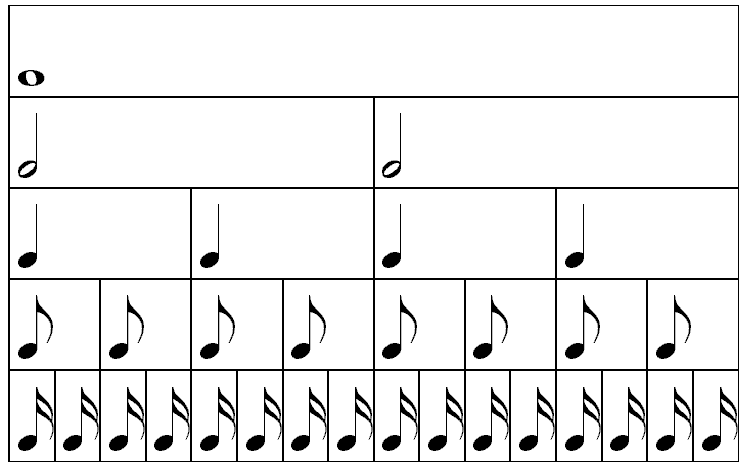
Think of it like a pizza. In 4/4 time, a whole note is the entire pizza—it lasts for all four beats. A half note is half the pizza, lasting two beats. A quarter note is one slice, lasting a single beat.
You can slice the beat even further:
- Eighth notes divide a quarter note in two. You can count them as "1 and 2 and 3 and 4 and."
- Sixteenth notes divide a quarter note into four. These are counted "1 e and a, 2 e and a, 3 e and a, 4 e and a."
Using these smaller divisions is how you create more complex and interesting rhythms. A simple kick and snare on the quarter notes provides a solid backbone, while fast sixteenth-note hi-hats can add energy and drive.
| Note | Duration in 4/4 Time | How It Fills a Measure |
|---|---|---|
| Whole Note | 4 beats | 1 note fills the measure |
| Half Note | 2 beats | 2 notes fill the measure |
| Quarter Note | 1 beat | 4 notes fill the measure |
| Eighth Note | 1/2 beat | 8 notes fill the measure |
| Sixteenth Note | 1/4 beat | 16 notes fill the measure |
Setting the Pace
tempo
noun
The speed at which a piece of music is played, often measured in beats per minute (BPM).
Tempo is the speed of the music. It’s measured in Beats Per Minute (BPM). A slow ballad might have a tempo of 60 BPM, meaning there are 60 quarter-note beats every minute—one per second. A high-energy punk song could be 180 BPM or faster.
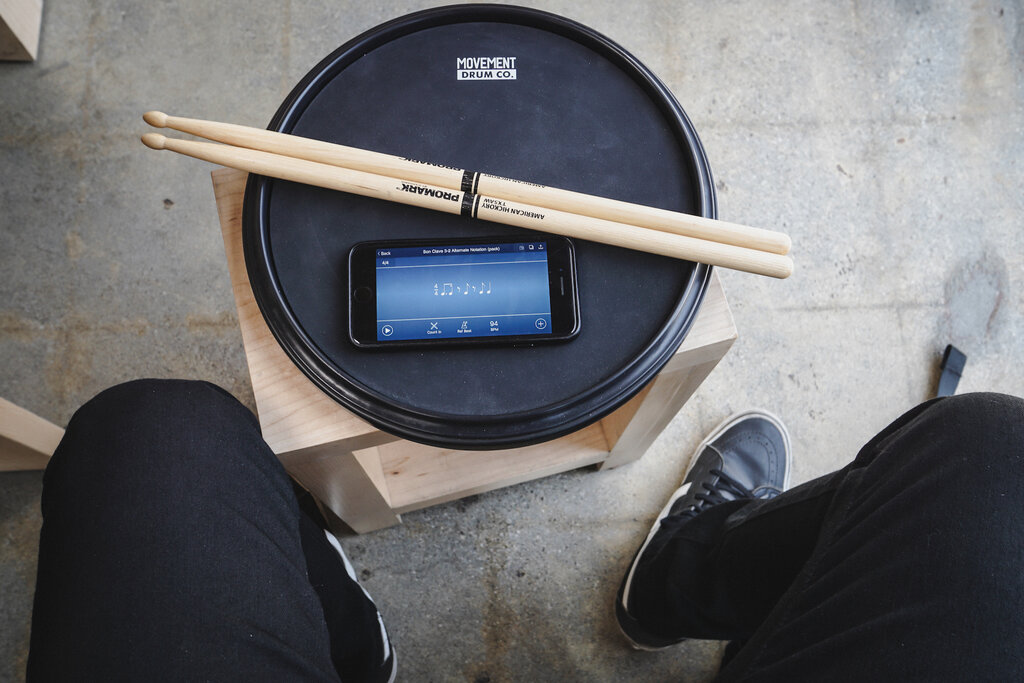
Tempo has a huge impact on the groove, or the rhythmic feel of the song. The same drum pattern will feel completely different at 80 BPM than it does at 140 BPM. A slow tempo might feel relaxed or heavy, while a fast tempo creates excitement and urgency.
By combining a time signature, different note values, and a specific tempo, you have all the core ingredients to build any rhythm you can imagine.
Let's check your understanding of these core rhythmic concepts.
In a 4/4 time signature, what does the top number '4' signify?
What does tempo, measured in BPM, define?
With these building blocks, you're ready to start arranging beats and creating drum parts that feel alive and authentic.