Drawing Fundamentals
Introduction to Drawing
Your First Mark
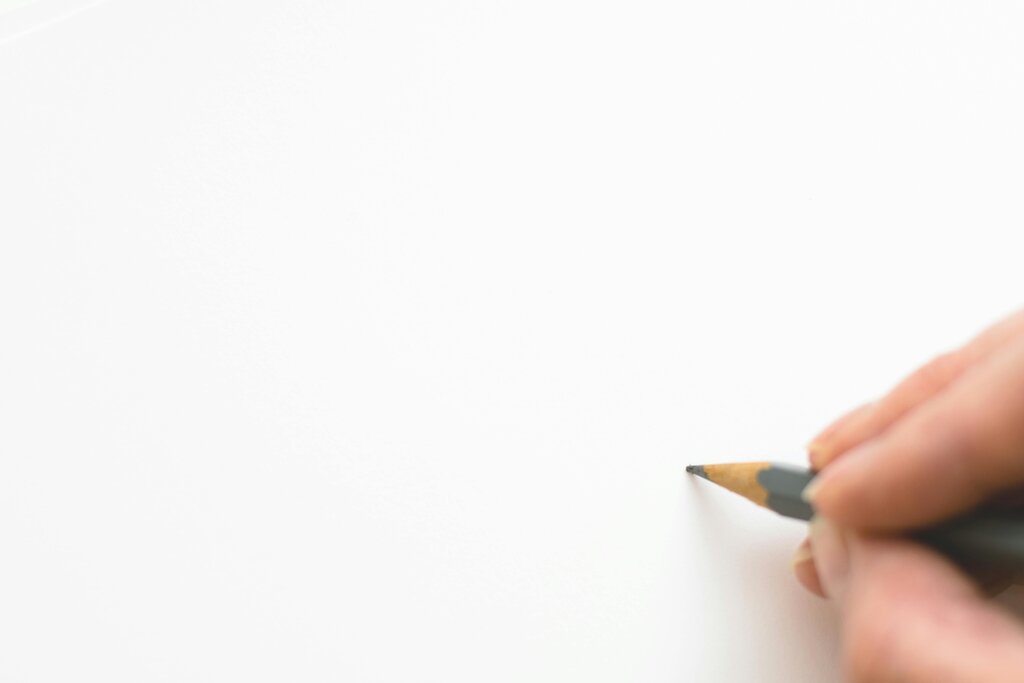
Everything in drawing starts with a simple mark. But before you make one, let's think about your main tool: the pencil. How you hold it changes everything. You've spent years holding a pencil for writing, but drawing asks for a different touch.
The writing grip, or tripod grip, gives you fine control for letters, but it can be stiff and limit your movement. For drawing, it's often better to use a grip that allows for looser, more expressive lines. Try holding the pencil further back from the tip, resting it between your thumb and index finger, with the end tucked under your palm. This is called the overhand grip.
The overhand grip encourages you to draw using your entire arm, from the shoulder down. This creates smoother, more confident lines because you're using larger, more stable joints. The tripod grip relies on your wrist, which is great for small details but can result in shaky, short strokes. Practice switching between these grips. There’s no single “correct” way, only different tools for different jobs.
The Power of the Line
With a comfortable grip, you're ready to draw lines. Every drawing, no matter how complex, is built from lines. Let's start with the two basic types: straight and curved.
To draw a straight line, keep your wrist locked and move your entire arm. Pick a starting point and an end point, look at the end point, and move your hand confidently in one smooth motion. Don't sketch it out with a series of short, fuzzy strokes. A single, clean line is the goal. For curved lines, pivot from your elbow or shoulder to create smooth, natural arcs.
Pro tip: Try rotating your paper instead of twisting your arm into an awkward position. It's an easy way to make drawing comfortable and keep your lines clean.
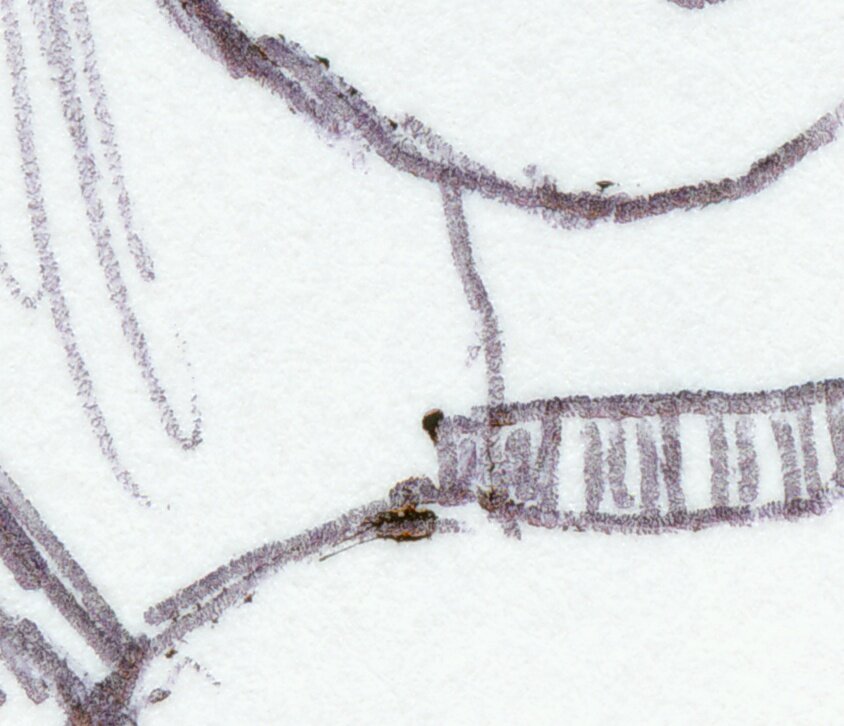
As you practice, pay attention to line weight, which is simply how thick or thin your lines are. You can change a line's weight by varying the pressure you apply to the pencil. A light touch creates a thin, delicate line, while more pressure creates a thick, bold one.
Line weight is a powerful tool. A single object can look completely different just by changing the thickness of its outline. Experiment by drawing a simple line that goes from thin to thick and back again. This control is fundamental to making your drawings feel dynamic and three-dimensional later on.
Lines into Shapes
Once you can control your lines, you can start combining them to create shapes. All complex objects in the world can be broken down into a few basic geometric shapes: circles, squares, and triangles. Mastering these is the key to drawing anything you can see or imagine.
Start by practicing fundamental shapes, then combine them to form objects.
Let's break down how to draw them.
- Squares: A square is just four straight lines of equal length connected at right angles. Focus on making your lines parallel and your corners sharp. Don't worry about perfection at first. Just practice the motions.
- Triangles: Three straight lines connected at their endpoints. Practice different types: some with equal sides, some with long, sharp points.
- Circles: Circles can be tricky. Instead of trying to draw one in a single, perfect motion, try using a series of light, overlapping curves. Use your whole arm, pivoting from the shoulder, to create the circular motion. Lightly sketch the shape first, then go over it with a darker, more confident line once you're happy with the form.
Fill pages with these shapes. Draw them large and small. Draw them fast and slow. This isn't about creating a masterpiece. It's about building muscle memory. The more you practice these foundational elements, the more intuitive drawing will become.
Ready to check your understanding? Let's see what you've learned.
What is the main advantage of using the overhand grip compared to the writing (tripod) grip for drawing?
The thickness or thinness of a line, which can be changed by varying the pressure on the pencil, is known as __________.
Practice is the most important part of learning to draw. Don't be afraid to make mistakes—every line you draw teaches you something new. Keep filling those pages.