Drawing for Young Artists
Introduction to Children's Art Education
The Journey of a Young Artist
When a child first picks up a crayon, they aren't just making a mess. They're starting a journey. Like learning to walk or talk, artistic skills develop in predictable stages. Understanding this progression helps us see their creations not as “good” or “bad,” but as milestones in their cognitive growth. It's about the process, not just the final product.
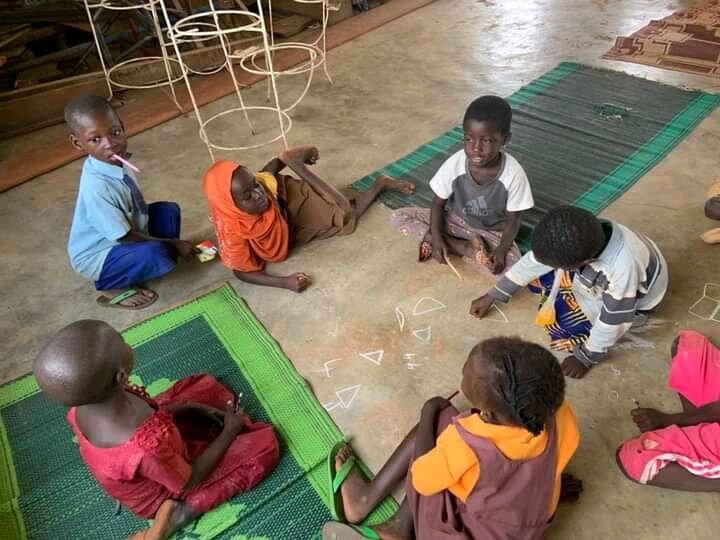
A child’s drawing is a window into their mind. What might look like a random scribble is actually an important step in learning how to control their movements and understand cause and effect. As they grow, their art becomes more complex, reflecting their expanding understanding of the world.
From Scribbles to Scenes
Artistic development in children is often broken down into distinct stages. While the ages are approximate and every child is different, the sequence is remarkably consistent. Let's look at the first few phases.
| Stage | Typical Age | Key Characteristics |
|---|---|---|
| Scribble Stage | 2–4 years | Explores making marks. Starts with uncontrolled lines, then gains more control, and eventually names the scribbles. |
| Preschematic Stage | 4–7 years | First attempts to represent objects. People often appear as a circle with lines for legs (a "tadpole" figure). Objects float in space. |
| Schematic Stage | 7–9 years | Drawings become more organized. Figures stand on a baseline. The child develops standard symbols for things like the sun or a house. |
Recognizing these stages is the first step. For example, during the Scribble Stage, the goal isn't to teach a child to draw a circle. It's to provide chunky crayons and large sheets of paper so they can explore movement freely. As they enter the Preschematic Stage, you can start asking, "Tell me about your drawing," which encourages them to connect their creations to the world around them.
In the Schematic Stage, children might draw every family member the same height. This isn't a mistake; it's a sign they're using a schema, or a learned symbol, for 'person.'
How to Nurture Creativity
The right environment can make all the difference. The goal is to create a space where children feel safe to explore and experiment without fear of judgment. This builds confidence that extends far beyond the art table.
Focus on the process, not the result. Instead of saying, "That's a great drawing!" try something more specific and encouraging. Comment on their effort or choices: "You used so many bright colors!" or "I see you worked hard on making all those lines."
Offer a variety of age-appropriate materials. For toddlers, this might be finger paints, play-doh, and large crayons. For older children, you can introduce watercolors, scissors, and glue. Having these tools accessible allows them to bring their ideas to life.
This structured approach helps children understand the drawing process and builds their confidence in their abilities.
Finally, display their work proudly. Taping a drawing to the refrigerator sends a powerful message: their creativity is valued. This simple act acknowledges their effort and encourages them to keep creating.
What is the most important aspect to focus on in a child's artistic development?
During the Scribble Stage, a child's drawing is primarily an exploration of movement and cause-and-effect.
By understanding these fundamentals, you can provide meaningful support for a child's artistic journey.