Dopamine Production Explained
Amino Acids
The Building Blocks of Proteins
Proteins are the workhorses of the body, responsible for everything from building tissues to fighting infections. But what are proteins made of? The answer is amino acids. Think of them like letters of an alphabet. Just as 26 letters can form countless words, the 20 common amino acids can link together in endless combinations to build all the different proteins your body needs.
amino acid
noun
An organic compound containing both a carboxyl group (—COOH) and an amino group (—NH₂), which serves as a building block for proteins.
Every amino acid shares a fundamental structure. At the center is a carbon atom, called the alpha-carbon. This carbon is bonded to four different groups:
- An amino group (—NH₂)
- A carboxyl group (—COOH)
- A hydrogen atom (—H)
- A side chain, also known as the R-group
The amino group, carboxyl group, and hydrogen atom are the same in all 20 amino acids. It's the R-group that's different for each one. This unique side chain gives each amino acid its specific chemical properties, determining how it will interact with other amino acids and its environment. Based on the properties of their R-groups, amino acids are classified into groups like nonpolar, polar, acidic, or basic.
The R-group is what gives each amino acid its unique identity.
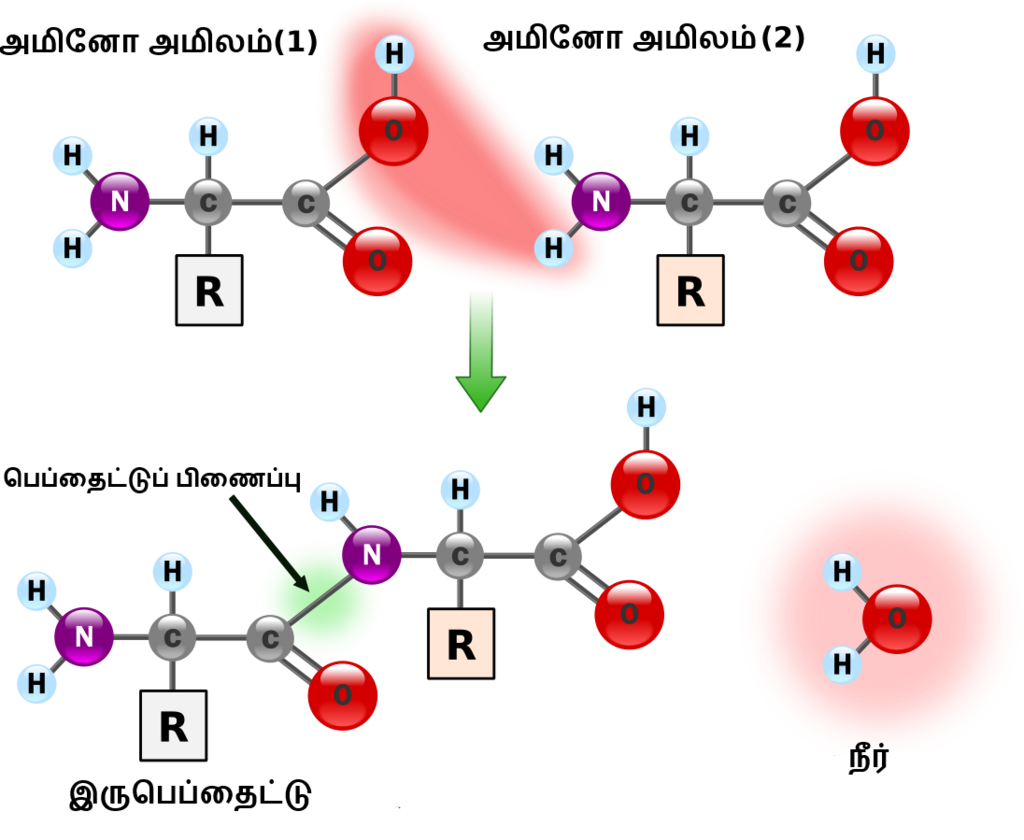
Amino acids link together in a chain by forming peptide bonds. This happens through a process called a condensation reaction, where the carboxyl group of one amino acid connects to the amino group of another, releasing a molecule of water in the process. A chain of amino acids is called a polypeptide, and once it folds into a specific three-dimensional shape, it becomes a functional protein.
Tyrosine: A Key Player
Now let's focus on one specific amino acid: tyrosine. Tyrosine belongs to the group of amino acids with aromatic side chains, meaning its R-group contains a ring structure. While it's a crucial component of many proteins, tyrosine has another vital role: it's a precursor for several important molecules in the body, including certain hormones and neurotransmitters.
Tyrosine is considered a non-essential amino acid. This doesn't mean it's unimportant. It means our bodies can typically produce it, so we don't strictly need to get it from our diet. The body synthesizes tyrosine from another amino acid called phenylalanine, which is an essential amino acid—we must get it from food.
This simple conversion, adding just one hydroxyl (—OH) group to phenylalanine, creates tyrosine. This small change is incredibly significant because it gives tyrosine the chemical properties needed to become the starting material for synthesizing the neurotransmitter dopamine, a topic we'll explore next.
What part of an amino acid's structure is different for each of the 20 common types, giving it unique chemical properties?
When two amino acids join together, what type of bond is formed and what molecule is released in the process?
Understanding amino acids, especially tyrosine, is the first step in seeing how our body creates the chemical messengers that regulate our mood, motivation, and movement.