Dopamine Neurochemistry Essentials
Introduction to Neurochemistry
The Brain's Chemical Language
Your brain is a command center, constantly sending and receiving messages that control everything you think, feel, and do. This incredible network runs on a combination of electricity and chemistry. Neurochemistry is the study of these chemicals and how they allow your nervous system to function.
At the heart of this system are specialized cells. They are the building blocks of the brain's communication network.
Meet the Neuron
The primary cells of the nervous system are called neurons. Think of them as the wires of your body's electrical grid. While they come in many shapes and sizes, most neurons have three main parts.
- The Cell Body (Soma): This is the neuron's core, containing the nucleus and other components needed to keep the cell alive.
- Dendrites: These tree-like branches extend from the cell body. Their job is to receive signals from other neurons.
- The Axon: This long, cable-like projection carries signals away from the cell body to send them to other neurons.
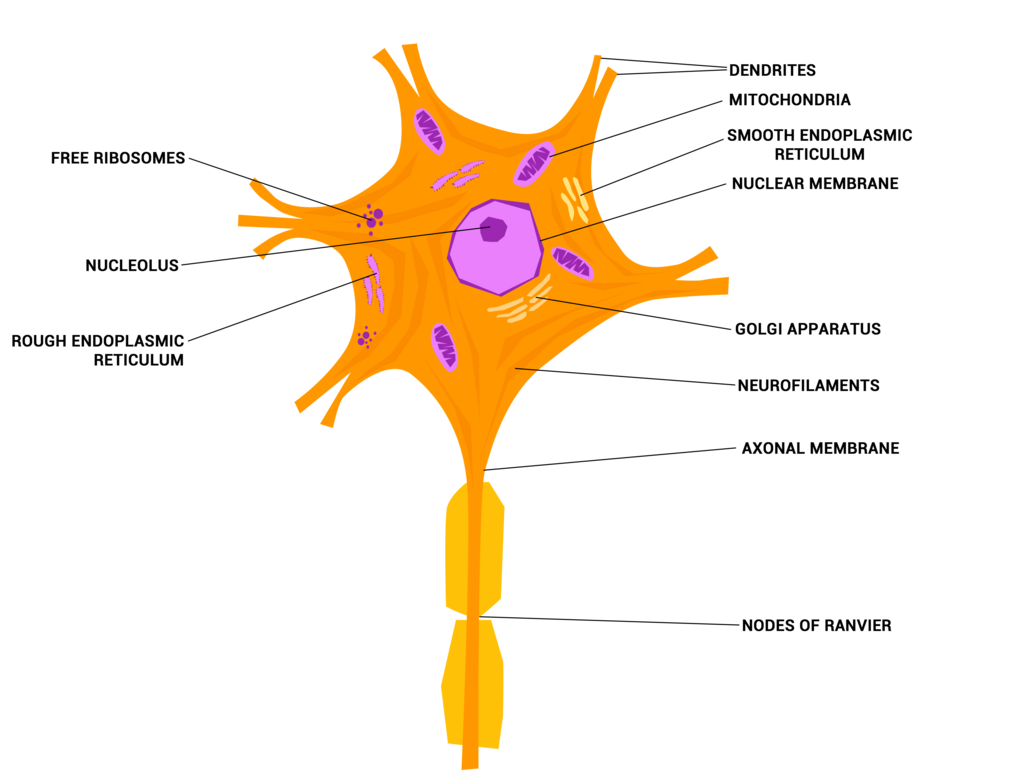
A signal, called an action potential, travels down the axon as an electrical impulse. But when it reaches the end of the axon, it encounters a tiny problem: a gap. Neurons don't physically touch each other. So how does the signal get across?
The Synaptic Leap
The space between the axon terminal of one neuron and the dendrite of the next is called a synapse. To bridge this synaptic gap, the electrical signal is converted into a chemical one. This process is known as synaptic transmission.
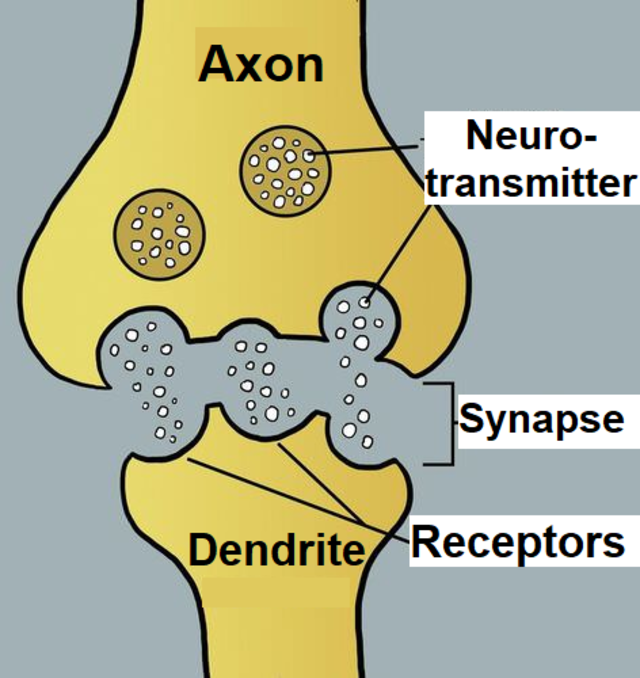
When the action potential reaches the end of the axon, it triggers the release of special chemical messengers called neurotransmitters. These molecules are stored in tiny sacs called vesicles. They spill into the synapse, travel across the gap, and bind to specific sites called receptors on the neighboring neuron's dendrite. This binding opens channels on the receiving neuron, which converts the chemical signal back into an electrical one, and the message continues on its way.
A Cast of Chemical Messengers
There isn't just one type of neurotransmitter. The brain uses dozens of different kinds to send a wide range of messages. Some neurotransmitters are excitatory, meaning they encourage the next neuron to fire. Others are inhibitory, telling the next neuron to hold its fire. The precise balance between these signals is crucial for everything from muscle movement to mood regulation.
| Neurotransmitter | Primary Role |
|---|---|
| Glutamate | The most common excitatory neurotransmitter; involved in learning and memory. |
| GABA | The main inhibitory neurotransmitter; helps to calm nervous activity. |
| Serotonin | Plays a major role in mood, sleep, and appetite. |
| Acetylcholine | Important for muscle contraction, memory, and learning. |
Each neurotransmitter fits into its receptor like a key into a lock. This specificity ensures that the right messages are delivered to the right places. Understanding this complex chemical dance is the first step to understanding how the brain works, and how substances and conditions can affect it.