Doosan Puma GT2100M CNC Machine Operation
Machine Overview
Meet the Doosan Puma GT2100M
The Doosan Puma GT2100M is a type of CNC lathe. Think of a lathe as a potter's wheel for metal or plastic. It spins a piece of material, called a workpiece, at high speed. As the workpiece rotates, cutting tools are brought in to shape it, carving away material to create a precise cylindrical part. The "CNC" part stands for Computer Numerical Control, which means the whole process is guided by a computer program, not by hand. This allows for incredible accuracy and repeatability.
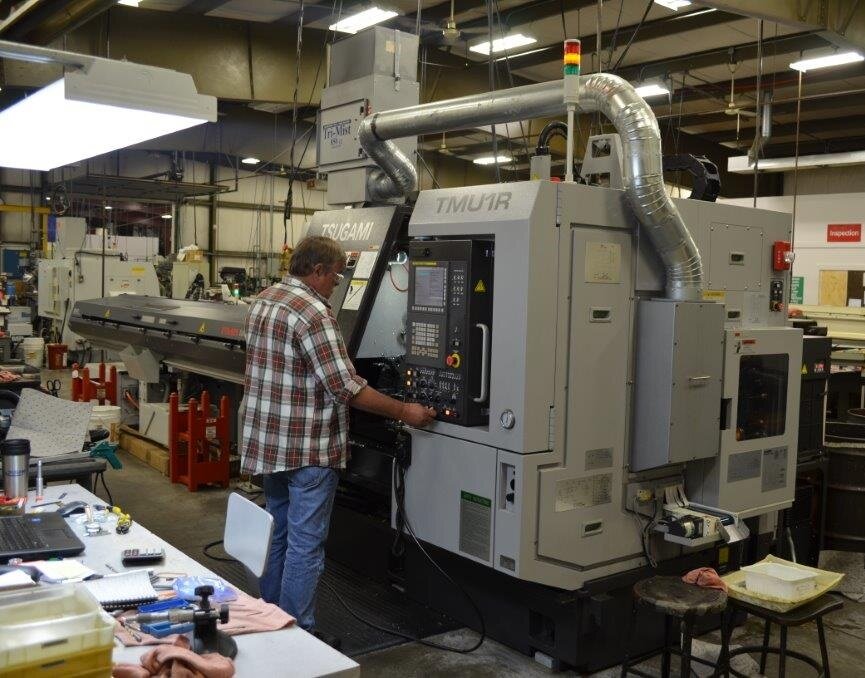
This specific model is a turn-mill center, which adds another layer of capability. Besides the standard turning operations, it can also perform milling tasks like drilling holes or cutting slots into the workpiece, often without needing to move the part to a different machine.
Key Specifications
To understand what this machine can do, we need to look at its specs. These numbers define the physical limits of the parts it can create.
| Specification | Value |
|---|---|
| Max Turning Diameter | 390 mm (15.4 in) |
| Max Turning Length | 562 mm (22.1 in) |
| Chuck Size | 210 mm (8 in) |
| Bar Working Diameter | 65 mm (2.6 in) |
| X-Axis Travel | 235 mm (9.3 in) |
| Z-Axis Travel | 580 mm (22.8 in) |
| Turret Stations | 12 |
Let's break down what these mean.
- Turning Diameter & Length: These tell you the maximum size of a workpiece the machine can handle. It can shape a part up to 390 mm in diameter and 562 mm long.
- Chuck Size: The chuck is the vise that grips the rotating workpiece. This machine uses an 8-inch chuck.
- Bar Working Diameter: This is the largest diameter of a raw material bar that can be fed through the center of the spindle. It's a key spec for automated production where a long bar is fed into the machine and parts are cut off one by one.
- Axis Travels: The cutting tools move along two main axes. The X-axis controls movement in and out from the center of the workpiece (controlling diameter), and the Z-axis controls movement along the length of the workpiece.
- Turret Stations: The turret is a rotating tool holder. This machine's turret has 12 stations, meaning it can hold 12 different cutting tools at once. The CNC controller can switch between them automatically as needed for different operations.
The Sinumerik 828D Control
If the lathe is the body, the Sinumerik 828D is the brain. This control system, made by Siemens, is where the operator interacts with the machine, loads programs, and monitors the manufacturing process. It's the interface between human instruction and machine action.
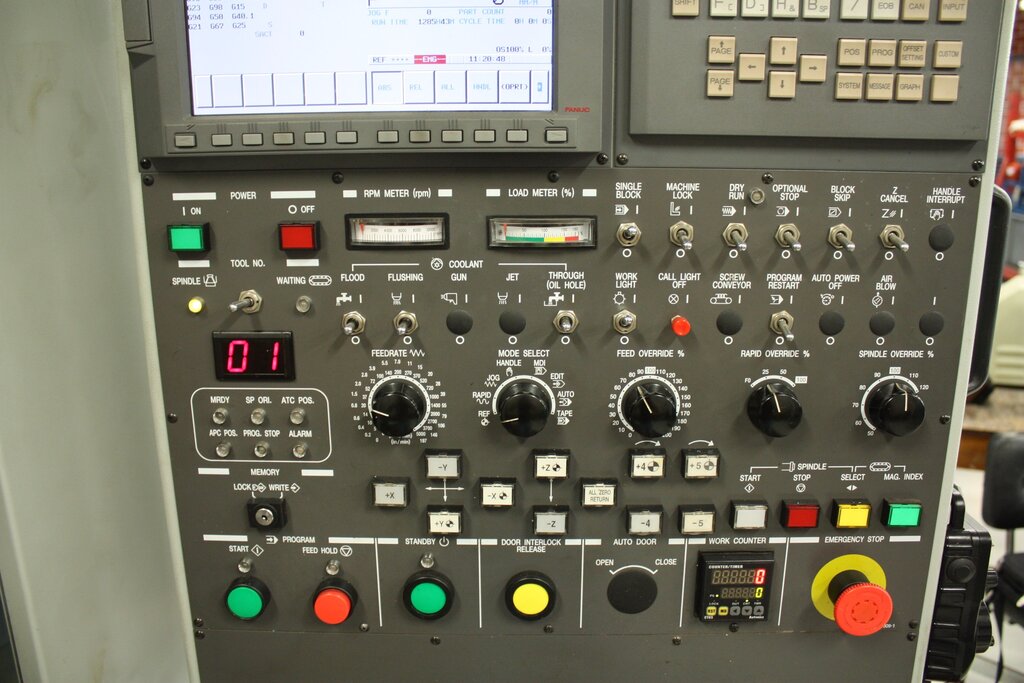
It features a large 10.4-inch color display that makes it easy to visualize the part, the toolpaths, and machine status. A full QWERTY keyboard allows for quick data entry and program editing right at the machine.
One of the most powerful aspects of the 828D is its programming flexibility. It supports several methods:
- Graphical Programming: Users can define the shape of the part they want to make using visual, interactive menus. The control system then automatically generates the machine code.
- High-Level Language: This uses a more advanced, text-based language that simplifies complex programming tasks.
- ISO Programming: This is the traditional method using G-code and M-code, which gives experienced programmers direct, low-level control over every machine movement.
This versatility means that both beginners and expert machinists can use the control system effectively, choosing the method that best suits their skill level and the complexity of the job.
Understanding these core components—the machine's physical capabilities and the control system's features—is the first step in learning how to operate the Doosan Puma GT2100M safely and efficiently.