Dominican Republic 20th Century History
Early 20th Century Politics
The Age of Warlords
At the dawn of the 20th century, the Dominican Republic was not a unified nation in practice. It was a collection of regions controlled by powerful local leaders, or caudillos. These men commanded private armies and held immense personal loyalty from the people in their territories. National politics was essentially a power struggle between them.
Caudillo
noun
A political-military leader with a personalist hold on power over a region or country.
When one caudillo managed to seize the presidency, others would immediately conspire to overthrow him. This created a relentless cycle of instability. Governments lasted for months, sometimes only weeks. Revolutions and civil wars were common, draining the country's resources and preventing any real progress. Between 1899 and 1916, the presidency changed hands more than a dozen times.
An Empty Treasury
Constant warfare is expensive. To fund their armies and reward their followers, successive Dominican governments borrowed heavily from European and American banks. They took on massive debts at high interest rates, often pledging the country's customs revenues as collateral. Customs duties—taxes on imported and exported goods—were the government's primary source of income.
By 1904, the Dominican Republic was effectively bankrupt. Its total foreign debt had ballooned to over $32 million, a staggering sum it had no hope of repaying. European creditors, particularly from France and Belgium, began sending warships to the Caribbean to pressure the Dominican government for payment. This caught the attention of the United States.
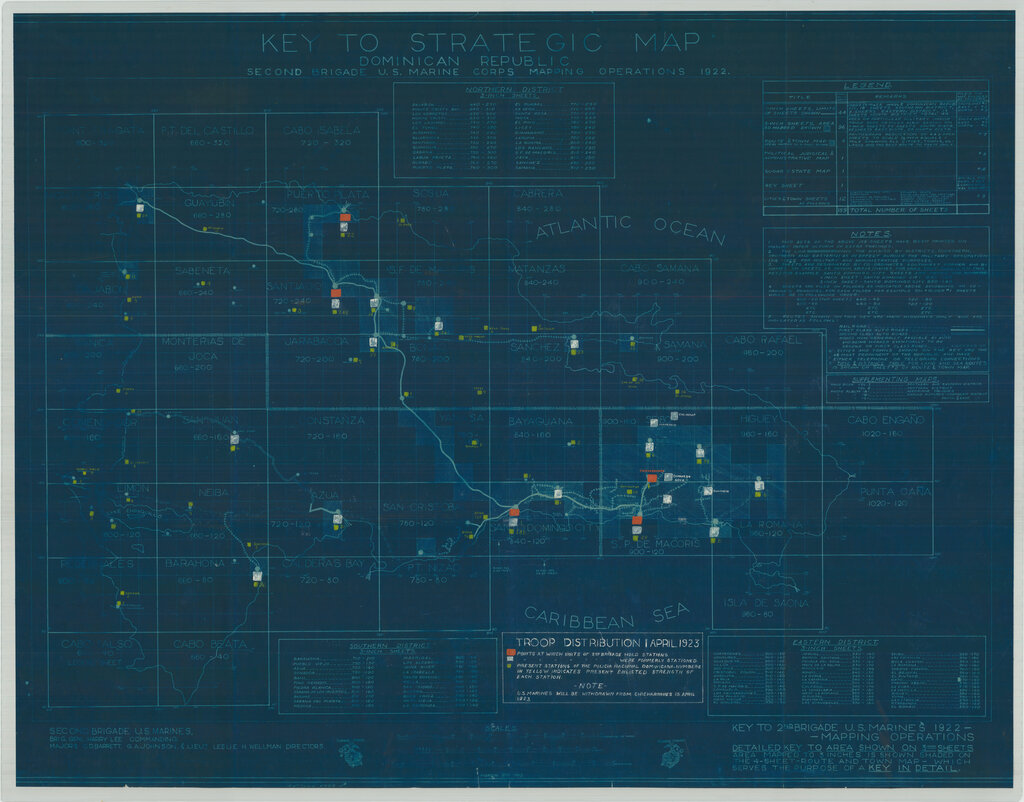
American Intervention
The United States, under President Theodore Roosevelt, feared that a European power might use the unpaid debts as an excuse to establish a military base in the Dominican Republic. This would violate the Monroe Doctrine, a long-standing U.S. policy opposing European colonialism in the Americas. In what became known as the Roosevelt Corollary, Roosevelt declared that the U.S. had the right to intervene in the affairs of unstable Latin American nations to prevent European intervention.
To stop European powers from collecting debts by force, the United States decided it would collect the debts for them.
In 1905, the U.S. took its first major step. Under a mutual agreement, the United States took control of the Dominican Republic's customs houses. American agents would now collect all customs duties. A portion of the money was given to the Dominican government for its operational expenses, while the rest was used to pay down the massive foreign debts. While it stabilized the country's finances, this arrangement was a profound loss of national sovereignty and set the stage for a much larger U.S. presence in the years to come.
What was the primary reason for the chronic political instability in the Dominican Republic at the start of the 20th century?
How did successive Dominican governments primarily fund their constant warfare and political activities?