Domestic Beekeeping for Gardeners
Bee Biology
Inside the Hive
A honeybee colony is a highly organized society. It's a bustling city where every resident has a specific job, all working together for the survival of the group. These distinct roles are determined by a bee's caste. There are three types of bees in every hive: the queen, the workers, and the drones.
Caste
noun
A distinct group within a society of social insects that is specialized to perform a particular function.
The queen is the sole reproductive female in the colony. Her primary job is to lay eggs, up to 2,000 per day during peak season. She is the mother of nearly every bee in the hive.
Worker bees are all female, but they are not reproductive. They are the lifeblood of the colony, performing all the essential tasks. Their duties change as they age, from cleaning the hive and feeding larvae to building honeycomb, guarding the entrance, and eventually foraging for nectar and pollen.
The drones are the male bees. They have one purpose: to mate with a new queen. They don't collect food or perform any hive tasks. In the fall, or when food is scarce, drones are expelled from the hive by the workers.
| Caste | Sex | Primary Role |
|---|---|---|
| Queen | Female | Egg-laying |
| Worker | Female | Hive maintenance and foraging |
| Drone | Male | Mating |
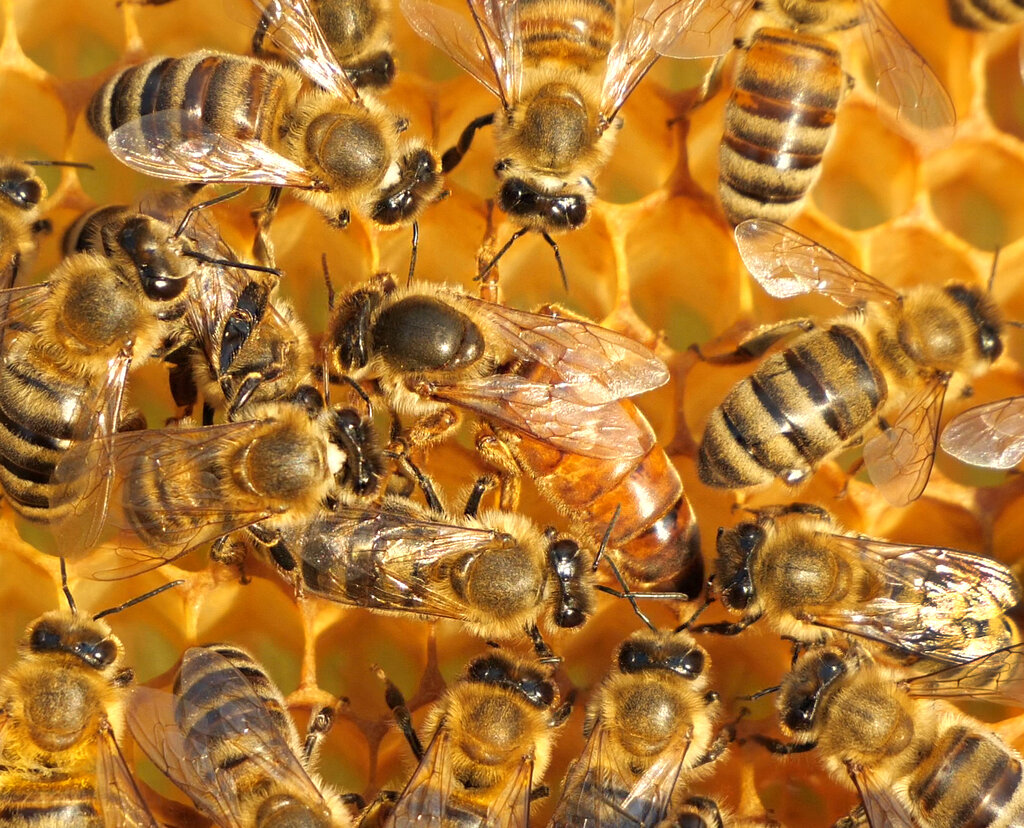
A Bee's Blueprint
Like all insects, a honeybee's body is divided into three main sections: the head, the thorax, and the abdomen. Each part has specialized structures that help the bee survive and do its job.
The head contains the brain, two large compound eyes for seeing patterns and colors, and three simple eyes on top of the head for detecting light. A pair of antennae detect smells and vibrations. The bee's mouthparts, called a proboscis, work like a straw to suck up nectar.
The thorax is the bee's engine room. It holds the muscles that power the two pairs of wings and six legs. Worker bees have a special structure on their hind legs called a pollen basket, or corbicula, for carrying pollen back to the hive.
The abdomen contains the digestive system, reproductive organs, and, in females, the stinger. The stinger is a modified ovipositor (egg-laying organ), which is why male drones do not have one.
How Bees Talk
Bees have one of the most sophisticated communication systems in the animal kingdom. They use a combination of chemical signals and intricate dances to share information.
Pheromones are chemical scents that bees release to trigger specific behaviors in other bees. The queen produces a special pheromone that signals her presence and keeps the colony cohesive. There are also alarm pheromones to warn of danger and trail pheromones to guide sisters to a food source.
The most famous form of bee communication is the "waggle dance." A returning forager performs this dance inside the dark hive to tell other bees the direction and distance to a rich source of nectar or pollen.
From Egg to Adult
All honeybees go through four stages of development: egg, larva, pupa, and adult. This process is called complete metamorphosis. The time it takes to develop varies by caste.
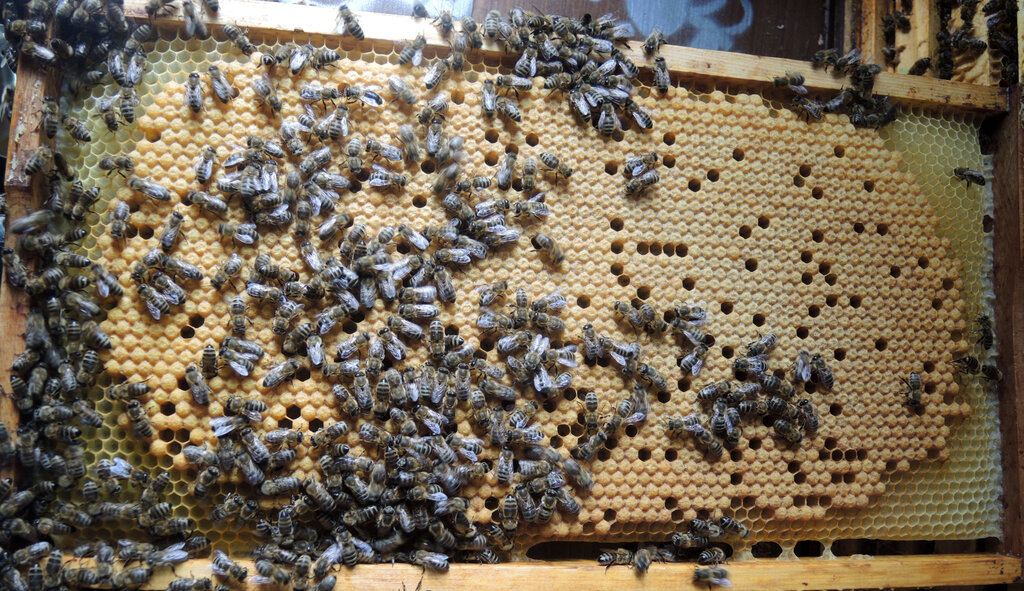
The queen lays a single egg in each wax cell. After about three days, the egg hatches into a tiny, white larva. Worker bees feed the larva a substance called royal jelly for the first few days, then switch to a diet of honey and pollen known as "bee bread." The larva grows rapidly, shedding its skin several times.
After about a week, worker bees cap the cell with wax. Inside, the larva spins a cocoon and transforms into a pupa. During the pupal stage, it develops its adult features: wings, legs, eyes, and antennae. Finally, a fully formed adult bee chews its way out of the cell.
| Caste | Egg | Larva | Pupa | Total Development Time |
|---|---|---|---|---|
| Queen | 3 days | 5.5 days | 7.5 days | ~16 days |
| Worker | 3 days | 6 days | 12 days | ~21 days |
| Drone | 3 days | 6.5 days | 14.5 days | ~24 days |
A key difference in the queen's development is her diet. The larva destined to become a queen is fed exclusively royal jelly throughout her larval stage. This special diet is what allows her to develop into a large, fertile reproductive female.
Before you get your first beehive, you should understand the basics of honey bee behavior and beekeeping.
Now that you understand the basic biology and social structure of a honeybee colony, you can better appreciate the complex world inside the hive.
Ready to test your knowledge?
What is the primary role of a male drone bee in a honeybee colony?
Which part of a honeybee's body is considered the 'engine room', containing the muscles for the wings and legs?
Understanding these fundamentals is the first step toward becoming a successful beekeeper.