Document Analysis and Synthesis
Conceptual Synthesis
From Concepts to Connections
You already have the building blocks: the key terms, the core components, the individual specifications. The next step is to become an architect. It's about moving from a list of parts to a blueprint of a functioning machine. This shift requires a new way of looking at technical documents: through the lens of Systems Thinking .
Think of it like an orchestra. You can identify the violins, the cellos, and the percussion. You know what each one does. But the music only happens when you understand how their individual parts weave together. Systems Thinking is the practice of listening for that music within a technical document. It's about seeing the relationships, the feedback loops, and the hidden dependencies that form the 'logical connective tissue' holding everything together.
How do you make these connections visible? Through Conceptual Modelling . This is the active process of creating a personal scaffold to understand a system. It doesn't need to be a formal diagram for a presentation; it can be a quick sketch on a notepad or a simple bulleted list. The goal is to map the territory for yourself.
Start by identifying the primary players. What are the main 'systems' or 'actors' in the document? A user, a server, an authentication service, a data pipeline. Then, trace the interactions. When a user performs an action, what other parts of the system are touched? What information is exchanged? This isn't about restating what the document says, but about synthesising it into a model of cause and effect.
Changing one part of an interconnected system almost always has ripple effects. Understanding the model helps you anticipate them.
Building Your Framework
A powerful way to structure your conceptual model is to identify the 'nodes' and 'links'. Nodes are the key concepts or components—the nouns of your system. Links are the relationships or actions that connect them—the verbs.
Think about a document describing a cloud-based file storage service. The nodes might be 'User Account', 'File', 'Storage Server', and 'Billing System'. The links are the actions: a 'User Account' uploads a 'File', the 'File' is stored on a 'Storage Server', and the 'Billing System' charges the 'User Account' based on storage used. Mapping this out reveals the internal logic of the entire service.
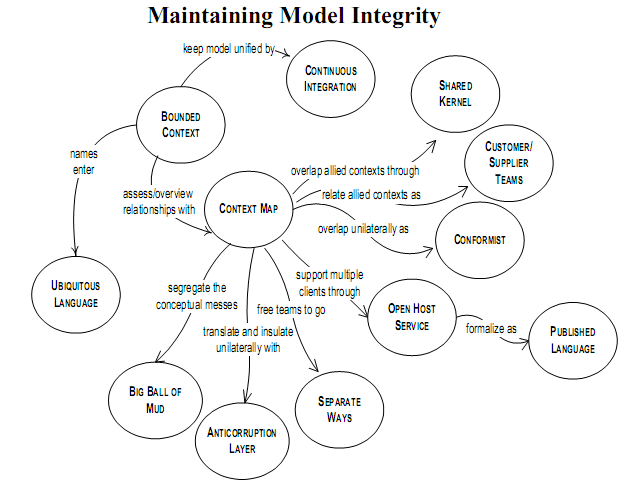
This process moves you from passive reading to active analysis. You start asking different kinds of questions. Instead of "What is the authentication service?" you ask, "Which other services depend on the authentication service? What happens if it fails?" This is the transition from rote knowledge to systemic understanding.
This kind of synthesis is crucial because real-world systems are not static. A change in one component, like updating a security protocol, will have cascading effects. Your conceptual model acts as a map to predict these effects, helping you see not just how the system works now, but how it will behave when things change.
By building these mental or physical models, you create a robust framework that can accommodate new information. Each new detail from the document finds a logical place within your structure, reinforcing your understanding rather than just adding to a pile of facts.