Docker Fundamentals Explained
Introduction to Docker
What is Docker?
Docker is a tool that makes it easier to create, deploy, and run applications by using containers. Think of a shipping container. Before they existed, loading a ship was a chaotic puzzle of different-sized boxes, barrels, and sacks. Standardized containers made shipping simple and predictable, because everything fits into the same kind of box.
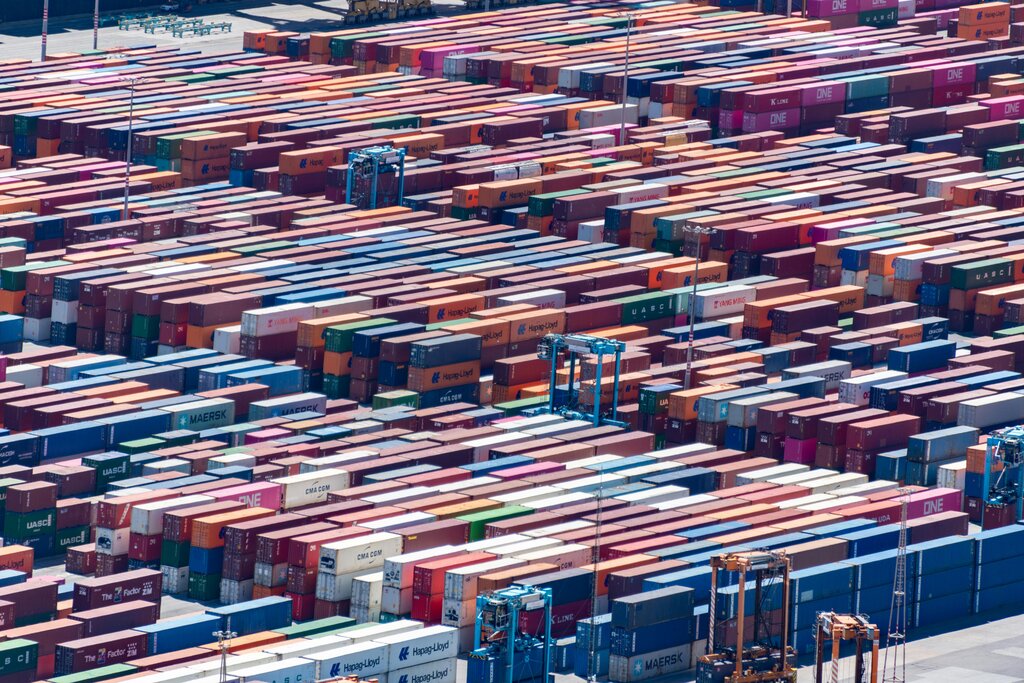
Docker does the same thing for software. It bundles an application and all of its dependencies—libraries, settings, and system tools—into a single, neat package. This package, called a container, can run on any computer with Docker installed, regardless of the underlying operating system. It solves the age-old developer problem: "It worked on my machine."
From Servers to Containers
Deploying applications used to be a headache. Developers would write code on their local computers, which might run on a Mac. The testing server might be on Ubuntu, and the production server on a different version of Linux. Each environment had subtle differences in configurations and installed software. Moving an application between them often led to unexpected bugs and failures.
Conflicts were common. Application A might require a specific version of a library, while Application B, running on the same server, needed a completely different version. This was known as "dependency hell."
Virtual machines (VMs) were an early solution. A VM emulates an entire computer system, including the hardware. You could package an application inside a VM, but they were bulky and slow to start. Each VM required its own full operating system, consuming significant memory and disk space.
Containers are a more lightweight solution. Instead of virtualizing the hardware, containers virtualize the operating system. They share the host machine's OS kernel but keep the application and its dependencies isolated. This makes them much smaller, faster to start, and more efficient with resources.
Why Use Docker?
Docker's approach offers several key benefits that have made it a cornerstone of modern software development.
| Benefit | Description |
|---|---|
| Consistency | An application in a Docker container runs the same way everywhere, from a developer's laptop to a production server in the cloud. |
| Efficiency | Containers use fewer resources than virtual machines, allowing you to run more applications on the same hardware. |
| Scalability | You can quickly start, stop, and replicate containers to handle changes in demand. |
| Isolation | Each container is a self-contained environment. Changes or failures in one container don't affect others. |
These advantages are especially important in DevOps, a culture that aims to shorten the development lifecycle and provide continuous delivery. Docker helps bridge the gap between development (Dev) and operations (Ops) by providing a standard format for applications. Developers package their apps, and operations teams deploy and manage those packages, all using the same tool.
By packaging applications and their dependencies into standardized units called containers, Docker ensures that software runs seamlessly across different environments.
This means faster development cycles, fewer deployment errors, and a more reliable system overall.
Ready to check your understanding?
What is the primary function of a Docker container?
Docker was designed to solve which classic developer problem?
You now have a foundational understanding of what Docker is, the problems it solves, and why it's so widely used in modern software development. You're ready to dive deeper into how it works.