Docker Fundamentals
Introduction to Docker
What Is Docker?
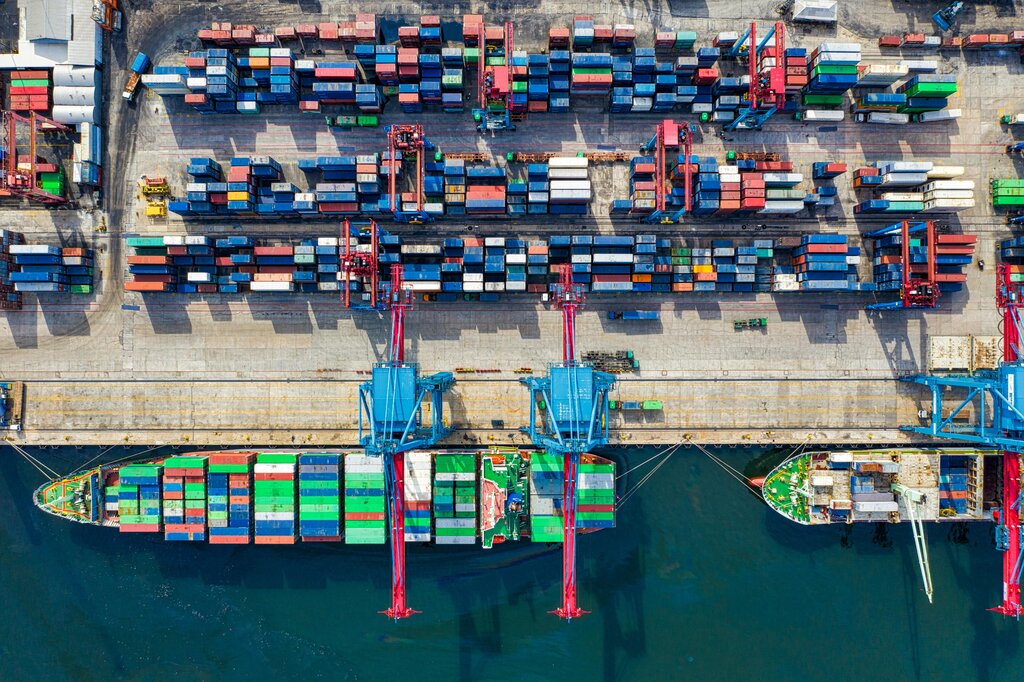
Docker is a tool that packages an application and all its dependencies into a single, standardized unit called a container. Think of it like a shipping container for software. Before shipping containers, loading a ship was a chaotic process with goods of all shapes and sizes. A standard container made it possible to transport anything, anywhere, efficiently.
Docker does the same for applications. A Docker container holds everything the software needs to run: the code, system tools, libraries, and settings. This self-contained package ensures that the application will run the same way, regardless of where the container is deployed, be it a developer's laptop or a production server in the cloud.
Docker is an open-source platform that automates the deployment of applications inside containers.
The Old Way of Doing Things
Before tools like Docker became popular, deploying software was often a source of frustration. A developer might build an application that worked perfectly on their own computer. But when it was time to move it to a testing or production server, things would break. This was the classic “it works on my machine” problem.
The issue was almost always a difference in environments. The server might have a different operating system version, a missing library, or conflicting software. Developers and system administrators would spend countless hours hunting down these subtle differences.
Virtual machines (VMs) offered a partial solution. A VM is an emulation of a complete computer system. You could package your application inside a VM with its own operating system. This solved the consistency problem but introduced a new one: inefficiency. VMs are large, consuming gigabytes of space, and they are slow to start up because they have to boot an entire OS.
The Power of Containers
Docker and containerization offer the best of both worlds: the consistency of virtual machines without the heavy overhead. Here’s why this approach is so powerful:
Consistency: A container packages the application and its dependencies together. This eliminates environment-specific bugs and ensures the software runs identically everywhere.
Containers achieve this by sharing the host machine's operating system kernel. Unlike a VM, a container doesn't need its own full OS. This simple difference has huge implications.
Efficiency: Because they don’t bundle a full operating system, containers are very lightweight. They are typically measured in megabytes (instead of gigabytes), use less memory, and start in seconds.
This efficiency leads directly to another major benefit: scalability.
Scalability: Since containers are so lightweight and fast, you can quickly create new instances of your application to handle increased demand. Need to handle a sudden traffic spike? Just launch more containers. When the traffic subsides, you can shut them down.
Let's test what you've learned about Docker's core ideas.
What is the primary problem Docker was designed to solve?
How does a Docker container differ from a traditional Virtual Machine (VM)?
By solving the core problem of environment consistency in a lightweight and scalable way, Docker has become a fundamental tool in modern software development.