DNS Cybersecurity Attacks and Defenses
DNS Fundamentals
The Internet's Phone Book
Computers communicate using numbers. Specifically, they use IP addresses, which look something like 142.250.191.78. This is the actual address for one of Google's servers. While computers are great at remembering long strings of numbers, humans aren't. We prefer memorable names like google.com.
This is where the Domain Name System, or DNS, comes in. Think of it as the phone book for the internet. When you type a website address into your browser, your computer uses DNS to look up the corresponding IP address. Without this system, we'd all have to memorize IP addresses for every website we want to visit.
DNS translates human-readable domain names into machine-readable IP addresses.
A Distributed System
The DNS isn't one single, massive phone book stored in one place. If it were, it would be incredibly slow and a single point of failure. Instead, it's a decentralized, hierarchical system distributed across thousands of servers worldwide.
Imagine you're looking for a specific book in a global library system. You wouldn't go to one central desk. You'd start with a main directory that tells you which country the book is in. Then you'd go to that country's national library, which would tell you the city. Finally, the city library would tell you the exact shelf. DNS works in a similar, layered way.
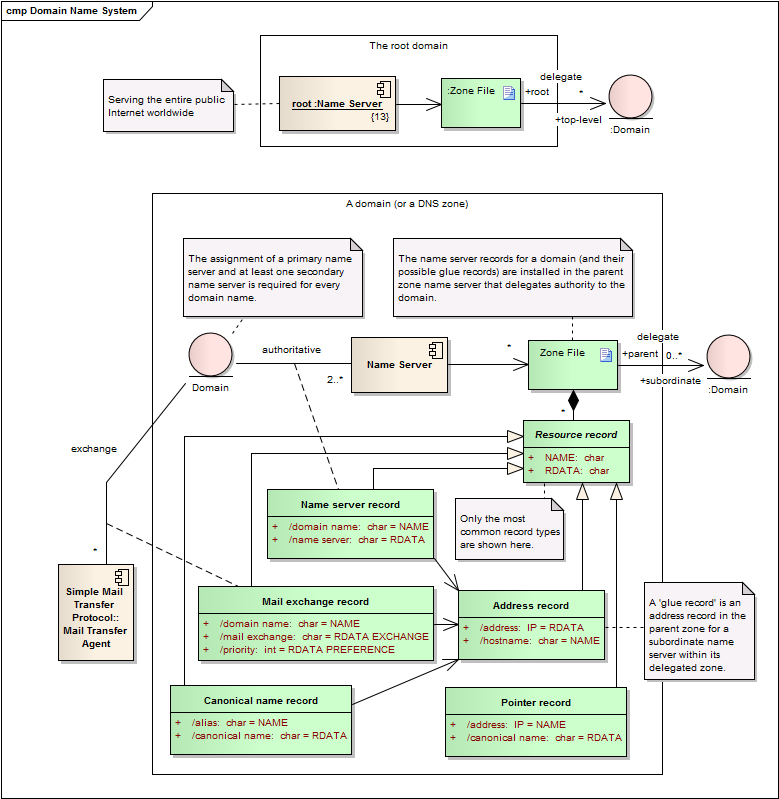
The hierarchy starts at the top with the root servers. There are only a handful of these root server networks, and their job is very simple: they know where to find the servers for the next level down.
root server
noun
A name server for the root zone of the Domain Name System. It directly answers requests for records in the root zone and answers other requests by returning a list of the authoritative name servers for the appropriate top-level domain (TLD).
The next level contains the Top-Level Domain (TLD) servers. These servers handle the last part of a domain name, like .com, .org, or .gov. When a root server gets a request for www.wikipedia.org, it doesn't know the IP address. But it knows where to find the .org TLD servers, so it directs the query there.
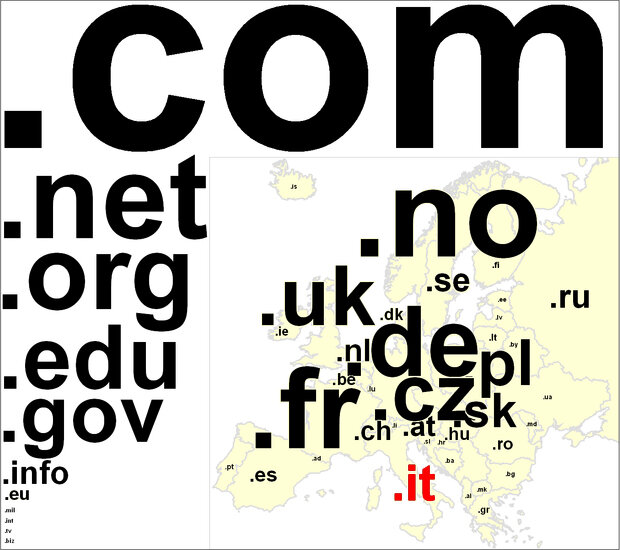
The TLD server for .org then takes over. It doesn't know the IP for www.wikipedia.org either, but it knows who is in charge of the wikipedia.org domain. It points the query to the final destination: the authoritative name server.
This final server is the ultimate source of truth for that specific domain. It's managed by the organization that owns the domain (in this case, the Wikimedia Foundation). This server holds the actual records that match domain names to IP addresses. It tells your computer, "The IP address for www.wikipedia.org is 208.80.154.224." Your computer now has the address it needs to connect.
This whole lookup process happens in milliseconds. Your computer also caches, or temporarily saves, the results. The next time you visit the same site, it can skip the lookup process entirely, making the connection even faster.
Records and Types
An authoritative name server doesn't just store one IP address for a domain. It holds various types of DNS records. The most common is the 'A' record, which maps a domain to an IPv4 address. But there are many others.
| Record Type | Purpose |
|---|---|
| A | Maps a hostname to an IPv4 address. |
| AAAA | Maps a hostname to a more modern IPv6 address. |
| CNAME | Creates an alias, pointing one domain name to another. |
| MX | Specifies the mail servers for a domain. |
| NS | Delegates a subdomain to a set of authoritative name servers. |
For example, when you send an email to example@gmail.com, your email service queries the MX (Mail Exchange) records for gmail.com to find out where to deliver the message. Each record type serves a specific purpose, making DNS a flexible system for directing all kinds of internet traffic, not just web browsing.
Now let's check your understanding of these core DNS concepts.
What is the primary function of the Domain Name System (DNS)?
Why is the DNS designed as a decentralized, hierarchical system?
Understanding DNS is fundamental to knowing how the internet works. It's the invisible yet essential service that connects the names we use to the numbers the network needs.