DNA for Health and Wellness
DNA Structure
The Blueprint of Life
DNA, or deoxyribonucleic acid, is the molecule that carries the genetic instructions for all known living organisms. The structure of DNA is famously a double helix, which looks like a twisted ladder. This elegant shape is formed by two long strands that spiral around each other.
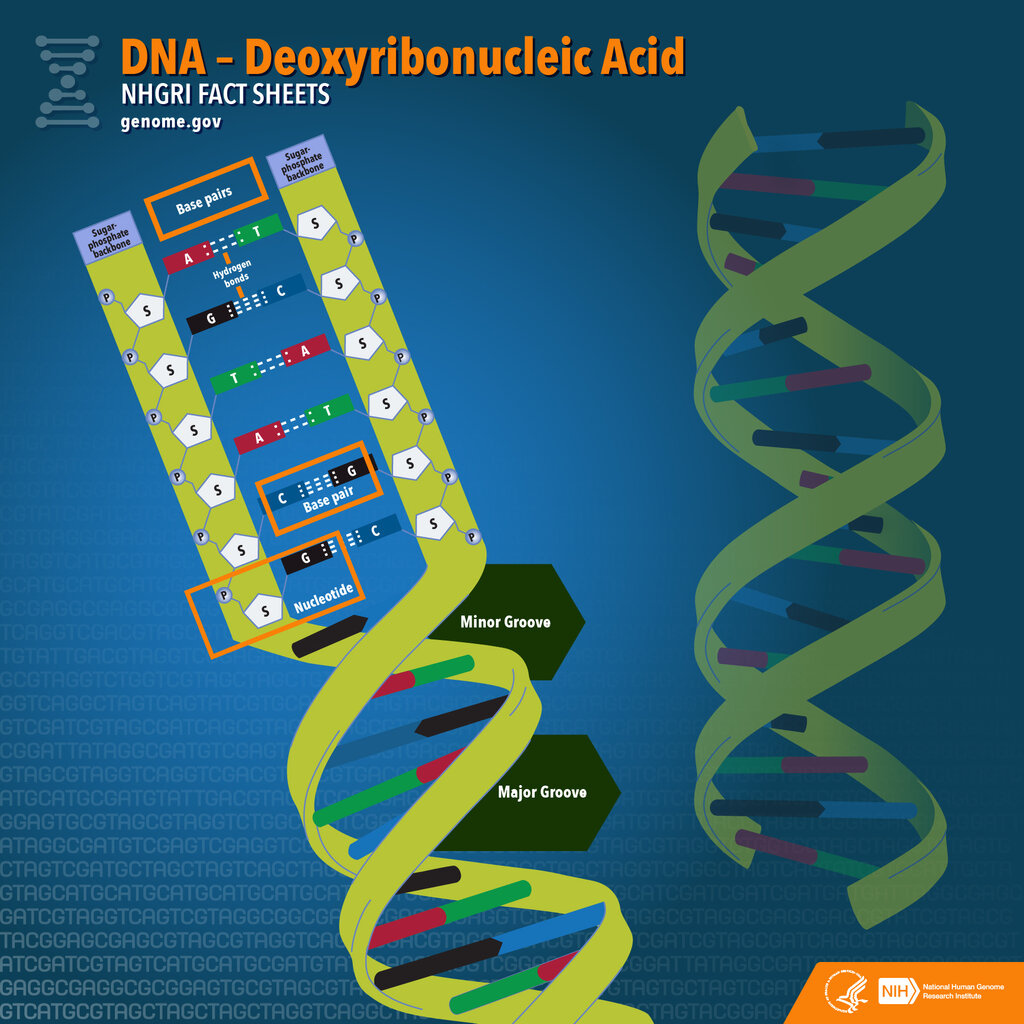
The two strands run in opposite directions, a property known as being antiparallel. Think of it like a two-way street. This orientation is crucial for many of DNA's functions.
The Building Blocks
Each strand of the DNA ladder is built from smaller units called nucleotides. Every nucleotide consists of three parts: a sugar molecule, a phosphate group, and a nitrogenous base.
The sides of the DNA ladder are formed by a sugar-phosphate backbone. The phosphate group of one nucleotide attaches to the deoxyribose sugar of the next one in the chain. This creates a strong, stable structure that protects the genetic information encoded by the bases.
The Language of DNA
The "rungs" of the DNA ladder are made from pairs of nitrogenous bases. There are four types of bases in DNA:
- Adenine (A)
- Guanine (G)
- Cytosine (C)
- Thymine (T)
These bases follow a very specific set of rules for pairing up.
Adenine always pairs with Thymine (A-T), and Cytosine always pairs with Guanine (C-G). This is known as complementary base pairing.
This pairing rule is the heart of DNA's structure. The A-T pair is held together by two hydrogen bonds, while the C-G pair is held together by three hydrogen bonds, making it slightly stronger. The sequence of these bases along the DNA strand is what forms the genetic code.
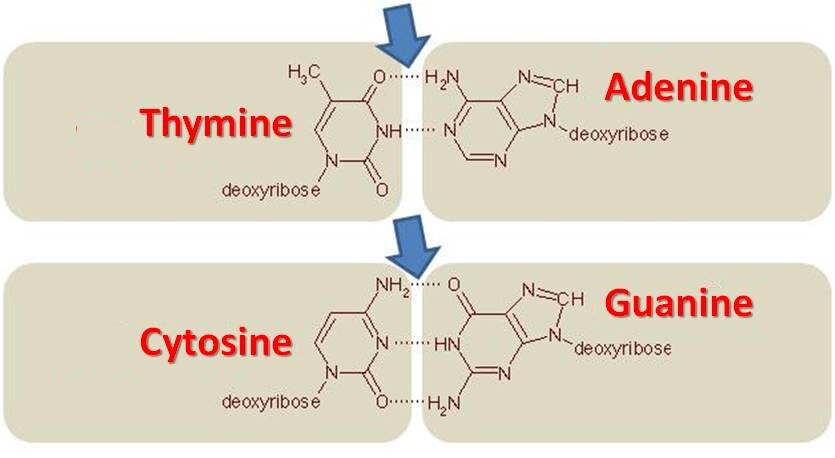
Because of complementary pairing, the two strands of a DNA molecule are mirror images of each other. If you know the sequence of bases on one strand, you automatically know the sequence on the other. For example, if one strand has the sequence A-G-G-T-C-A, the opposite strand must have the sequence T-C-C-A-G-T.
What is the well-known shape of a DNA molecule?
The two strands of a DNA molecule are antiparallel. What does this mean?