DNA and Mitochondria Explained
Cell Structure
The Cell's Command Center
Think of a eukaryotic cell as a bustling city. It has a power plant, a postal service, a waste disposal system, and a government, all working together. This city is enclosed by a border, the plasma membrane, which carefully controls who and what gets in or out. Inside, everything is suspended in a gel-like substance called the cytoplasm.
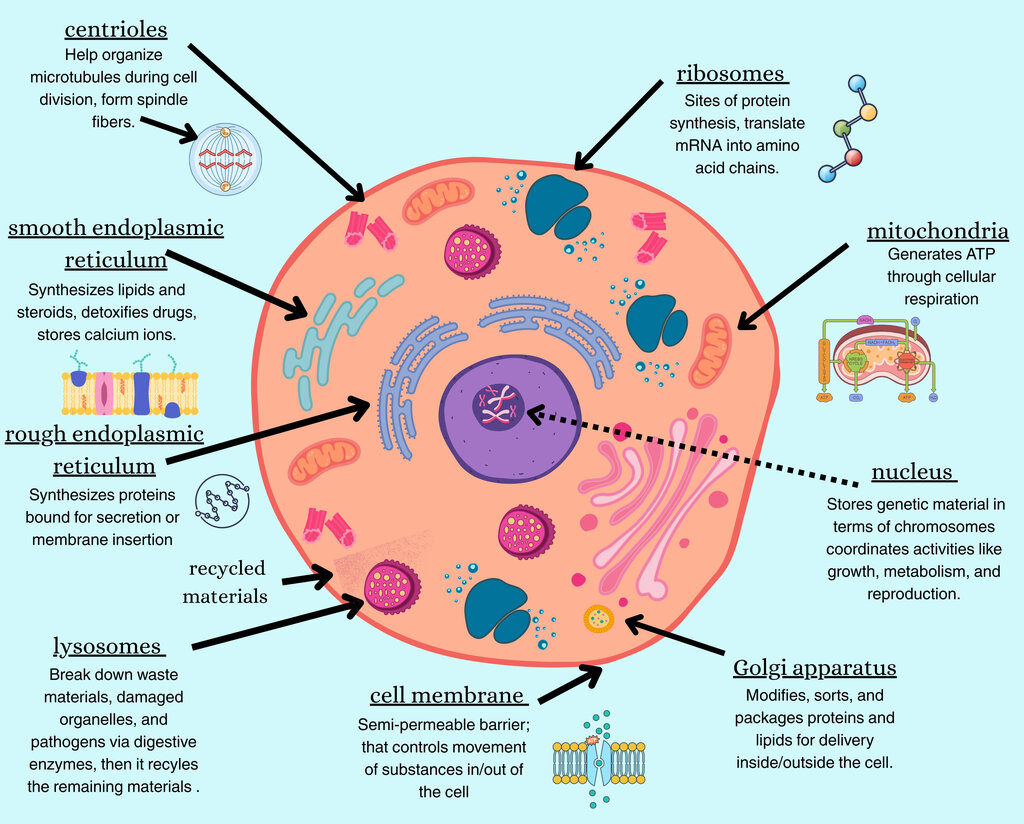
At the heart of this cellular city is the nucleus. It’s the city hall, housing the cell's most important information: the DNA. The nucleus is wrapped in a double membrane called the nuclear envelope, which has pores that act like guarded gates, allowing specific molecules to pass between the nucleus and the rest of the cell. The nucleus doesn't just store DNA; it protects it and controls access to it, dictating which genes are used to make proteins and when.
The nucleus is the cell's command center, containing the genetic blueprints (DNA) and directing all cellular activities.
Factories and Shipping
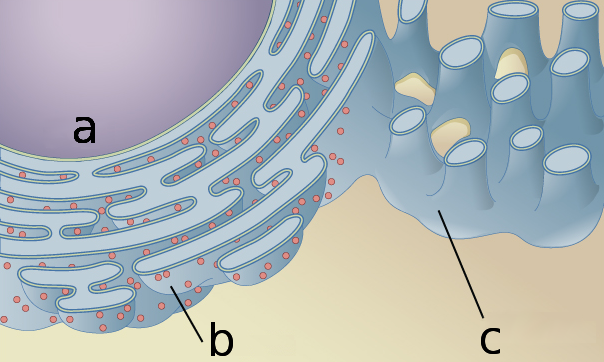
Just outside the nucleus lies a sprawling network of membranes called the endoplasmic reticulum, or ER. This is the city's main industrial complex. There are two distinct, but connected, regions.
The rough ER is studded with tiny structures called ribosomes, giving it a bumpy appearance. This is where many of the cell's proteins are built. The ribosomes assemble proteins, which then enter the ER for modifications and folding. The smooth ER, lacking ribosomes, has different jobs. It's involved in making lipids, detoxifying harmful substances, and storing calcium ions.
Once proteins and lipids are made in the ER, many are sent to the Golgi apparatus. You can think of the Golgi as the cell's post office. It receives molecules from the ER, further modifies them, sorts them, and packages them into small, membrane-bound sacs called vesicles. These vesicles are then shipped to their final destinations, whether that's another organelle within the cell or the plasma membrane for export out of the cell.
The ER builds proteins and lipids, and the Golgi apparatus processes and packages them for delivery.
Cleanup and Structure
Every city produces waste, and a cell is no different. Lysosomes are the recycling centers. These small organelles are filled with powerful digestive enzymes. They break down worn-out cell parts, unwanted molecules, and anything the cell has engulfed from the outside. Peroxisomes are another type of cleanup crew. They specialize in breaking down specific substances, like fatty acids, and neutralizing toxic materials in the process.
What stops the cell from collapsing into a blob? The cytoskeleton. This is not a rigid skeleton like our own, but a dynamic network of protein fibers that extends throughout the cytoplasm. It provides structural support, giving the cell its shape. It also acts as a highway system, allowing organelles and vesicles to move around. Plus, it plays a key role in cell division and movement.
Cytoskeleton
noun
A network of protein filaments and tubules in the cytoplasm of many living cells, giving them shape and coherence.
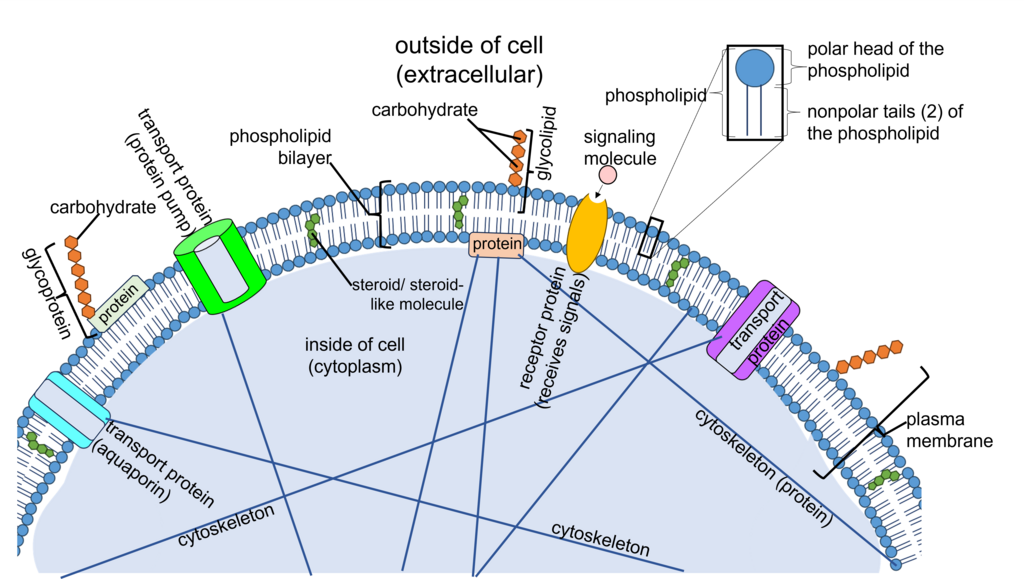
Finally, the entire cell is encased in the plasma membrane. This flexible barrier is made of a phospholipid bilayer, creating a boundary between the cell's internal environment and the outside world. It's selectively permeable, meaning it has channels and pumps made of protein that precisely control which substances can pass through. This regulation is vital for maintaining the cell's internal balance, or homeostasis.
Time to review the key players in our cellular city.
Now, let's test your knowledge of the cell's architecture.
Which organelle acts as the cell's 'post office', modifying, sorting, and packaging proteins and lipids for transport?
A cell specializing in detoxifying poisons and producing large amounts of lipids, such as steroids, would have an abundance of which organelle?
Each of these components, from the nucleus to the plasma membrane, plays a crucial role. Together, they create a highly organized and functional unit: the eukaryotic cell.